


 一键配货
一键配货
化合物详情
CAS21593-23-7
分子式C17H17N3O6S2
分子量423.46 g/mol g/mol
危化品
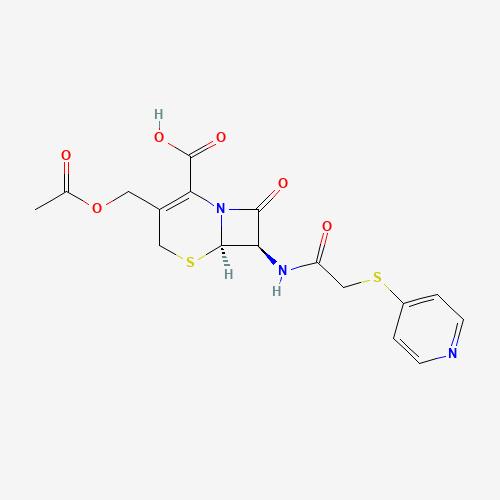
Cephapirin is a cephalosporin with acetoxymethyl and 2(pyridin-4-ylsulfanyl)acetamido substituents at positions 3 and 7, respectively, of the cephem skeleton. It is used (as its sodium salt) as an antibiotic, being effective against gram-negative and gram-positive organisms. It has a role as an antibacterial drug. It is a conjugate acid of a cephapirin(1-).
科学粮草官-词典编辑部,修订于:2026-07-06
Toxicity
ToxicityBody Burden
Cephalosporins cross the placenta and are found in low concentrations in milk. /Cephalosporins/
Milk Concentrations
Cephalosporins cross the placenta and are found in low concentrations in milk. /Cephalosporins/
Interactions
The admixture of beta-lactam antibacterials (penicillins and cephalosporins) and aminoglycosides may result in substantial mutual inactivation. If they are administered concurrently, they should be administered in separate sites. Do not mix them in the same intravenous bag or bottle. /Cephalosporins/
Drug Induced Liver Injury
References: DOI:10.1016/j.drudis.2019.09.022
Non-Human Toxicity Excerpts
First-generation cephalosporins /including cephapirin/ have the highest degree of activity against most gram-positive bacteria, including beta-lactamase producing Staphylococcus aureus and most streptococci; exceptions include methicillin resistant staphylococci, and penicillin resistant Streptococcus pneumonia. No cephalosporin is effective against Enterococcus faecalis infections. Gram-negative bacteria coverage is generally limited to Escherichia coli, Klebsiella species, and Proteus mirabilis. /Cephalosporins/
Populations at Special Risk
These medications sould not be used when the following medical problem exists: Previous allergic reaction (anaphylaxis) to penicillins, penicillin derivatives penicillamine, or cephalosporins; Gastrointestinal disease, history of, especially ulcerative colitis, regional enteritis, or antibiotic-associated colitis (cephalosporins may cause pseudomembranous colitis); Hepatic function impairment (cefoperazone is primarily excreted in bile; may also cause elevated SGOT, SGPT, and alkaline phosphatase; it is recommended that patients with both severe liver disease and significant renal disease receive a reduced dosage of cefoperazone. /Cephalosporins/









