


 一键配货
一键配货
化合物详情
CAS701-44-0
分子式C7H8N2O2
分子量152.15 g/mol g/mol
非危品
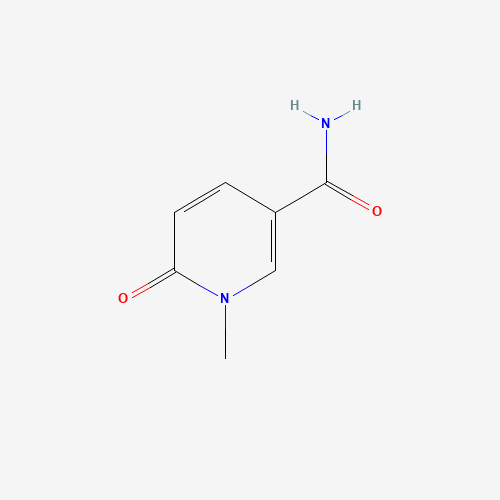
N-methyl-6-pyridone-3-carboxamide is a pyridone that is 2-pyridone substituted with a carboxamide group at C-5 and a methyl group at N-1. It has a role as a metabolite and a mouse metabolite. It is a member of methylpyridines, a pyridinecarboxamide and a pyridone.
科学粮草官-词典编辑部,修订于:2026-07-06
Toxicity
ToxicitySymptoms
As a uremic toxin, this compound can cause uremic syndrome. Uremic syndrome may affect any part of the body and can cause nausea, vomiting, loss of appetite, and weight loss. It can also cause changes in mental status, such as confusion, reduced awareness, agitation, psychosis, seizures, and coma. Abnormal bleeding, such as bleeding spontaneously or profusely from a very minor injury can also occur. Heart problems, such as an irregular heartbeat, inflammation in the sac that surrounds the heart (pericarditis), and increased pressure on the heart can be seen in patients with uremic syndrome. Shortness of breath from fluid buildup in the space between the lungs and the chest wall (pleural effusion) can also be present.
Treatment
Kidney dialysis is usually needed to relieve the symptoms of uremic syndrome until normal kidney function can be restored.
Health Effects
Chronic exposure to uremic toxins can lead to a number of conditions including renal damage, chronic kidney disease and cardiovascular disease.
Exposure Routes
Endogenous, Ingestion, Dermal (contact)
Toxicity Summary
Uremic toxins such as N-methyl-2-pyridone-5-carboxamide are actively transported into the kidneys via organic ion transporters (especially OAT3). Increased levels of uremic toxins can stimulate the production of reactive oxygen species. This seems to be mediated by the direct binding or inhibition by uremic toxins of the enzyme NADPH oxidase (especially NOX4 which is abundant in the kidneys and heart) (A7868). Reactive oxygen species can induce several different DNA methyltransferases (DNMTs) which are involved in the silencing of a protein known as KLOTHO. KLOTHO has been identified as having important roles in anti-aging, mineral metabolism, and vitamin D metabolism. A number of studies have indicated that KLOTHO mRNA and protein levels are reduced during acute or chronic kidney disea...
Carcinogen Classification
No indication of carcinogenicity to humans (not listed by IARC).









