


 一键配货
一键配货
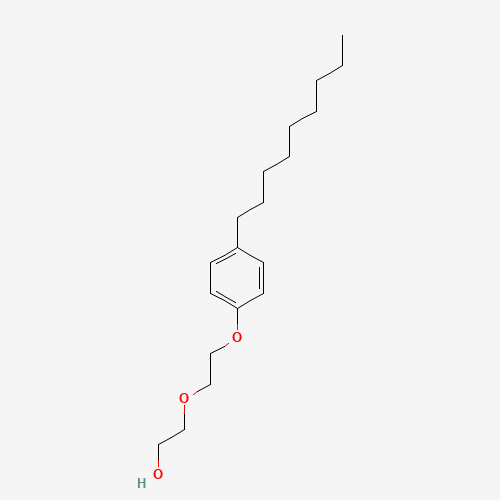
化合物详情
CAS20427-84-3
分子式C19H32O3
分子量308.4556 g/mol
非危品
The CIR Expert Panel concluded that the following 27 Nonoxynols listed below are safe in the present practices of use and concentration in cosmetics as described in this safety assessment, when formulated to be non-irritating..Nonoxynol-2...
科学粮草官-词典编辑部,修订于:2026-07-06
Toxicity
ToxicityFate Summary
ATMOSPHERIC FATE: According to a model of gas/particle partitioning of semivolatile organic compounds in the atmosphere(1), polyethyleneglycol nonylphenol ethers, which have vapor pressures ranging from extrapolated 9.4X10⁻⁵ mm Hg(2) to estimated 3.2X10⁻¹⁰ mm Hg at 25 °C(SRC), determined from a fragment constant method(3), will exist mainly in the particulate phase in the ambient atmosphere, although some of the smaller oligomers may also exist in the vapor phase. Those compounds found in the vapor phase are expected to be degraded in the atmosphere by reaction with photochemically-produced hydroxyl radicals(SRC). Particulate-phase polyethylene glycol nonylphenyl ethers may be physically removed from the air by both wet and dry deposition(SRC). polyethyleneglycol nonylphenol ethers do n...
Soil Adsorption / Mobility
Adsorption of nonylphenol polyethoxylates is dependent upon the number of ethoxylate units present; sludge adsorption was greatest for nonylphenol (44-48% of the added compound adsorbed) followed by nonylphenol ethoxylate (n=1) (14-15% of the added compound adsorbed to sludge), and nonylphenol diethoxylate (6-7% of the added compound adsorbed to sludge)(1). Adsorption of nonylphenyl ethoxylate (n=6) to sediment was dependent on the organic matter concentration(2). A Koc of 6.1 was measured in sediment(2). Polyethyleneglycol nonylphenyl ether (n=1-3) was observed to Kd values ranging from 450-1460 L/kg in sediment, 230-590 L/kg in sediment without organic carbon, 25-92 L/kg in silica, and 12,000-13,000 L/kg in sludge, suggesting strong sorption may occur to the solid phase in soil(SRC).
Environmental Biodegradation
AEROBIC: A highly branched alkyl chain made from propylene trimer and benzene and an average polyoxyethylene chain length of 9 was added to continuous biotreaters seeded with sewage; during the initial acclimation phase this mixture was completely biodegraded at 10, 20, and 40 mg/L(1). However, at 80-100 mg/L breakthrough of the feed appeared in the effluent indicating incomplete biodegradation(1). Nonylphenol polyethoxylate with either 5 or 10 ethoxylate units at four concentrations(3, 10, 30, 100 mg/L) was inoculated with activated sludge(2). BOD, as % theoretical in a BOD test, was measured after 14 days; values of 64, 57, 68, and 33% were measured for the 5 ethoxylate unit compound at 3, 10, 30, and 100 mg/L, respectively(2). Values of 57, 42, 40, and 25% were measured for the 10 et...
Environmental Bioconcentration
BCF values of <0.2 to <1.4 were measured in carp at polyethylene glycol nonylphenyl ether concentrations of 2.0 and 0.2 mg/L, respectively. According to a classification scheme(3), these BCF values indicate that bioconcentration of this mixture in aquatic organisms is low(SRC). Nonylphenol, nonylphenol monoethoxylate, and nonylphenol diethoxylate are more lipophilic and may bioconcentrate in aquatic organisms to a greater extent than higher oligomers(3).
Volatilization from Water / Soil
Henry's Law constants for polyethylene glycol nonylphenyl ethers range from 2.45X10⁻⁹ atm-cu m/mole for nonylphenol, a measured value(1), to 4.1X10⁻¹² atm-cu m/mole for nonylphenol ethoxylate (n=6), from a fragment constant estimation method(2). These values indicate that polyethylene glycol nonylphenyl ethers should be essentially nonvolatile from water surfaces(3). Polyethylene glycol nonylphenyl ether is not expected to volatilize from dry soil surfaces(SRC) based upon vapor pressure values ranging from extrapolated 9.4X10⁻⁵ mm Hg(4) to estimated 3.2X10⁻¹⁰ mm Hg at 25 °C(SRC), determined from a fragment constant method(5).
Environmental Abiotic Degradation
Polyethyleneglycol nonylphenol ethers, which have vapor pressures ranging from extrapolated 9.4X10⁻⁵ mm Hg(1) to estimated 3.2X10⁻¹⁰ mm Hg at 25 °C(SRC), determined from a fragment constant method(2), will exist mainly in the particulate phase in the ambient atmosphere, although some of the smaller oligomers may also exist in the vapor phase. Those compounds found in the vapor phase are expected to be degraded in the atmosphere by reaction with photochemically-produced hydroxyl radicals(SRC). Particulate-phase polyethylene glycol nonylphenyl ethers may be physically removed from the air by both wet and dry deposition(SRC). Polyethyleneglycol nonylphenol ether is not expected to undergo hydrolysis in the environment due to the lack of functional groups that hydrolyze under environmental...
Environmental Water Concentrations
SURFACE WATER: Total nonylphenols in various rivers worldwide were reported as follows (ug/L): Rivers - not detected to 100 (n=4-6) (several rivers in Spain); 1.6-14.9 (n=4-6) (several rivers in the US); 9.3-98.6 (n=4-9)(Texcoco River, Mexico)(1). Nonylphenol ethoxylates were detected in river water at concentrations ranging from 6.9-97.6, 1.0-2.6, and 2.5-52.7 ug/L in the area of Chongqing, China, sampled in April, July, and December, 2000, respectively(2).
Ecotoxicity Excerpts
/AQUATIC SPECIES/ The ability of nonylphenol polyethoxylate (nonylphenyl polyethylene glycol, NPPG) to alter the metabolic elimination of testosterone and elicit reproductive toxicity to Daphnia magna was assessed. NPPG (5.0 mg/L inhibited the elimination of testosterone as glucose and sulfate conjugates, but had minimal effect on the rate of elimination of oxido-reduced and hydroxylated derivatives of the steroid hormone. This exposure concentration of NPPG also approximated the acute threshold-effect concentration and the chronic value for daphnids. Results demonstrated that NPPG qualitatively elicits similar effects on the metabolic elimination of testosterone by daphnids as previously characterized with its degradation product 4-nonylphenol. Unlike 4-nonylphenol, significant chronic...
Effluent Concentrations
Total nonylphenols in untreated wastewaters in ug/L were reported as follows (ug/L): several cities in Spain - 24-938 (n=4-6); textile industry (Canada) - 798.4-8,811.2 (n=3-17); several cities worldwide - 844-2,250 (n=3-18); Danta Maria Nativitas, Mexico - 59.5-229 (n=4-9). Total nonylphenols in treated wastewaters in ug/L were reported as follows (ug/L): several cities in Spain - no detected - 10 (n=3-17); several cities, Canada - 1.00-52.82 (n=3-17); several cities worldwide - 3.9-2250 (n=3-18); Nativitas treatment, wetland, Mexico - 5.28-54.8 (n=4-9)(1).
Artificial Pollution Sources
Polyethyleneglycol nonylphenol ether's production and use as a dispersing agent(1) may result in its release to the environment through various waste streams(SRC).
Probable Routes of Human Exposure
NIOSH (NOES Survey 1981-1983) has statistically estimated that 1,961,225 workers (548,908 of these were female) were potentially exposed to polyethyleneglycol nonylphenol ether in the US(1). Occupational exposure to polyethyleneglycol nonylphenol ether may occur through inhalation and dermal contact with this compound at workplaces where polyethyleneglycol nonylphenol ether is produced or used. Monitoring and use data indicate that the general population may be exposed to polyethyleneglycol nonylphenol ether via ingestion of contaminated drinking water, and dermal contact with consumer products containing polyethyleneglycol nonylphenol ether(SRC).
Environmental Fate / Exposure Summary
Polyethyleneglycol nonylphenol ether's production and use as a dispersing agent may result in its release to the environment through various waste streams. If released to the atmosphere, small oligomers (n=0-2) may exist in both the vapor and particulate phases in the ambient atmosphere; larger oligomers are expected to exist solely in the particulate phase. Particulate-phase polyethylene glycol nonylphenyl ethers may be physically removed from the air by both wet and dry deposition. Polyethyleneglycol nonylphenol ethers do not contain chromophores that absorb at wavelengths >290 nm, and therefore are not expected to be susceptible to direct photolysis by sunlight). If released to soil, polyethyleneglycol nonylphenol ether is expected to have moderate mobility as polyehtyleneglycol nony...
Toxicity Data
LCLo (rat) = 29 mg/m3/8h
Toxicity Summary
Cosmetic Ingredient Review Finding(s): Safe for use in cosmetics, with qualifications
Non-Human Toxicity Values
LD50 Rat oral 1310 mg/kg
Non-Human Toxicity Excerpts
/LABORATORY ANIMALS: Acute Exposure/ The influence of in vivo administration of detergents on serum lipid composition was studied in rats. Male Wistar rats received 50 mg Emulgen 913 (polyoxyethylene nonylphenylether, a nonionic detergent) or sodium dodecylsulfate (an anionic detergent) per kg of body weight ip for 3 consecutive days. Emulgen 913 and sodium dodecylsulfate administration increased the level of cholesterol esters and phospholipids, respectively. But Emulgen 913 administration reduced the level of triglycerides in the serum, and sodium dodecylsulfate administration reduced also the levels of triglycerides and cholesterol esters. In spite of the changes in serum lipid composition, the administration of these detergents did not affect the amount of total lipids in rat serum....
Antidote and Emergency Treatment
/SRP:/ Advanced treatment: Consider orotracheal or nasotracheal intubation for airway control in the patient who is unconscious, has severe pulmonary edema, or is in severe respiratory distress. Positive-pressure ventilation techniques with a bag-valve-mask device may be beneficial. Consider drug therapy for pulmonary edema ... . Monitor cardiac rhythm and treat arrhythmias if necessary ... . Start IV administration of D5W /SRP: "To keep open", minimal flow rate/. Use 0.9% saline (NS) lactated Ringer's (LR) if signs of hypovolemia are present. For hypotension with signs of hypovolemia, administer fluid cautiously. Consider vasopressors if patient is hypotensive with a normal fluid volume. Watch for signs of fluid overload ... . Treat seizures with diazepam or lorazepam ... . Use propara...
USGS Health-Based Screening Levels for Evaluating Water-Quality
Reference: Smith, C.D. and Nowell, L.H., 2024. Health-Based Screening Levels for evaluating water-quality data (3rd ed.). DOI:10.5066/F71C1TWP









