化合物详情

CAS5578-73-4
分子式C20H14ClNO4 · xH2O
分子量367.78(anhydrous bas g/mol
危化品

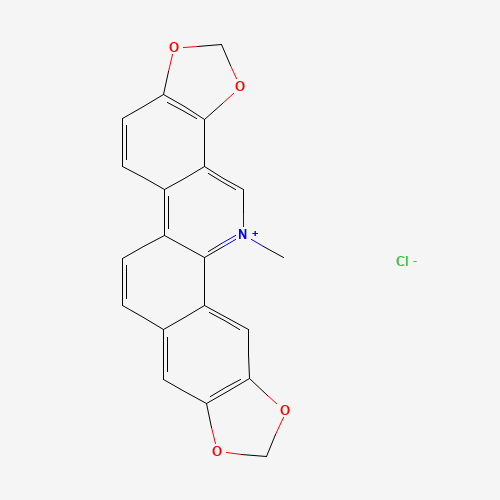
Sanguinarine is found in opium poppy. Consumption of Sanguinarine, present in poppy seeds and in the oil of <i>Argemone mexicana</i> which has been used as an adulterant for mustard oil in India, has been linked to development of glaucoma. Sanguinarine is banned by FDA. Sanguinarine is a quaternary ammonium salt from the group of benzylisoquinoline alkaloids. It is extracted from some plants, including bloodroot (Sanguinaria canadensis), Mexican prickly poppy Argemone mexicana, Chelidonium majus and Macleaya cordata. It is also found in the root, stem and leaves of the opium poppy but not in the capsule. Sanguinarine is a toxin that kills animal cells through its action on the Na+-K+-ATPase transmembrane protein. Epidemic dropsy is a disease that results from ingesting sanguinarine. San...

科学粮草官-词典编辑部,修订于:2026-07-06
化合物详情

Toxicity

Toxicity
3
Lethal Dose
collection=toxvaldb&kind=^LD$
Toxicity Summary
Sanguinarine, at micromolar concentrations, imparts cell growth inhibitory response in human squamous carcinoma (A431) cells via an induction of apoptosis. This is while sanguinarine treatment did not result in apoptosis of the normal human epidermal keratinocytes at similar dose. Sanguinarine [0.1 (M-2 (M)] treatment to HaCaT cells was found to inhibit in a dose-dependent manner the cell proliferation and induce apoptosis, as measured by 3-(4,5 dimethylthiazol-2-yl)-2,5-diphenyltetrazolium bromide assay and ELISA, respectively. Sanguinarine treatment also resulted in a significant cleavage of poly(ADP-ribose) polymerase in HaCaT cells. Sanguinarine treatment to HaCaT cells resulted in a dose-dependent (a) increase in the level of Bax with a concomitant decrease in Bcl-2 levels and (b)...
Carcinogen Classification
No indication of carcinogenicity to humans (not listed by IARC).
客服