

 一键配货
一键配货
化合物详情
CAS7783-81-5
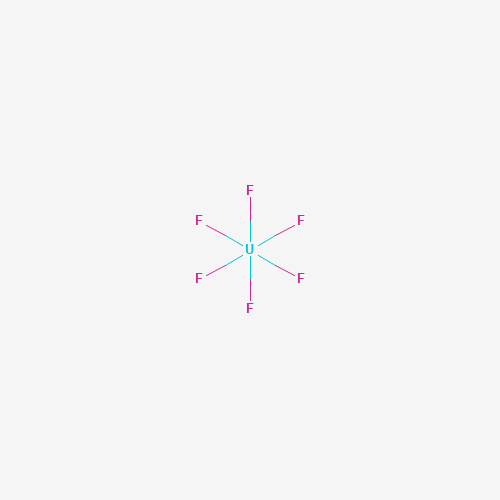
分子式F6U
分子量352.0193292 g/mol
非危品
Physical Description | Radioactive material, uranium hexafluoride, fissile appears as a colorless volatile white crystalline solid. Highly toxic and corrosive. Radioactive. Emits high energy rays which may be harmful and are detectable only by special instruments. Chemically irritates skin, eyes and mucous membranes. Used to make fuel for nuclear power plants.
科学粮草官-词典编辑部,修订于:2026-07-06
Toxicity
ToxicityFate Summary
ATMOSPHERIC FATE: Most uranium compounds are ionic in nature and would generally have extremely low vapor pressures(SRC). These compounds are expected to exist in the ambient atmosphere in the particulate phase(SRC). One exception to this is uranium(VI) hexafluoride, which has a vapor pressure of 115 mm Hg at 25 °C(1). Uranium compounds in the particulate-phase will be removed from the atmosphere by wet or dry deposition(SRC).
Soil Adsorption / Mobility
... Uranium present in the (6+) oxidation state is highly mobile. ... /Hexavalent uranium/
Probable Routes of Human Exposure
In the 1940s, an accident involving the sudden release of gaseous uranium fluoride resulted in the death of two people, serious injury of three others, and minor injury to 13 others(1). Those affected experienced renal lesions and diffuse inflammatory changes in the lungs and gastrointestinal tract. The renal damage was thought to be caused by adsorbed uranium while skin, eye and respiratory effects were attributed to the direct action of fluorine(1). In another study, the exposure to an accidental release of uranium fluoride and its hydrolysis products to 31 workers in 1986 was investigated. The study indicated that none of the 31 workers sustained any observable health effects from exposure to uranium even though an exposure limit of 9.6 mg was exceeded by eight of the workers(1).
Environmental Fate / Exposure Summary
Uranium compounds are expected to exist in the particulate phase in the ambient atmosphere. One notable exception to this is uranium(VI) hexafluoride which is expected to exist entirely in the vapor phase based on its vapor pressure of 100 mm Hg at 18.2 °C. Uranium hexafluoride reacts vigorously with water, forming uranyl fluoride (UO2F2) and hydrogen fluoride (HF). (SRC)
Symptoms
Ingestion of uranium may cause vomiting and diarrhea. (L248)
Treatment
EYES: irrigate opened eyes for several minutes under running water. INGESTION: do not induce vomiting. Rinse mouth with water (never give anything by mouth to an unconscious person). Seek immediate medical advice. SKIN: should be treated immediately by rinsing the affected parts in cold running water for at least 15 minutes, followed by thorough washing with soap and water. If necessary, the person should shower and change contaminated clothing and shoes, and then must seek medical attention. INHALATION: supply fresh air. If required provide artificial respiration.
Toxicity Data
LC50: 26 098 mg/m3 over 5 minutes (Inhalation, Rat) (L249)
Health Effects
Uranium primarily damages the kidney, but may also damage the lungs, central nervous system, and immune system. Uranium's radioactivity is believed to damage the DNA, resulting in carcinogenic effects and reproductive and developmental damage. (L248, L249)
Adverse Effects
Toxic Pneumonitis - Inflammation of the lungs induced by inhalation of metal fumes or toxic gases and vapors.
Exposure Routes
Oral (L249); inhalation (L249); dermal (L249)
Toxicity Summary
Uranium is combined with either bicarbonate or a plasma protein in the blood but once in the kidney, it is released and forms complexes with phosphate ligands and proteins in the tubular wall, causing damage. Uranium may also inhibit both sodium transport-dependent and independent ATP utilization and mitochondrial oxidative phosphorylation in the renal proximal tubule. Uranium causes respiratory diseases by damaging alveolar epithelium type II cells in the lungs. Uranium induces c-Jun N-terminal kinase (JNK) and p38 mitogen-activated protein kinase (p38 MAPK) activation, which in turn induces tumor necrosis factor alpha (TNF-alpha) secretion and generates and inflammatory response in the lungs. Studies have shown that the more soluble the uranium salt, the more toxic it is. Ionizing rad...
Minimum Risk Level
Intermediate Inhalation: 0.0004 mg/m3 (Soluble uranium salts) (L134) Chronic Inhalation: 0.0003 mg/m3 (Soluble uranium salts) (L134) Intermediate Oral: 0.002 mg/kg/day (Soluble uranium salts) (L134) Intermediate Inhalation: 0.008 mg/m3 (Insoluble uranium compounds) (L134)
Carcinogen Classification
Uranium: Group 1, carcinogenic to humans (L135)
Non-Human Toxicity Values
LC50 Guinea pigs inhalation 35,011 mg U/cu m for a 2-minute exposure limit.
Populations at Special Risk
Humans who excrete acidic urine may be more sensitive to uranium-induced kidney injury.