


 一键配货
一键配货
化合物详情
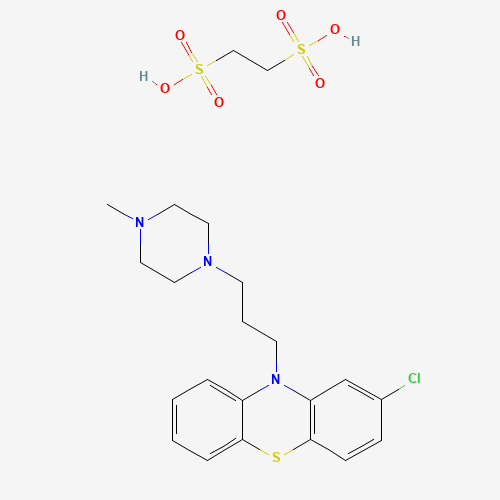
CAS1257-78-9
分子式C22H30ClN3O6S3
分子量564.1 g/mol g/mol
非危品
Prochlorperazine Edisylate is the edisylate salt form of prochlorperazine, a derivative of phenothiazine with antipsychotic and antiemetic properties. Prochlorperazine edisylate blocks postsynaptic dopamine receptors in cortical and limbic areas of the brain, thereby preventing the excess of dopamine in the brain. This leads to a reduction in psychotic symptoms, including hallucinations and delusions. Prochlorperazine edisylate appears to exert its antiemetic activity by blocking the dopamine and histamine receptors in the chemical trigger zone (CTZ) in the brain, thereby relieving nausea and vomiting.
科学粮草官-词典编辑部,修订于:2026-07-06
Toxicity
ToxicitySymptoms
Symptoms of central nervous system depression to the point of somnolence or coma. Agitation and restlessness may also occur. Other possible manifestations include convulsions, EKG changes and cardiac arrhythmias, fever and autonomic reactions such as hypotension, dry mouth and ileus; LD<sub>50</sub>=400mg/kg (orally in mice)
Lethal Dose
collection=toxvaldb&kind=^LD$
Toxicity Data
LD<sub>50</sub>=400mg/kg (orally in mice)
Exposure Routes
Intravenous, Oral, Rectal. Rapidly absorbed following oral administration.
Toxicity Summary
The mechanism of action of prochlorperazine has not been fully determined, but may be primarily related to its antidopaminergic effects. Prochlorperazine blocks the D2 somatodendritic autoreceptor, resulting in the blockade of postsynaptic dopamine receptors in the mesolimbic system and an increased dopamine turnover. Prochlorperazine also has anti-emetic effects, which can be attributed to dopamine blockade in the chemoreceptor trigger zone. Prochlorperazine also blocks anticholinergic and alpha-adrenergic receptors, the blockade of alpha(1)-adrenergic receptors resulting in sedation, muscle relaxation, and hypotension.
Carcinogen Classification
No indication of carcinogenicity to humans (not listed by IARC).









