


 一键配货
一键配货
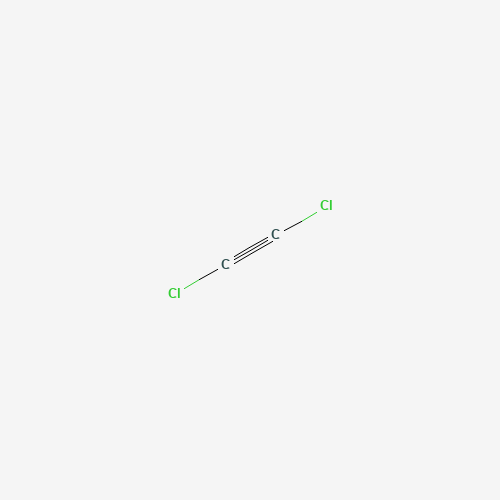
化合物详情
CAS7572-29-4
分子式-
分子量94.9274 g/mol
非危品
Physical Description | -68 to -65 °C; bp: 32-34 °C. Density: 1.38 g cm-3. Is not produced commercially.
科学粮草官-词典编辑部,修订于:2026-07-06
Toxicity
ToxicityFate Summary
ATMOSPHERIC FATE: According to a model of gas/particle partitioning of semivolatile organic compounds in the atmosphere(1), dichloroacetylene, which has an estimated vapor pressure of 570 mm Hg at 25 °C(SRC), determined from a fragment constant method(2), is expected to exist solely as a vapor in the ambient atmosphere. Vapor-phase dichloroacetylene is degraded in the atmosphere by reaction with photochemically-produced hydroxyl radicals(SRC); the half-life for this reaction in air is estimated to be 110 hours(SRC), calculated from its rate constant of 1.2X10⁻¹² cu cm/molecule-sec at 25 °C(SRC) that was derived using a structure estimation method(3). The rate constant for the vapor-phase reaction of dichloroacetylene with ozone has been estimated as 6.1X10⁻²² cu cm/molecule-sec at 25 °C...
Soil Adsorption / Mobility
Using a structure estimation method based on molecular connectivity indices(1), the Koc for dichloroacetylene can be estimated to be 44(SRC). According to a classification scheme(2), this estimated Koc value suggests that dichloroacetylene is expected to have very high mobility in soil.
Environmental Bioconcentration
An estimated BCF of 1.4 was calculated for dichloroacetylene(SRC), using an estimated log Kow of 1.1(1) and a regression-derived equation(2). According to a classification scheme(3), this BCF suggests the potential for bioconcentration in aquatic organisms is low(SRC).
Volatilization from Water / Soil
The Henry's Law constant for dichloroacetylene is estimated as 2.0X10⁻² atm-cu m/mole(SRC) using a fragment constant estimation method(1). This Henry's Law constant indicates that dichloroacetylene is expected to volatilize rapidly from water surfaces(2). Based on this Henry's Law constant, the volatilization half-life from a model river (1 m deep, flowing 1 m/sec, wind velocity of 3 m/sec)(2) is estimated as 1.0 hours(SRC). The volatilization half-life from a model lake (1 m deep, flowing 0.05 m/sec, wind velocity of 0.5 m/sec)(2) is estimated as 3.9 days(SRC). Dichloroacetylene's Henry's Law constant indicates that volatilization from moist soil surfaces may occur(SRC). The potential for volatilization of dichloroacetylene from dry soil surfaces may exist(SRC) based upon an estimated...
Environmental Abiotic Degradation
The rate constant for the vapor-phase reaction of dichloroacetylene with photochemically-produced hydroxyl radicals has been estimated as 1.2X10⁻¹² cu cm/molecule-sec at 25 °C(SRC) using a structure estimation method(1). This corresponds to an atmospheric half-life of about 110 hours at an atmospheric concentration of 5X10+5 hydroxyl radicals per cu cm(1). The rate constant for the vapor-phase reaction of dichloroacetylene with ozone has been estimated as 6.1X10⁻²² cu cm/molecule-sec at 25 °C(SRC) that was derived using a structure estimation method(2). This corresponds to an atmospheric half-life of about 19,000 days at an atmospheric concentration of 7X10+11 ozone molecules per cu cm(3). Dichloroacetylene is not expected to undergo hydrolysis in the environment due to the lack of hydr...
Natural Pollution Sources
Dichloroacetylene does not occur as a natural product(1).
Atmospheric Concentrations
Dichloroacetylene concentrations in air at an unspecified location have been measured over the range of 0.4 to 40 mg/cu m(1).
Artificial Pollution Sources
Dichloroacetylene's release as a byproduct in the production of vinylidine chloride or in the dehydrochlorination of trichloroethylene, from exposure of trichloroethylene vapor to Hopcalite in a closed environmental system (submarine) or soda lime in close circuit (rebreathing) anesthesia machines, and from exposure of trichloroethylene liquid in degreaser tanks(1) may result in its release to the environment through various waste streams(SRC).
Probable Routes of Human Exposure
As dichloroacetylene may occur as a byproduct in the production of vinylidine chloride or as a byproduct in the deyhyrochlorination of trichloroethylene(1), occupational exposure to dichloroacetylene may occur through inhalation of vapor or dermal contact with this compound at workplaces where vinylidine chloride or trichloroethylene are produced or used. Monitoring data indicate that the general population may be exposed to dichloroacetylene via inhalation of ambient air containing dichloroacetylene(SRC).
Environmental Fate / Exposure Summary
Dichloroacetylene's release as a byproduct in the production of vinylidine chloride or the dehydrochlorination of trichloroethylene, from exposure of trichloroethylene vapor to Hopcalite in a closed environmental system (submarine) or soda lime in close circuit (rebreathing) anesthesia machines, and from exposure of trichloroethylene liquid in degreaser tanks may result in its release to the environment through various waste streams. If released to air, an estimated vapor pressure of 570 mm Hg at 25 °C indicates dichloroacetylene will exist solely as a vapor in the ambient atmosphere. Vapor-phase dichloroacetylene will be degraded in the atmosphere by reaction with photochemically-produced hydroxyl radicals; the half-life for this reaction in air is estimated to be 9.0 days. If released...
Symptoms
headache, loss of appetite, nausea, vomiting, intense jaw pain, cranial nerve palsy; In Animals: kidney, liver, brain injury; weight loss; [potential occupational carcinogen]
Cancer Sites
[in animals: kidney tumors]
Target Organs
central nervous system
Toxicity Data
LC50 (mouse) = 23 ppm/4h
Adverse Effects
ACGIH Carcinogen - Confirmed Animal.
Exposure Routes
inhalation, skin absorption, ingestion, skin and/or eye contact
Human Toxicity Excerpts
/SIGNS AND SYMPTOMS/ Toxic effects have been reported after accidental exposure to dichloroacetylene in various settings: its generation during use of trichloroethylene as an anesthetic, after use of a solvent mixture containing trichloroethylene as a cleaning agent either domestically or in enclosed work spaces, and during the cleaning of tank cars containing vinylidene chloride copolymers where dichloroacetylene was present. The signs and symptoms observed in each of these reports included headache, dizziness, nausea, vomiting, irritation of the mucous membranes of the mouth and throat as well as eye irritation, facial and oral herpes and neurological disorders. The latter were manifested in paresis and neuralgia in several cranial and cervical nerves. In some cases, the signs and sym...
Carcinogen Classification
IARC Monographs: Volume 71: (1999) Re-evaluation of Some Organic Chemicals, Hydrazine and Hydrogen Peroxide (Part 1, Part 2, Part 3)
Antidote and Emergency Treatment
Advanced treatment: Consider orotracheal or nasotracheal intubation for airway control in the patient who is unconscious or in respiratory arrest. Monitor cardiac rhythm and treat arrhythmias if necessary ... . Start an IV with D5W /SRP: "To keep open", minimal flow rate/. Treat seizures with diazepam ... . /Simple ashpyxiants and related compounds/









