
化合物详情

CAS51230-49-0
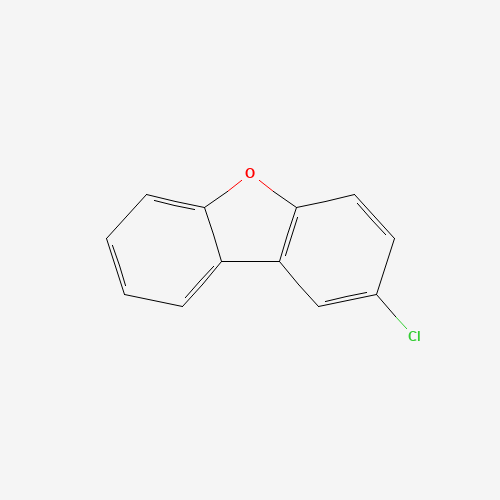
分子式C12H7ClO
分子量202.63 g/mol g/mol
非危品

Chlorinated dibenzofurans (CDFs) are a family of chemical that contain one to eight chlorine atoms attached to the carbon atoms of the parent chemical, dibenzofuran. The CDF family contains 135 individual compounds (known as congeners) with varying harmful health and environmental effects. Of these 135 compounds, those that contain chlorine atoms at the 2,3,7,8-positions of the parent dibenzofuran molecule are especially harmful. Other than for laboratory use of small amounts of CDFs for research and development purposes, these chemicals are not deliberately produced by industry. Most CDFs are produced in very small amounts as unwanted impurities of certain products and processes utilizing chlorinated compounds. Only a few of the 135 CDF compounds have been produced in large enough quan...

科学粮草官-词典编辑部,修订于:2026-07-06
化合物详情

Toxicity

Toxicity
5
Symptoms
Skin and eye irritations, especially severe acne, darkened skin color, and swollen eyelids with discharge are the most obvious health effects of the CDF poisoning. (L952)
Health Effects
CDFs cause vomiting and diarrhea, anemia, more frequent lung infections, numbness and other effects on the nervous system, and mild changes in the liver. However, there were no permanent liver changes or definite liver damage found in people who ingested CDFs. (L952)
Exposure Routes
Inhalation (L952); dermal (L952); oral (L952)
Toxicity Summary
Halogenated dibenzofurans (PCDFs and PBDFs) bind the aryl hydrocarbon receptor (AhR), which increases its ability to activate transcription in the XRE (xenobiotic resoponse element) promoter region. Specifically AhR binds to the PCDF, translocates it to the nucleus and together with hydrocarbon nuclear translocator (ARNT) and xenobiotic responsive element (XRE) increases the expression of CYP1A1 and aryl hydrocarbon hydroxylase (CYP1B1). AhR signaling also increseases conversion of arachidonic acid to prostanoids via cyclooxygenase-2, alters Wnt/beta-catenin signaling downregulating Sox9 and alters signaling by receptors for inflammatory cytokines. AhR signalling also alters proteasomal degradation of steroid hormone receptors, alters cellular UVB stress response and changes the differe...
Carcinogen Classification
3, not classifiable as to its carcinogenicity to humans. (L135)
客服