


 一键配货
一键配货
化合物详情
CAS52-49-3
分子式C20H32ClNO
分子量337.927 g/mol g/mol
危化品
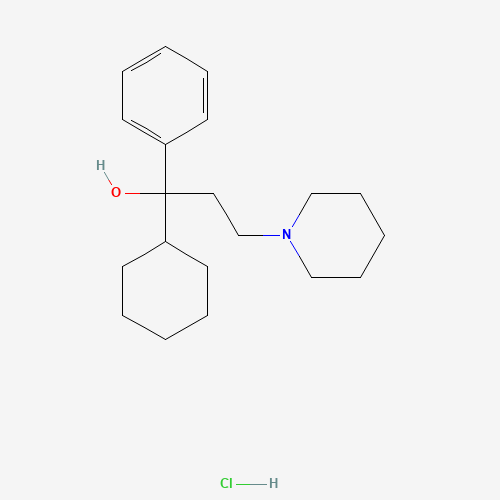
Trihexyphenidyl hydrochloride is an aralkylamine.
科学粮草官-词典编辑部,修订于:2026-07-06
Toxicity
ToxicitySymptoms
Symptoms of overdose include mydriasis, dryness of mucous membranes, red face, atonic states of bowels and bladder, and hyperthermia in high doses. Central consequences are agitation, confusion, and hallucinations.
Treatment
Treatment of acute overdose involves symptomatic and supportive therapy. Gastric lavage or other methods to limit absorption should be instituted. A small dose of diazepam or a short-acting barbiturate may be administered if CNS excitation is observed. Phenothiazines are contraindicated because the toxicity may be intensified due to their antimuscarinic action, causing coma. Respiratory support, artificial respiration or vasopressor agents may be necessary. Hyperpyrexia must be reversed, fluid volume replaced and acid-balance maintained. Urinary catheterization may be necessary. It is not known if Trihexyphenidyl is dialyzable. (L1712)
Lethal Dose
collection=toxvaldb&kind=^LD$
Exposure Routes
Oral. Trihexyphenidyl is rapidly absorbed from the gastrointestinal tract.
Toxicity Summary
Trihexyphenidyl is a selective M1 muscarinic acetylcholine receptor antagonist. It is able to discriminate between the M1 (cortical or neuronal) and the peripheral muscarinic subtypes (cardiac and glandular). Trihexyphenidyl partially blocks cholinergic activity in the CNS, which is responsible for the symptoms of Parkinson's disease. It is also thought to increase the availability of dopamine, a brain chemical that is critical in the initiation and smooth control of voluntary muscle movement.
Carcinogen Classification
No indication of carcinogenicity to humans (not listed by IARC).
Drug Induced Liver Injury
References: DOI:10.1016/j.drudis.2016.02.015









