


 一键配货
一键配货
化合物详情
CAS25523-97-1
分子量274.790 g/mol g/mol
非危品
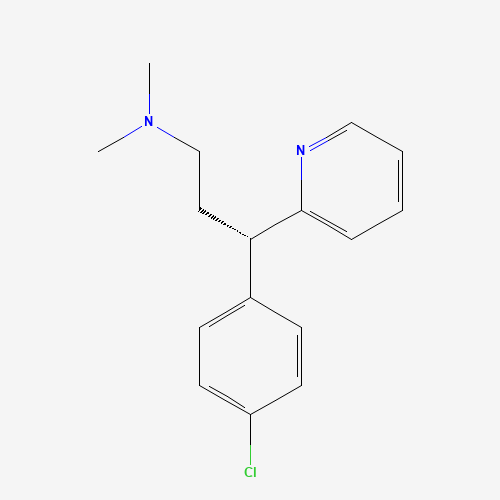
Dexchlorpheniramine is a chlorphenamine. It is an enantiomer of a levochlorpheniramine.
科学粮草官-词典编辑部,修订于:2026-07-06
Toxicity
ToxicityInteractions
Concurrent use /of other photosensitizing medications/ with antihistamines may cause additive photosensitizing effects. /Antihistamines/
Toxicity Data
Oral LD50 (rat): 306 mg/kg Oral LD50 (mice): 130 mg/kg Oral LD50 (guinea pig): 198 mg/kg LD50: 306 mg/kg (Human) (A308)
Health Effects
Chlorpheniramine posesses serotonergic and norepinephrinergic effects. It has been shown to work as a serotonin-norepinephrine reuptake inhibitor or SNRI. [Wikipedia]
Exposure Routes
Well absorbed in the gastrointestinal tract.
Toxicity Summary
Chlorpheniramine binds to the histamine H1 receptor. This blocks the action of endogenous histamine, which subsequently leads to temporary relief of the negative symptoms brought on by histamine.
Carcinogen Classification
No indication of carcinogenicity to humans (not listed by IARC).
Drug Induced Liver Injury
References: DOI:10.1016/j.drudis.2019.09.022
Non-Human Toxicity Excerpts
SMALL DOSES OF SOME ANTIHISTAMINICS PRODUCE DEPRESSION, DROWSINESS, SALIVATION & VOMITING. /ANTIHISTAMINICS/
Populations at Special Risk
Dizziness, sedation, confusion, and hypotension may be more likely to occur in geriatric patients taking antihistamines. Geriatric patients are especially susceptible to the anticholinergic side effects, such as dryness of mouth and urinary retention (especially in males), of the antihistamines. If these side effects occur and continue or are severe, medication should probably be discontinued. /Antihistamines/
Antidote and Emergency Treatment
THERE IS NO SPECIFIC THERAPY FOR ANTIHISTAMINE POISONING, AND TREATMENT IS ALONG GENERAL SYMPTOMATIC AND SUPPORTIVE LINES. ... SHOULD BREATHING FAIL, MECH SUPPORT OF VENTILATION OFFER SAFER AND ... EFFECTIVE MEANS OF MAINTAINING RESP THAN USE OF ANALEPTICS WHICH ARE PRONE TO INITIATE OR INTENSIFY CONVULSIVE PHASE. /ANTIHISTAMINES/
Effects During Pregnancy and Lactation
Antihistamines in relatively high doses given by injection can decrease basal serum prolactin in nonlactating women and in early postpartum women. However, suckling-induced prolactin secretion is not affected by antihistamine pretreatment of postpartum mothers. Whether lower oral doses of antihistamines have the same effect on serum prolactin or whether the effects on prolactin have any consequences on breastfeeding success have not been studied. The prolactin level in a mother with established lactation may not affect her ability to breastfeed.









