


 一键配货
一键配货
化合物详情
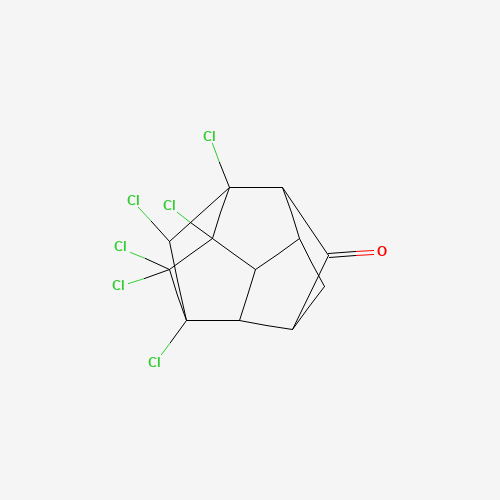
CAS53494-70-5
分子式C12H9Cl5O
分子量380.909 g/mol
非危品
Endrin ketone is the chemical produced when endrin is exposed to light. Endrin is a chlorinated hydrocarbon used as an insecticide on cotton, maize, and rice. It also acts as an avicide and rodenticide. Due to its toxicity and tendency to bioaccumulate, its use is now banned in most parts of the world. (L111)
科学粮草官-词典编辑部,修订于:2026-07-06
Toxicity
ToxicitySymptoms
Symptoms that may result from endrin poisoning are headaches, dizziness, nervousness, confusion, nausea, vomiting, and convulsions. (L112)
Treatment
Treatment is symptomatic, aimed at controlling convulsions, coma, and respiratory depression. If ingested, gastric lavage may be performed, followed by administering activated charcoal powder. (L150)
Health Effects
Endrin poisoning affects primarily the nerve system. Exposure causes various harmful effects including hyperexcitability, severe central nervous system damage, and death. Endrin is also believed to cause birth defects. (T10, L112)
Adverse Effects
Other Poison - Organochlorine
Exposure Routes
Oral (L111)
Toxicity Summary
Endrin antagonizes the action of the neurotransmitter gamma-aminobutyric acid (GABA) acting at the GABA-A receptors, effectively blocking the GABA-induced uptake of chloride ions and causing hyperexcitability of the central nervous system. Endrin also inhibits Na+ K+ ATPase and Ca2+ and Mg2+ ATPase which are essential for the transport of calcium across membranes. This results in the accumulation of intracellular free calcium ions, which promotes release of neurotransmitters from storage vesicles, the subsequent depolarization of adjacent neurons, and the propagation of stimuli throughout the central nervous system. Endrin also causes increased lipid peroxidation, decreased membrane fluidity, and DNA damage in hepatocytes, but the exact mechanism is unknown. (T10, L112)
Carcinogen Classification
No indication of carcinogenicity to humans (not listed by IARC).









