


 一键配货
一键配货
化合物详情
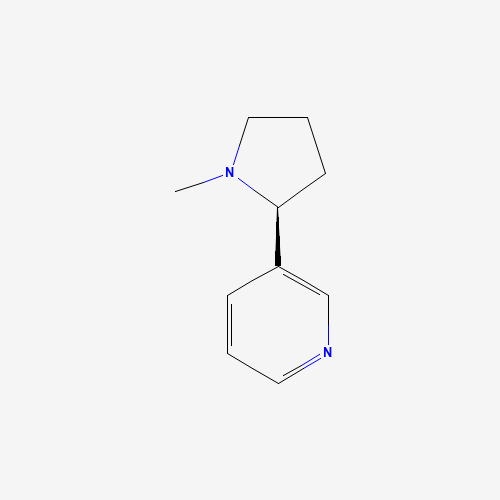
CAS54-11-5
分子式C10H14N2
分子量162.23 g/mol
危化品
Nicotine can cause developmental toxicity according to state or federal government labeling requirements.
科学粮草官-词典编辑部,修订于:2026-07-06
Toxicity
ToxicityBody Burden
Urine samples of 2 groups of children (Group A: 10 mo old, 55 children; Group B: 4 yr old, 54 children) were analyzed for nicotine and cotinine to study the effects of exposure to environmental tobacco smoke. Twenty of Group A and 19 of Group B children had not been exposed to environmental tobacco smoke while the remaining children had been exposed during the last three days. The differences in urinary nicotine and cotinine levels between the "exposed" and "unexposed" children were statistically significant in both age groups. Median urinary nicotine levels in "exposed" and "unexposed" children were 2.7 ug/L and 1.3 ug/L respectively in Group A and 2.2 ug/L and 1.1 ug/L respectively in Group B.
EPA Ecotoxicity
Pesticide Ecotoxicity Data from EPA: 1
Ecotoxicity Values
USDA APHIS Chemical Effects: collection=usda_chemeffect&query_type=synonym&query='^54-11-5$'
Fate Summary
ATMOSPHERIC FATE: According to a model of gas/particle partitioning of semivolatile organic compounds in the atmosphere(1), nicotine, which has a vapor pressure of 0.038 mm Hg at 25 °C(2), is expected to exist solely as a vapor in the ambient atmosphere. Vapor-phase nicotine is degraded in the atmosphere by reaction with photochemically-produced hydroxyl radicals(SRC); the half-life for this reaction in air is estimated to be 4 hours(SRC), calculated from its rate constant of 9.1X10⁻¹¹ cu cm/molecule-sec at 25 °C(SRC) that was derived using a structure estimation method(3). Nicotine does not contain chromophores that absorb at wavelengths >290 nm(4) and therefore is not expected to be susceptible to direct photolysis by sunlight(SRC).
Soil Adsorption / Mobility
Sorption coefficients (m hr-1) of 1.5, 5.3, and 1.4 were measured for nicotine on stainless steel, carpet, and wallboard(1).
Environmental Biodegradation
PURE CULTURE: Several organisms capable of degrading nicotine have been isolated from leaves and seeds of tobacco and from soil(1). A wide variety of transformation products have been identified from bacterial fermentation media, tobacco seed infusions and fermented tobacco leaves. These products include oxynicotine, 3-pyridylmethyl ketone, 2,3'-dipyridyl, N-methylmyosmine and a purple crystalline pigment(1). A variety of different degradation pathways have been proposed(1). However, in a study designed to identify the effects of nicotine on some human oral bacterial species, it was determined that nicotine neither stimulates nor reduces growth(2). Nicotine was degraded very slowly by an isolate, Arthriobacter globiformis, from cigar tobacco leaves (var. Nambu) and soil of tobacco field...
Environmental Bioconcentration
An estimated BCF of 3 was calculated in fish for nicotine(SRC), using a log Kow of 1.17(1) and a regression-derived equation(2). According to a classification scheme(3), this BCF suggests the potential for bioconcentration in aquatic organisms is low(SRC).
Volatilization from Water / Soil
The Henry's Law constant for nicotine is estimated as 3.0X10⁻⁹ atm-cu m/mole(SRC) using a fragment constant estimation method(1). This Henry's Law constant indicates that nicotine is expected to be essentially nonvolatile from water surfaces(2). Nicotine's Henry's Law constant indicates that volatilization from moist soil surfaces may not occur(SRC). Nicotine is not expected to volatilize from dry soil surfaces(SRC) based upon a vapor pressure of 0.038 mm Hg(3).
Environmental Abiotic Degradation
NICOTINE DECOMP WAS ACCELERATED BY UV RADIATION. RATE WAS GREATER IN SOLN @ PH 9.5 THAN @ ACID PH OF 6.2 OR 2.1. SULFATE FORM WAS MORE STABLE THAN FREE NICOTINE ... .
Environmental Water Concentrations
SEAWATER: Nicotine levels in Jamaica Bay, NY estuary ranged from 250-600 ng/L, concentrations decreasing with increasing salinity(1).
Food Survey Values
Nicotine was detected in the fiscal year period of 1983-1986 during regulatory monitoring for the FDA pesticide residue monitoring program at unreported concns and in an unreported number of samples(1).
Milk Concentrations
ENVIRONMENTAL: In the body, nicotine is metabolized to a number of compounds, such as cotinine, 3'hydroxycotinine, and N-formylnornicotine(1). Passive smoking may result in a mean concentration of 12 ppb in breast milk(2). Breast milk from heavy smokers may contain 0.5 mg/L(3). Nicotine was detected in breast milk from smokers and nonsmokers at a mean concentration of 91 and 0 ppb, respectively(4). Detected (0.2-1.6 ng/mL) in serum of newborn infants nursed by smoking mothers(5).
Ecotoxicity Excerpts
/PLANTS/ A variety of test methods were used to study the gradation, bioaccumulation, and toxicity of nicotine. Studies included determination of the octanol-water partition coefficient, conversion to CO2 in soil and activated sludge, and evaluation of the effects on microbiological and algal inhibition as well as plant germination and root elongation. The partitioning of nicotine between octanol and water indicated that nicotine will not bioaccumulate regardless of the pH of the medium. The aqueous and soil-based biodegradation studies indicated that nicotine is readily biodegradable in both types of media. The microbiological inhibition and aquatic and terrestrial toxicity tests indicated that nicotine has low toxicity. ...Using the estimated nicotine concentrations in water, soil, an...
Effluent Concentrations
Average nicotine concentrations in tobacco smoke, generated by 2 volunteer smokers in a 10.75 cu m exposure chamber, was 12.3, 22.7, 65.2, 152, and 82.7 ug/cu m for 2, 4, 10, 20, and 10 cigarettes smoked, respectively(1).
ICSC Environmental Data
The substance is toxic to aquatic organisms. The substance may cause long-term effects in the aquatic environment. Avoid release to the environment in circumstances different to normal use.
Natural Pollution Sources
... /Nicotine/ is found in ... Aesclepias syriaca /common milkweed/.
Atmospheric Concentrations
INDOOR: Nicotine concns at a bar and at 2 bar/restaurants, where smoking was permitted, ranged from 1.1-7 ug/cu m to 2 to 13.1 ug/cu m, respectively(1). Nicotine concns of 1.0, 1.6, 17.1, and 0.6 to 4.3 ug/cu m were reported for a subway station, hospital, clinic (smoking area), and in 5 office buildings, respectively(1). Nicotine concns in a billiard parlor(34 cigarettes smoked, 2 hr period), in 2 homes (6 cigarettes smoked each home, 4 hr period), in a department store (0 cigarettes smoked, 4 hr period), and in an automobile (0 cigarettes smokes, 8 hr period) were 19.4, 12.1 to 14.4, 0.6, and 0.4 ug/cu m, respectively(2). Nicotine concns measured in an office receiving recirculated air from smoking designated areas were similar to nonsmoking offices receiving "clean" air (about 1 ug/c...
Artificial Pollution Sources
Chemical characterization was made of gas-phase components of environmental tobacco smoke in a 30 cu m Teflon chamber from smoking 1R1 Kentucky reference cigarettes. Nicotine was the most abundant particulate compound identified by collection with either the annular denuder/filter pack system or the high vol samplers (467 + or - 144 umol/g), regardless of whether fresh or aged environmental tobacco smoke particles were collected on the filter. The mole ratio of particulate nicotine to carbon monoxide (CO) was the same for both fresh and aged samples. After 4 cigarettes were burned and chambers were exposed to ultraviolet light during the second and fourth hr of the expt, the nicotine concn during hr 1, hr 3 and hr 5 were 154, 581, and 632 umol/g, respectively.
Probable Routes of Human Exposure
Exposure of individuals to ambient nicotine in households, offices, pubs, restaurants, coffee shops, cars, trains, and airplanes was estimated. An estimate of the amount of nicotine inhaled was calculated by multiplying nicotine concentration from the personal monitor by respiratory volume (0.48 cu m/hr). Nicotine exposure was converted to an equivalent of cigarettes smoked (representing passive smoking) by dividing the inhaled nicotine values by the known nicotine exposure (1 mg) from active smoking of one cigarette. Three individual offices yielded nicotine exposure values ranging from 5.9 to 19.8 ug/cu m. The nicotine inhaled was estimated to be 2.8 to 9.5 ug/hr, which is equivalent to active smoking of 0.003 to 0.010 cigarettes/hr. In one office where 28 to 48 cigarettes were smoked...
Other Environmental Concentrations
[Table#2823]: IkZ1cm5pc2hpbmcgTGV2ZWwiLCJDb25jZW50cmF0aW9uIDIvaHIiLCJDb25jZW50cmF0aW9uIDAuNi9ociIsIkNvbmNlbnRyYXRpb24gMC4zL2hyIgoiV2FsbGJvYXJkIE9ubHkiLCIzNzUwIiwiMjA0MCIsIjE2MDAiCiJXYWxsYm9hcmQvQ2FycGV0IiwiMzAyMCIsIjE1NDAiLCI4NzMiCiJGdWxseSBGdXJuaXNoZWQiLCIxMjcwIiwiNjg5IiwiMzk2Igo=
Environmental Fate / Exposure Summary
Nicotine's production and use as a pharmaceutical may result in its release to the environment through various waste streams; its limited use as an insecticide will result in its direct release to the environment. Nicotine is contained in the leaves of the tobacco plants Nicotiana tabacum and N. rustica. If released to air, a vapor pressure of 0.0038 mm Hg at 25 °C indicates nicotine will exist solely as a vapor in the atmosphere. Vapor-phase nicotine will be degraded in the atmosphere by reaction with photochemically-produced hydroxyl radicals; the half-life for this reaction in air is estimated to be 4 hours. Nicotine does not contain chromophores that absorb at wavelengths >290 nm and therefore is not expected to be susceptible to direct photolysis by sunlight. If released to soil, n...
Symptoms
Symptoms of overdose include nausea, abdominal pain, vomiting, diarrhea, diaphoresis, flushing, dizziness, disturbed hearing and vision, confusion, weakness, palpitations, altered respiration and hypotension.
Treatment
Other supportive measures include diazepam or barbiturates for seizures, atropine for excessive bronchial secretions or diarrhea, respiratory support for respiratory failure, and vigorous fluid support for hypotension and cardiovascular collapse. (L1712)
Effect Level
collection=toxvaldb&kind=^EL$
Interactions
The administration of nicotine during the prenatal stages of life resulted in a significant decrease in tumors occurring after transplacental induction by N-methylnitrosourea. The overall tumor incidence following oral application of N-methylnitrosourea to dams was 85% in the rats of the F1 generation, the main occurrence being related to the neurogenic system (62% of the animals). Regular injections of nicotine before or after birth resulted in a reduction of malignancies by 17% and 22%, respectively. The difference in the incidence of neurogenic tumors proved to be highly significant in rats of either sex, when nicotine was applied over 26 wk following birth.
Target Organs
central nervous system, cardiovascular system, lungs, gastrointestinal tract, reproductive system
Lethal Dose
collection=toxvaldb&kind=^LD$
Toxicity Data
LD50: 140 mg/kg (Dermal, Rat) LD50: 25 mg/kg (Subcutaneous, Rat) LD50: 5900 ug/kg (Intraperitoneal, Mouse) LD50: 2.8 mg/kg (Intravenous, Rat) (T80) LD50: 24 mg/kg (Oral, Mouse) (T18)
Health Effects
Nicotine has mood-altering effects that may include relaxation, sharpness, calmness, and alertness. It may act as a stimulant or sedative/pain killer, depending on the dosage. (L327)
Hepatotoxicity
Likelihood score: E (unlikely cause of clinically apparent liver injury).
Adverse Effects
Neurotoxin - Other CNS neurotoxin
Exposure Routes
Oral (L327); Inhalation (L327) Absorption of nicotine through the buccal mucosa is relatively slow and the high and rapid rise followed by the decline in nicotine arterial plasma concentrations seen with cigarette smoking are not achieved with the inhaler. About 10% of absorbed nicotine is excreted unchanged in urine.
Toxicity Summary
Nicotine is a stimulant drug that acts as an agonist at nicotinic acetylcholine receptors. These are ionotropic receptors composed up of five homomeric or heteromeric subunits. In the brain, nicotine binds to nicotinic acetylcholine receptors on dopaminergic neurons in the cortico-limbic pathways. This causes the channel to open and allow conductance of multiple cations including sodium, calcium, and potassium. This leads to depolarization, which activates voltage-gated calcium channels and allows more calcium to enter the axon terminal. Calcium stimulates vesicle trafficking towards the plasma membrane and the release of dopamine into the synapse. Dopamine binding to its receptors is responsible the euphoric and addictive properties of nicotine. Nicotine also binds to nicotinic acetylc...
NIOSH Toxicity Data
NIOSH Toxicity Data: niosh
Average Daily Intake
Using sidestream/mainstream ratios of nicotine and assuming a 10 L/min respiratory rate, the recent Surgeon General's Report estimates that from 0.6 to 30 ug of nicotine is inhaled in one hour by passive smoking(1). As a result of all-day monitoring, it was found that the highest amount of nicotine inhaled in a day was estimated to be up to 310 ug, equivalent to actively smoking 0.31 ordinary cigarettes(2).
Effect Concentration
collection=toxvaldb&kind=^EC$
Lethal Concentration
collection=toxvaldb&kind=^LC$
Other Toxicity Values
collection=toxvaldb&kind=^Other$
Human Toxicity Excerpts
/HUMAN EXPOSURE STUDIES/ Applications of nicotine were made locally on the nasal mucosa in human controls and patients suffering from hyperreactive nasal disorders. Ten normal subjects (controls) (mean age-32 yr, male/female = 50/50%) having no history of nasal disease or nasal allergy, smoking or ongoing drug treatment, and patients with vasomotor rhinitis (VMR), having sneezing and rhinorrhea and/or nasal congestion (mean age = 39 yr, male/female = 37/63%) were tested. Patients were divided into two groups: patients with the diagnosis of vasomotor rhinitis (n= 10); and patients with increased nasal secretion as the dominating symptom of the hyperreactive disorder (n= 4). Nasal application of nicotine (6.5x10⁻⁵ M, 6.5x10⁻⁴ M and 6.5x10⁻³ M nicotine bitartrate in saline) induced only a...
Carcinogen Classification
No indication of carcinogenicity to humans (not listed by IARC).
Non-Human Toxicity Values
LD50 Rat sc 33.5 mg/kg
Reference and Risk Values
collection=toxvaldb&kind=^RRV$
Non-Human Toxicity Excerpts
/LABORATORY ANIMALS: Acute Exposure/ ... Previously /it has been noted/ that a single dose of nicotine elevates plasma adrenocorticotropin levels in rats and has a biphasic effect on plasma prolactin. The stimulatory effect of nicotine on these stress-responsive hormones desensitizes after a single injection of nicotine. Continuous exposure to nicotine also induces tolerance to its locomotor depressive and hypothermic effects, which have been associated with an increase of central (3)H-nicotine binding. Thus, the acute and chronic administration of nicotine might induce changes in central nicotinic cholinergic circuits that affect the adrenocorticotropin and prolactin responses to stress. In the present study, a single dose of nicotine (0.75-3.0 mg/kg body weight) significantly inhibite...
Populations at Special Risk
Commercially available nicotine polacrilex lozenges contain aspartame, which is metabolized in the GI tract to phenylalanine following oral administration. Individuals with phenylketonuria (ie, homozygous genetic deficiency of phenylalanine hydroxylase) and other individuals who must restrict their intake of phenylalanine should be warned that each lozenge provides 3.4 mg of phenylalanine.
Antidote and Emergency Treatment
Emergency and supportive measures: Maintain an open airway and assist ventilation if necessary. Administer supplemental oxygen. Treat seizures, coma, hypotension, hypertension, and arrhythmias if they occur. observe for at least 4-6 hours to rule out delayed toxicity, especially after skin exposure. For ingestion of intact gum tablets or transdermal patches, observe for a longer period (up to 12-24 hours).
Effects During Pregnancy and Lactation
A woman had a history of mild galactorrhea and breast engorgement from risperidone that had improved with the discontinuation of risperidone 1 year prior. She had serum prolactin levels measured. She had quit smoking 2 to 3 weeks prior to having her prolactin levels checked and had started using 10 to 12 nicotine pouches daily (6 mg each) to help with nicotine cravings. Initial laboratory values showed a prolactin level of 312 mcg/L (reference 5.2 to 26.5 mcg/L). Because she was trying to get pregnant, she discontinued nicotine pouches immediately after learning of high prolactin levels. Prolactin levels normalized 2 and 3 days later (13.4 mcg/L and 8.8 mcg/L, respectively).
USGS Health-Based Screening Levels for Evaluating Water-Quality
Reference: Smith, C.D. and Nowell, L.H., 2024. Health-Based Screening Levels for evaluating water-quality data (3rd ed.). DOI:10.5066/F71C1TWP









