

 一键配货
一键配货
化合物详情
CAS71925-18-3
分子式-
分子量356.416 g/mol
非危品
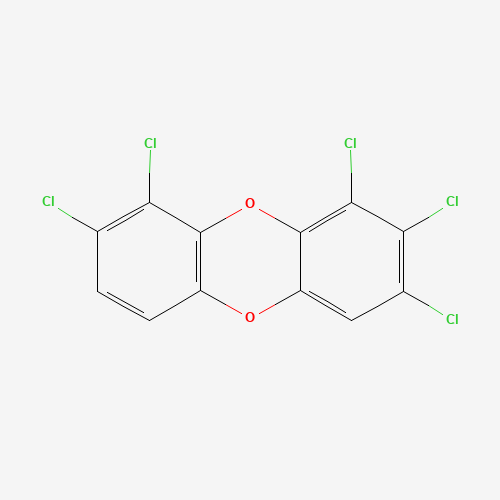
1,2,3,8,9-Pentachlorodibenzo-p-dioxin is a chlorinated dibenzo-p-dioxin (CDD) isomer. CDDs are a class of manufactured chemicals that consist of dioxin skeletal structures with chlorine substituents. They are also persistent organic pollutants (POPs), thus their production is regulated in most areas. Dioxins occur as by-products from the manufacture of organochlorides, the bleaching of paper, chlorination by waste and drinking water treatment plants, municipal solid waste and industrial incinerators, and natural sources such as volcanoes and forest fires. (L177, L178)
科学粮草官-词典编辑部,修订于:2026-07-06
Toxicity
ToxicitySymptoms
In addition to chloracne, CDD exposure causes skin rashes, discoloration, and excessive body hair. (L177)
Treatment
Treatment of CDD exposure may include washing the area of contact, GI decontamination, administering an IV, or forced alkaline diuresis. (L346)
Health Effects
Exposure to large amounts of CDDs causes chloracne, a severe skin disease with acne-like lesions that occur mainly on the face and upper body. CDDs may also cause liver damage and induce long-term alterations in glucose metabolism and subtle changes in hormonal levels. In addition, studies have shown that CDDs may disrupt the endocrine system and weaken the immune system, as well as cause reproductive damage and birth defects, central and peripheral nervous system pathology, thyroid disorders, endometriosis, and diabetes. (L177, L178)
Exposure Routes
Oral (L177); inhalation(L177); dermal (L177)
Toxicity Summary
CDDs cause their toxic effects by binding to the aryl hydrocarbon receptor and subsequently altering the transcription of certain genes. The affinity for the Ah receptor depends on the structure of the specific CDD. The change in gene expression may result from the direct interaction of the Ah receptor and its heterodimer-forming partner, the aryl hydrocarbon receptor nuclear translocator, with gene regulatory elements or the initiation of a phosphorylation/dephosphorylation cascade that subsequently activates other transcription factors. The affected genes include several oncogenes, growth factors, receptors, hormones, and drug-metabolizing enzymes. The change in transcription/translation of these genes is believed to be the cause of most of the toxic effects of CDDs. (L177)
Minimum Risk Level
Acute Oral: 0.0002 ug/kg/day (L134) Intermediate Oral: 0.00002 ug/kg/day (L134) Chronic Oral: 0.000001 ug/kg/day (L134)
Carcinogen Classification
3, not classifiable as to its carcinogenicity to humans. (L135)