


 一键配货
一键配货
化合物详情
CAS130-61-0
分子式C21H27ClN2S2
分子量407.04 g/mol g/mol
危化品
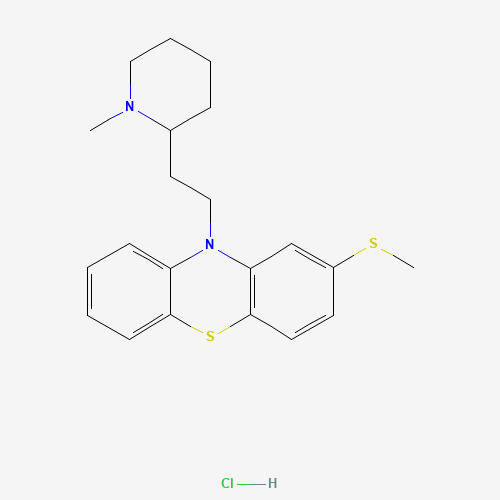
Thioridazine hydrochloride is a hydrochloride. It has a role as a geroprotector and a first generation antipsychotic. It contains a thioridazine.
科学粮草官-词典编辑部,修订于:2026-07-06
Toxicity
ToxicitySymptoms
LD<sub>50</sub>=956-1034 mg/kg (Orally in rats); Agitation, blurred vision, coma, confusion, constipation, difficulty breathing, dilated or constricted pupils, diminished flow of urine, dry mouth, dry skin, excessively high or low body temperature, extremely low blood pressure, fluid in the lungs, heart abnormalities, inability to urinate, intestinal blockage, nasal congestion, restlessness, sedation, seizures, shock
Treatment
An airway must be established and maintained. Adequate oxygenation and ventilation must be ensured. Cardiovascular monitoring should commence immediately and should include continuous electrocardiographic monitoring to detect possible arrhythmias. Treatment may include one or more of the following therapeutic interventions: correction of electrolyte abnormalities and acid-base balance, lidocaine, phenytoin, isoproterenol, ventricular pacing, and defibrillation. Disopyramide, procainamide, and quinidine may produce additive QT-prolonging effects when administered to patients with acute overdosage of Mellaril and should be avoided. Caution must be exercised when administering lidocaine, as it may increase the risk of developing seizures. Treatment of hypotension may require intravenous fl...
Lethal Dose
collection=toxvaldb&kind=^LD$
Toxicity Data
LD<sub>50</sub>=956-1034 mg/kg (Orally in rats).
Exposure Routes
Oral
Toxicity Summary
Thioridazine blocks postsynaptic mesolimbic dopaminergic D1 and D2 receptors in the brain; blocks alpha-adrenergic effect, depresses the release of hypothalamic and hypophyseal hormones and is believed to depress the reticular activating system thus affecting basal metabolism, body temperature, wakefulness, vasomotor tone, and emesis.
Carcinogen Classification
No indication of carcinogenicity to humans (not listed by IARC).
Drug Induced Liver Injury
References: DOI:10.1016/j.drudis.2016.02.015









