

 一键配货
一键配货
化合物详情
CAS7733-02-0
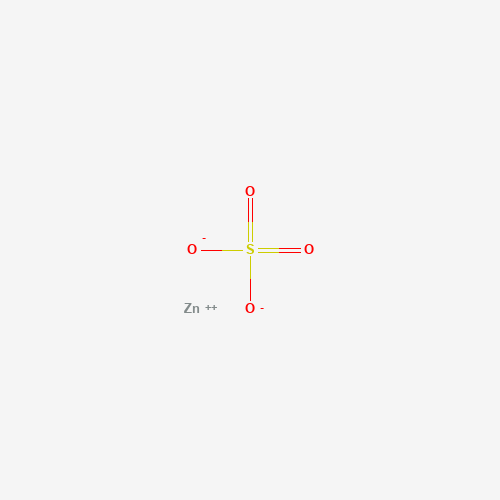
分子式O4SZn
分子量161.47 g/mol
非危品
Physical Description | Anhydrous zinc sulfate is a colorless crystalline solid. Zinc sulfate is also obtained as a hexahydrate, ZnSO4.6H2O, and as a heptahydrate ZnSO4.7H2O. All forms are soluble in water. All are noncombustible. The primary hazard is the threat posed to the environment. Immediate steps should be taken to limit its spread to the environment. It is used in the production of rayon, as a feed supplement, and as a fertilizer ingredient.
科学粮草官-词典编辑部,修订于:2026-07-06
Toxicity
ToxicityEPA Ecotoxicity
Pesticide Ecotoxicity Data from EPA: 2
ICSC Environmental Data
The substance is very toxic to aquatic organisms. It is strongly advised not to let the chemical enter into the environment.
Probable Routes of Human Exposure
NIOSH (NOES Survey 1981-1983) has statistically estimated that 2,849 workers (705 of these are female) are potentially exposed to zinc sulfate heptahydrate in the US(1). /Zinc sulfate heptahydrate/
Symptoms
Ingestion of large doses of zinc causes stomach cramps, nausea, and vomiting. Acute inhalation of large amounts of zinc causes metal fume fever, which is characterized by chills, fever, headache, weakness, dryness of the nose and throat, chest pain, and coughing. Dermal contact with zinc results in skin irritation. (L49)
Treatment
Zinc poisoning is treated symptomatically, often by administering fluids such as water or milk, or with gastric lavage. (L49)
Toxicity Data
LD50: 57 mg/kg (Oral, Mouse) (T13) LD50: 71.7 mg/kg (Intraperitoneal, Mouse) (T13) LD50: 40 mg/kg (Intravenous, Rat) (T81)
Health Effects
Chronic exposure to zinc causes anemia, atazia, lethargy, and decreases the level of good cholesterol in the body. It is also believed to cause pancreatic and reproductive damage. (L49)
Exposure Routes
Inhalation (L49); oral (L49); dermal (L49)
Toxicity Summary
Anaemia results from the excessive absorption of zinc suppressing copper and iron absorption, most likely through competitive binding of intestinal mucosal cells. Unbalanced levels of copper and zinc binding to Cu,Zn-superoxide dismutase has been linked to amyotrophic lateral sclerosis (ALS). Stomach acid dissolves metallic zinc to give corrosive zinc chloride, which can cause damage to the stomach lining. Metal fume fever is thought to be an immune response to inhaled zinc. (L48, L49, A49)
Minimum Risk Level
Intermediate Oral: 0.3 mg/kg/day (L134) Chronic Oral: 0.3 mg/kg/day (L134)
Carcinogen Classification
No indication of carcinogenicity to humans (not listed by IARC).
Evidence for Carcinogenicity
CLASSIFICATION: D; not classifiable as to human carcinogenicity. BASIS FOR CLASSIFICATION: Based on inadequate evidence in humans and animals. HUMAN CARCINOGENICITY DATA: Inadequate. ANIMAL CARCINOGENICITY DATA: Inadequate. /Zinc and compounds/