

 一键配货
一键配货
化合物详情
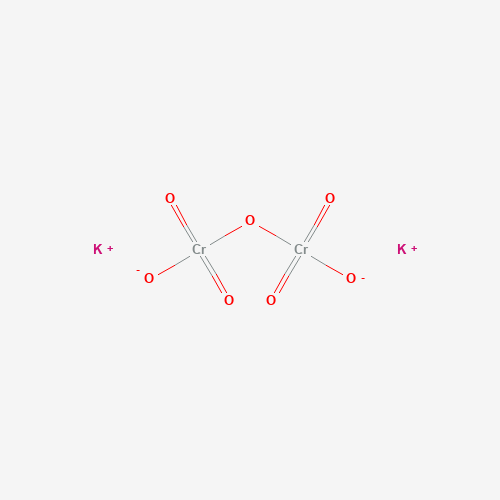
CAS7778-50-9
分子式K2Cr2O7
分子量294.18 g/mol g/mol
危化品
Physical Description | Potassium bichromate appears as orange red crystals. Denser than water and soluble in water. No distinctive odor. May severely irritate the eyes and respiratory tract. Avoid contact with organic materials. Noncombustible. Used in pyrotehnic displays with tungsten and iron.
科学粮草官-词典编辑部,修订于:2026-07-06
Toxicity
ToxicityEPA Ecotoxicity
Pesticide Ecotoxicity Data from EPA: 4
Environmental Bioconcentration
Using potassium dichromate as the source for chromium, a BCF of 2.8 (based on chromium) was determined for the muscle tissue of Salmo gairdneri (rainbow trout) over a 180 days duration period(1). According to a classification scheme(2), this BCF range suggests that bioconcentration in aquatic organisms is low(SRC).
ICSC Environmental Data
The substance is very toxic to aquatic organisms. The substance may cause long-term effects in the aquatic environment. It is strongly advised not to let the chemical enter into the environment.
Probable Routes of Human Exposure
NIOSH (NOES Survey 1981-1983) has statistically estimated that 61,073 workers (19,198 of these are female) are potentially exposed to potassium dichromate in the US(1).
Symptoms
Breathing hexavalent chromium can cause irritation to the lining of the nose, nose ulcers, runny nose, and breathing problems, such as asthma, cough, shortness of breath, or wheezing. Ingestion of hexavalent chromium causes irritation and ulcers in the stomach and small intestine, as well as anemia. Skin contact can cause skin ulcers. (L16)
Treatment
There is no know antidote for chromium poisoning. Exposure is usually handled with symptomatic treatment. (L16)
Toxicity Data
LD50: 26 mg/kg (Oral Rat) (L16) LD50: 403 mg/kg (Dermal, Rabbit) (L16) LD50: 37 mg/kg (Intraperitoneal, Mouse) (T14) LC50: 35 mg/m3 over 4 hours (Inhalation, Rat) (L16)
Health Effects
Hexavalent chromium is a known carcinogen. Chronic inhalation especially has been linked to lung cancer. Hexavalent chromium has also been know to cause reproductive and developmental defects. (A12)
Adverse Effects
ACGIH Carcinogen - Confirmed Human.
Exposure Routes
Inhalation (L16); oral (L16); dermal (L16)
Toxicity Summary
Hexavalent chromium's carcinogenic effects are caused by its metabolites, pentavalent and trivalent chromium. The DNA damage may be caused by hydroxyl radicals produced during reoxidation of pentavalent chromium by hydrogen peroxide molecules present in the cell. Trivalent chromium may also form complexes with peptides, proteins, and DNA, resulting in DNA-protein crosslinks, DNA strand breaks, DNA-DNA interstrand crosslinks, chromium-DNA adducts, chromosomal aberrations and alterations in cellular signaling pathways. It has been shown to induce carcinogenesis by overstimulating cellular regulatory pathways and increasing peroxide levels by activating certain mitogen-activated protein kinases. It can also cause transcriptional repression by cross-linking histone deacetylase 1-DNA methylt...
Minimum Risk Level
Intermediate Oral: 0.005 mg/kg/day (L134) Chronic Oral: 0.001 mg/kg/day (L134)
Carcinogen Classification
1, carcinogenic to humans. (L135)
Non-Human Toxicity Values
LD50 Mouse ip 37 mg/kg
Antidote and Emergency Treatment
Diffuse eczematous contact dermatitis resulted from exposure in a blueprint worker. Washing every 30 min in sodium bisulfite averted further dermatitis.