

 一键配货
一键配货
化合物详情
CAS161814-49-9
分子式C25H35N3O6S
分子量505.63 g/mol g/mol
危化品
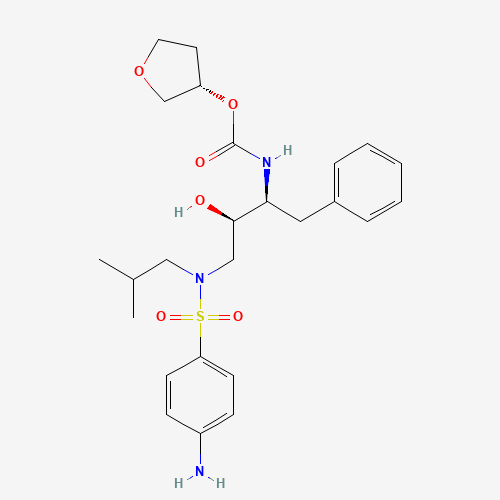
Amprenavir is a carbamate ester, a sulfonamide and a tetrahydrofuryl ester. It has a role as a HIV protease inhibitor and an antiviral drug.
科学粮草官-词典编辑部,修订于:2026-07-06
Toxicity
ToxicityMilk Concentrations
Although it is not known whether amprenavir is distributed in human milk, the drug is distributed into milk in rats.
Treatment
If overdosage occurs, the patient should be monitored for evidence of toxicity and standard supportive treatment applied as necessary. (L1712)
Interactions
Although antacids have not been specifically studied with amprenavir, based on data from other protease inhibitors, antacids (and didanosine due to the antacid content present in didanosine formulations) may interfere with the absorption of amprenavir; it is recommended that antacid and didanosine administration be separated from amprenavir administration by at least one hour.
Exposure Routes
Rapidly absorbed after oral administration in HIV-1-infected patients with a time to peak concentration (T<sub>max</sub>) typically between 1 and 2 hours after a single oral dose. The absolute oral bioavailability of amprenavir in humans has not been established.
Toxicity Summary
Amprenavir inhibits the HIV viral proteinase enzyme which prevents cleavage of the gag-pol polyprotein, resulting in noninfectious, immature viral particles.
Human Toxicity Excerpts
/HUMAN EXPOSURE STUDIES/ Although these medications /astemizole, bepridil, cisapride, dihydroergotamine, ergotamine, midazolam, or triazolam/ have not been specifically studied with amprenavir, amprenavir may interfere in the metabolism of these medications and cause serious or life threatening adverse events; concurrent use is not recommended.
Carcinogen Classification
No indication of carcinogenicity to humans (not listed by IARC).
Drug Induced Liver Injury
References: DOI:10.1016/j.drudis.2016.02.015
Non-Human Toxicity Excerpts
/GENOTOXICITY/ Amprenavir was not mutagenic or genotoxic in several in vitro and in vivo assays, including bacterial mutation, mouse lymphoma, rat micronucleus, and chromosomal aberration assays in human peripheral blood lymphocytes.
Populations at Special Risk
The usually recommended dosage of amprenavir oral solution (22.5 mg/kg twice daily) provides a propylene glycol intake of 1650 mg/kg daily; however, an acceptable intake of propylene glycol used as an excipient in pharmaceuticals has not been established to date. Propylene glycol is metabolized in the liver by the alcohol and aldehyde dehydrogenase enzyme pathway, and the possibility exists that young infants, patients with renal or hepatic impairment, and certain patient groups (females, Asians, Native Alaskans, Native Americans) may be at increased risk of propylene glycol-associated adverse effects if they receive amprenavir oral solution because of diminished ability to metabolize propylene glycol /SRP: due to alcohol dehydrogenase polymorphism/.
Antidote and Emergency Treatment
Maintain an open airway and assist ventilation if needed. Treat coma, seizures, hypotension or anaphylaxis if they occur. replace fluid losses resulting from gastroenteritis with intravenous crystalloids. Maintain steady urine flow with intravenous fluids to alleviate crystalluria and reverse renal dysfunction. Treat lactic acidosis with judicious doses of sodium bicarbonate and by withdrawal of the offending drug. There are no specific antidotes for these agents. Administer activated charcoal.