


 一键配货
一键配货
化合物详情
CAS98-72-6
分子式C6H6AsNO5
分子量247.04 g/mol g/mol
危化品
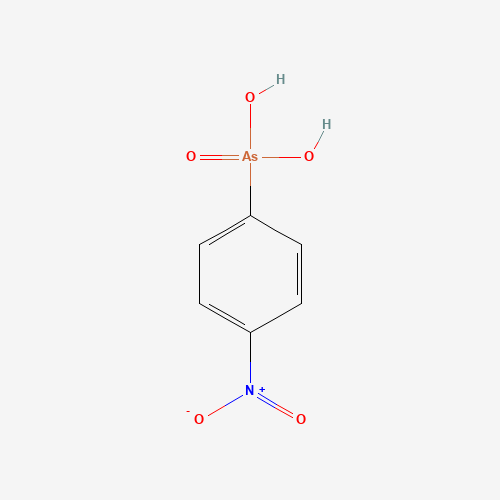
Nitarsone is an organoarsonic acid where the organyl group is 4-nitrophenyl. It has a role as an agrochemical and an antiprotozoal drug. It is an organoarsonic acid and a C-nitro compound. It is functionally related to a phenylarsonic acid.
科学粮草官-词典编辑部,修订于:2026-07-06
Toxicity
ToxicitySymptoms
Initial signs and symptoms of arsenic ingestion include burning lips, throat constriction and dysphagia, followed by excruciating abdominal pain, hemorrhagic gastritis, gastroenteritis, severe nausea, projectile voting, profuse "rice water-like" diarrhea, with hypovolemia that may result in hypotension and an irregular pulse. The sequence of chronic poisoning involves weakness, anorexia, hepatomegaly, jaundice, and gastrointestinal complaints, followed by conjunctivitis, irritation of the throat and respiratory tract. ther effects of chronic exposure include conjunctivitis with irritation and lacrimation; hair, skin and nail changes; hyperkeratosis of feet and hands; and melanosis, with pigment spots in corneal and conjunctival epithelium. Peripheral nervous system symptoms may include...
Treatment
Aggressive decontamination with gastric lavage is recommended if the patient has consumed a potentially life-threatening dose and if the patient is not vomiting (T36).
Effect Level
collection=toxvaldb&kind=^EL$
Health Effects
Hypovolemia from capillary leakage (third-spacing of fluids) is a common, serious, early effect. Muscle cramps, facial edema, bronchitis, dyspnea, chest pain, dehydration, intense thirst, and fluid-electrolyte disturbances are also common following significant exposures. A garlic-like odor of the breath and feces may also occur. After absorption, arsenic may cause multi-organ failure by inhibiting sulfhydryl-containing enzymes. Encephalopathy, with headache, lethargy, mental confusion, hallucinations, emotional lability, memory loss and delirium may occur; seizures, stupor, convulsions, coma, and death may follow within 24 hours of a severe acute exposure. Dysrhythmias (particularly QTc prolongation and torsade de pointes), cardiomyopathy, ARDS, hepatitis, rhabdomyolysis, hemolysis, and...
Exposure Routes
Oral (L2); inhalation (L2); dermal (L2)
Toxicity Summary
Arsenic and its metabolites disrupt ATP production through several mechanisms. At the level of the citric acid cycle, arsenic inhibits pyruvate dehydrogenase and by competing with phosphate it uncouples oxidative phosphorylation, thus inhibiting energy-linked reduction of NAD+, mitochondrial respiration, and ATP synthesis. Hydrogen peroxide production is also increased, which might form reactive oxygen species and oxidative stress. Arsenic's carcinogenicity is influenced by the arsenical binding of tubulin, which results in aneuploidy, polyploidy and mitotic arrests. The binding of other arsenic protein targets may also cause altered DNA repair enzyme activity, altered DNA methylation patterns and cell proliferation. (T1, A17)
Minimum Risk Level
Acute Oral: 0.005 mg/kg/day (L134) Chronic Oral: 0.0003 mg/kg/day (L134) Chronic Inhalation: 0.01 mg/m3 (L134)
Carcinogen Classification
3, not classifiable as to its carcinogenicity to humans. (L135)









