


 一键配货
一键配货
化合物详情
CAS123-19-3
分子式C7H14O
分子量114.19 g/mol g/mol
危化品
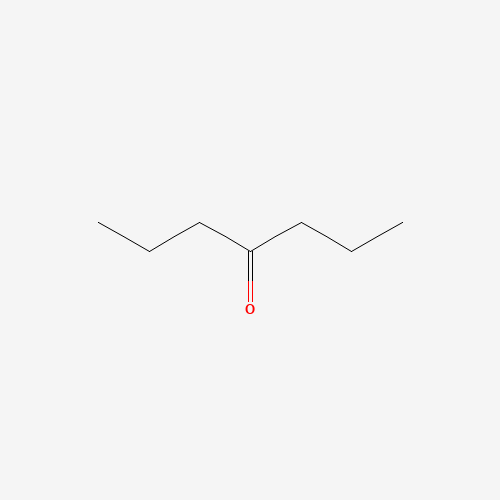
Physical Description | Dipropyl ketone appears as a colorless liquid with a pleasant odor. Insoluble in water and less dense than water. Flash point 120 °F. Toxic by inhalation. A skin irritant. Used to make flavorings and as a solvent.
科学粮草官-词典编辑部,修订于:2026-07-06
Toxicity
ToxicityBody Burden
Dipropyl ketone was detected in 12.4% of 387 samples of expired air collected from 54 individuals in Chicago, IL with a reported geometric mean concentration of 0.074 ng/L(1). Dipropyl ketone was detected in 35 out of 46 composite samples from the US EPA 1982 National Human Adipose Tissue Survey (NHATS) repository. Dipropyl ketone was detected in samples corresponding to all age groups and geographic regions(2). The reported concentration of dipropyl ketone ranged from 27 to 1044 ng/mL (median = 188 ng/mL)in the urine of 51 healthy individuals and from 17 to 978 ng/mL (median = 179 ng/mL) in 92 diabetic patients(3). During a study of the occurrence of volatile organic compounds in human milk samples from five industrial US cities, dipropyl ketone was detected in one milk sample collecte...
Fate Summary
ATMOSPHERIC FATE: According to a model of gas/particle partitioning of semivolatile organic compounds in the atmosphere(1), dipropyl ketone, which has a vapor pressure of 5.2 mm Hg at 20 °C(2), is expected to exist solely as a vapor in the ambient atmosphere. Vapor-phase dipropyl ketone is degraded in the atmosphere by reaction with photochemically-produced hydroxyl radicals(SRC); the half-life for this reaction in air is estimated to be 1.7 days(SRC), calculated from its rate constant of 9.3X10⁻¹² cu cm/molecule-sec at 25 °C(SRC) that was derived using a structure estimation method(3). The maximum UV absorption of dipropyl ketone occurs near 280 nm(4), and the absorption spectrum is expected to extend beyond 290 nm; therefore, this substance may be susceptible to direct photolysis by s...
Soil Adsorption / Mobility
The Koc of dipropyl ketone is estimated as 178(SRC), using a log Kow of 2.04(1) and a regression-derived equation(2). According to a classification scheme(3), this estimated Koc value suggests that dipropyl ketone is expected to have moderate mobility in soil.
Environmental Biodegradation
AEROBIC: Dipropyl ketone, present at 500 mg/L, in a Warburg repirometry flask containing 20 mL activated sludge suspension with a suspended solids concentration of 2,500 mg/L, reached 3.8% of the theoretical oxygen demand after 24 hours(1,2). Additional biodegradation data for dipropyl ketone were not located; however, as a group n-alkyl ketones are reported to be susceptible to microbial degradation(3).
Environmental Bioconcentration
An estimated BCF of 9.7 was calculated in fish for dipropyl ketone(SRC), using a log Kow of 2.04(1) and a regression-derived equation(2). According to a classification scheme(3), this BCF suggests the potential for bioconcentration in aquatic organisms is low(SRC).
Volatilization from Water / Soil
UNREVIEWED | The Henry's Law constant for dipropyl ketone is estimated as 2.4X10⁻⁴ atm-cu m/mole(SRC) derived from its vapor pressure, 5.2 mm Hg at 20 °C(1), and water solubility, 3.19X10+3 mg/L(2). This Henry's Law constant indicates that dipropyl ketone is expected to volatilize from water surfaces(3). Based on this Henry's Law constant, the volatilization half-life from a model river (1 m deep, flowing 1 m/sec, wind velocity of 3 m/sec)(3) is estimated as 3.7 hours(SRC). The volatilization half-life from a model lake (1 m deep, flowing 0.05 m/sec, wind velocity of 0.5 m/sec)(3) is estimated as 5.4 days(SRC). Dipropyl ketone's estimated Henry's Law constant indicates that volatilization from moist soil surfaces may occur(SRC). The potential for volatilization of dipropyl ketone from d...
Environmental Abiotic Degradation
Smog chamber tests were performed to study the reactivity of 4 ppm dipropyl ketone with 2 ppm NO(1). Reported measurements included a maximum time for NO2 production of 150 minutes, a maximum ozone oxidant production of approximately 0.3 ppm, an eye irritation response time of approximately 180 seconds, and formaldehyde production of approximately 0.2 ppm(1). Based on these results, dipropyl ketone was classified as having low to intermediate smog reactivity(1).
Milk Concentrations
ENVIRONMENTAL: During a study of the occurrence of volatile organic compounds in human milk samples from five industrial US cities, dipropyl ketone was detected in one milk sample collected in Jersey City, NJ(1,2).
Effluent Concentrations
One occurrence of dipropyl ketone was observed in chamber air during a study of the emissions of volatile organic compounds from the surface coatings of 44 furniture samples. The concentration was not specified(1).
Artificial Pollution Sources
Dipropyl ketone's production and use as a solvent for nitrocellulose, raw and blown oils, resins, and polymers and in the production of lacquers and flavoring(1) may result in its release to the environment through various waste streams(SRC).
Probable Routes of Human Exposure
Occupational exposure to dipropyl ketone may occur through inhalation and dermal contact with this compound at workplaces where dipropyl ketone is produced or used. Monitoring data indicate that the general population may be exposed to dipropyl ketone via inhalation of ambient air and dermal contact with this compound or other products containing dipropyl ketone. (SRC)
Environmental Fate / Exposure Summary
Dipropyl ketone's production and use as a solvent for nitrocellulose, raw and blown oils, resins, and polymers and in the production of lacquers and flavoring may result in its release to the environment through various waste streams. If released to air, a vapor pressure of 5.2 mm Hg at 20 °C indicates dipropyl ketone will exist solely as a vapor in the atmosphere. Vapor-phase dipropyl ketone will be degraded in the atmosphere by reaction with photochemically-produced hydroxyl radicals; the half-life for this reaction in air is estimated to be 1.7 days. The maximum UV absorption of dipropyl ketone occurs near 280 nm, and the absorption spectrum is expected to extend beyond 290 nm; therefore, this substance may be susceptible to direct photolysis by sunlight. If released to soil, dipropy...
Symptoms
irritation eyes, skin; central nervous system depression, dizziness, drowsiness, decreased breath; In Animals: liver injury; narcosis
Target Organs
Eyes, skin, central nervous system, liver
Toxicity Data
LC50 (rat) = 2,690 ppm/6h
Adverse Effects
Dermatotoxin - Skin burns.
Exposure Routes
inhalation, ingestion, skin and/or eye contact
Non-Human Toxicity Values
LC50 Rats inhalation 2690 ppm/ 6hr
Antidote and Emergency Treatment
Advanced treatment: Consider orotracheal or nasotracheal intubation for airway control in the patient who is unconscious, has severe pulmonary edema, or is in severe respiratory distress. Positive-pressure ventilation techniques with a bag valve mask device may be beneficial. Consider drug therapy for pulmonary edema ... . Consider administering a beta agonist such as albuterol for severe bronchospasm ... . Monitor cardiac rhythm and treat arrhythmias if necessary ... . Start IV administration of D5W /SRP: "To keep open", minimal flow rate/. Use 0.9% saline (NS) or lactated Ringer's (LR) if signs of hypovolemia are present. For hypotension with signs of hypovolemia, administer fluid cautiously. Watch for signs of fluid overload ... . Use proparacaine hydrochloride to assist eye irrigati...









