


 一键配货
一键配货
化合物详情
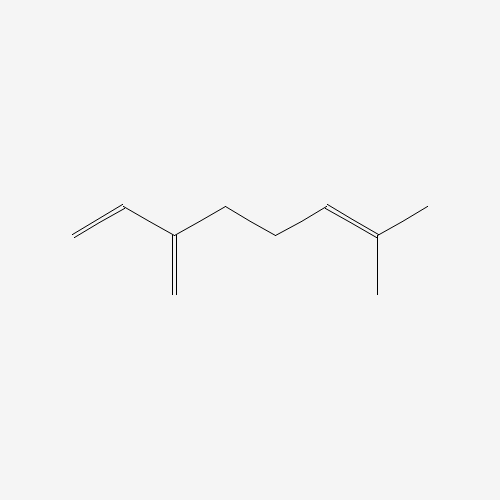
CAS123-35-3
分子式C10H16
分子量136.23 g/mol g/mol
危化品
科学粮草官-词典编辑部,修订于:2026-07-06
Toxicity
ToxicityBody Burden
Myrcene has been detected in pre-diabetic, diabetic and normal subjects in expired air samples, concns not specified(1).
Ecotoxicity Values
USDA APHIS Chemical Effects: collection=usda_chemeffect&query_type=synonym&query='^123-35-3$'
Fate Summary
ATMOSPHERIC FATE: According to a model of gas/particle partitioning of semivolatile organic compounds in the atmosphere(1), myrcene, which has a vapor pressure of 2.09 mm Hg at 25 °C(2), is expected to exist solely as a vapor in the ambient atmosphere. Vapor-phase myrcene is degraded in the atmosphere by reaction with photochemically-produced hydroxyl radicals, ozone and nitrate radicals(SRC); the half-life for the reaction with hydroxyl radicals is estimated to be 1.8 hrs(SRC), calculated from its rate constant of 2.15X10⁻¹⁰ cu cm/molecule-sec at 25 °C(3); the half-life for the reaction with ozone is estimated to be 34 minutes(SRC), calculated from its rate constant of 4.90X10⁻¹⁶ cu cm/molecule-sec(4); the half-life for the reaction with nitrate radicals in nighttime air is estimated t...
Soil Adsorption / Mobility
Using a structure estimation method based on molecular connectivity indices(1), the Koc of myrcene can be estimated to be 1074(SRC). According to a classification scheme(2), this estimated Koc value suggests that myrcene is expected to have low mobility in soil.
Environmental Biodegradation
AEROBIC: Myrcene has been observed to undergo biodegradation in aerated lagoons, rate constant not specified(1). Myrcene, present at 100 mg/L, reached 82-92% of its theoretical BOD in 2 weeks using an activated sludge inoculum at 30 mg/L and the Japanese MITI test(2) which classifies the compound as readily biodegradable. Monoterpene compounds similar in structure to myrcene (limonene, pinene, terpinene, terpinolene) were readily degraded in aerobic batch experiments using forest soil and enriched cultures(3).
Environmental Bioconcentration
An estimated BCF of 334 was calculated in fish for myrcene(SRC), using a log Kow of 4.33(1) and a regression-derived equation(2). According to a classification scheme(3), this BCF suggests the potential for bioconcentration in aquatic organisms is high(SRC), provided the compound is not metabolized by the organism(SRC).
Volatilization from Water / Soil
The Henry's Law constant for myrcene is estimated as 0.0916 atm-cu m/mole(SRC) derived from its vapor pressure, 2.09 mm Hg(1), and water solubility, 4.09 mg/L(2). This Henry's Law constant indicates that myrcene is expected to volatilize rapidly from water surfaces(3). Based on this Henry's Law constant, the volatilization half-life from a model river (1 m deep, flowing 1 m/sec, wind velocity of 3 m/sec)(3) is estimated as 3.4 hours(SRC). The volatilization half-life from a model lake (1 m deep, flowing 0.05 m/sec, wind velocity of 0.5 m/sec)(3) is estimated as 4.6 days(SRC). Myrcene's estimated Henry's Law constant indicates that volatilization from moist soil surfaces may occur(SRC). The potential for volatilization of myrcene from dry soil surfaces may exist based upon a vapor pressu...
Environmental Abiotic Degradation
The rate constant for the vapor-phase reaction of myrcene with photochemically-produced hydroxyl radicals is 2.15X10⁻¹⁰ cu cm/molecule-sec at 25 °C(1). This corresponds to an atmospheric half-life of about 1.8 hrs(SRC) at an atmospheric concentration of 5X10+5 hydroxyl radicals per cu cm(2). The rate constant for the vapor-phase reaction of myrcene with ozone is 4.90X10⁻¹⁶ cu cm/molecule-sec(3). This corresponds to an atmospheric half-life of about 34 minutes at an atmospheric concentration of 7X10+11 molecules/cu cm(4). The rate constant for the vapor-phase reaction of myrcene with nitrate radicals is 1.10X10⁻¹¹ cu cm/molecule-sec(3). This corresponds to an atmospheric half-life of about 4 minutes in nighttime air at an atmospheric concentration of 2.5X10+8 molecules/cu cm, 12-hr night...
Environmental Water Concentrations
SURFACE WATER: Myrcene has been detected in the Schussen River, Germany presumably due to wood processing industries (pulp mill, timber mills, etc.), concentrations not specified(1). Myrcene was detected in water samples taken from Resurrection Bay, Alaska on June 17, 1986 at 0.74 ng/L. Presumably, this was caused from conifer rain forest emissions from south of Port Valdez, Alaska(2).
Food Survey Values
Myrcene has been detected as an emission from apricots, carrots, cotton, Valencia oranges, pistachios, walnuts and whitehorn at 0.1, 0.6, 0.4, 0.5, 0.5, 0.2, and 1.9 ug/g respectively(1). Volatiles from fresh guava fruit pulp obtained by vacuum distillation revealed that myrcene is 0.001 ug/g of pineapple guava. Myrcene has been reportedly found in common guava and in strawberry and yellow guava, concentrations not specified(2). Myrcene comprises 22.41% of volatile hydrocarbons identified in extract of Korean Chamchwi(3). The concentration of myrcene in relation to ethyl acetate, defined as 1, in Idaho Russet Burbank potatoes is 0.08(4). Myrcene has been detected in emissions from the roasting of filberts, thick shelled sweet flavored tree nuts, concentrations not specified(5). Volatile...
Ecotoxicity Excerpts
/PLANTS/ ...The chemical composition and phytotoxicity of the essential oil extracted from leaves of Artemisia scoparia Waldst. et Kit. (red stem wormwood, Asteraceae) /was investigated/. GC/GC-MS analyses revealed 33 chemical constituents representing 99.83% of the oil. The oil, in general, was rich in monoterpenes that constitute 71.6%, with beta-myrcene (29.27%) as the major constituent followed by (+)-limonene (13.3%), (Z)-beta-ocimene (13.37%), and gamma-terpinene (9.51%). The oil and beta-myrcene were evaluated in a dose-response bioassay under laboratory conditions for phytotoxicity against three weeds-Avena fatua, Cyperus rotundus, and Phalaris minor. A significant reduction in germination, seedling growth, and dry matter accumulation was observed in the test weeds. At the lowes...
Plant Concentrations
Myrcene has been detected in emissions from Norway spruce, fir, Scots pine (Pinus sylvestris), and larch trees in the country of Switzerland, concentrations not specified. Highest emission rates take place during the summer month of July(1). Myrcene has been detected in emissions from Scots Pine at 2.3-6.3% of total terpenes(2). Myrcene has been detected in emissions from Siberian pine (P. Sibirica), silver fir (Picea silvestris), common juniper, zeravskar juniper, pencil cedar, evergreen cypress, northern white cedar, Chinese arbor vitae and deciduous moss, concentrations not specified. These plants are characteristic of northern Europe and Asia(2). Myrcene has been detected in emissions from the oak species Quercus ilex L. at Castel Porziano, Rome, Italy on June 1993 at 2.25% of total...
Effluent Concentrations
Myrcene has been detected in Kraft mill waste waters ranging from trace to 160 ppb concentrations(1). Percent composition of myrcene released to air during Kraft processing of softwood Scots pine ranged from 1-1.6% on Feb 22, 1989(2). Percent composition (ug/cu m) of total concentration of myrcene in atmospheric emission plumes from kraft pulp industries, processing Scots pine on June 20, 1989 was 1.2%, 0.9%, and 1.3% at 0 m, 20 m and 40 m heights, respectively(2). Kraft processing plant is located on the Swedish coast, 50 km south of Goteborg(2). Myrcene was detected in the headspace and waste exudate of waste trucks, concentrations not specified(3). Myrcene was detected in 4 of 4 air samples from biodegradable waste and 2 of 7 air samples from mixed waste containing biodegradable and...
Natural Pollution Sources
Myrcene has been detected as a natural gaseous emission from various plant species(1-8). It has also been detected in various fruits and vegetables(9-19). Terpenes (including myrcene) are emitted in large quantities from vegetation into the troposphere(20).
Atmospheric Concentrations
RURAL/REMOTE: Myrcene was detected in air samples from Lost Mt., Marietta, GA taken Aug 9, 1992 at 4:00 PM., concentration not specified(1). Myrcene has been detected in Smokey Mountain air samples at a concentration of 1.76 ppb, presumably from coniferous forests(2).
Artificial Pollution Sources
Myrcene's production and use as an intermediate in the manufacture of terpene alcohols, polymers and resins(1), in the manufacture of perfumes(2), and as flavoring agent in foods(3) may result in its release to the environment through various waste streams(SRC). Myrcene has also been detected in water effluents(4) and air emissions(5) from pulp and timber mill processes.
Sediment/Soil Concentrations
SOIL: Myrcene was detected in soil samples at a depth of 10-15 cm 20 cm away from a 15 year old Picea abics tree, concentration not specified(1).
Probable Routes of Human Exposure
NIOSH (NOES Survey 1981-1983) has statistically estimated that 25,154 workers (12,898 of these are female) are potentially exposed to myrcene in the US(1). Occupational exposure to myrcene may occur through inhalation and dermal contact with this compound at workplaces where myrcene is produced or used(SRC). The general population may be exposed to myrcene via inhalation of ambient air in forests and other natural environments containing plants that emit myrcene(2), ingestion of food(3-13), and dermal contact with other products containing myrcene. Since myrcene is an approved food additive, the greatest potential for exposure lies in the consumption of those foods with myrcene additives.
Environmental Fate / Exposure Summary
Myrcene's production and use as an intermediate in the manufacture of terpene alcohols, polymers and resins, in the manufacture of perfumes, and as flavoring agent in foods may result in its release to the environment through various waste streams. Myrcene is emitted from vegetation in large quantities into the troposphere. It has been detected as a natural gaseous emission from various plant species and in various fruits and vegetables. If released to air, a vapor pressure of 2.09 mm Hg at 25 °C indicates myrcene will exist solely as a vapor in the atmosphere. Vapor-phase myrcene will be degraded in the atmosphere by reaction with photochemically-produced hydroxyl radicals, ozone and nitrate radicals; the half-lives for these reactions in air are estimated to be 1.8 hrs, 34 minutes and...
Symptoms
Sneezing, itching, and increased nasal congestion (A334).
Treatment
Monitor for respiratory distress in case of inhalation exposure. Irrigate exposed eyes with copious amounts of room temperature water for at least 15 minutes. Administer symptomatic treatment as necessary. (T36)
Interactions
The leafy parts of thyme and its essential oil have been used in foods for the flavor, aroma and preservation and also in folk medicines. The aim of the current study was to determine the components of Thymus vulgaris L essential oil and to evaluate the protective effects of this oil against aflatoxin-induce oxidative stress in rats. Thirty six mature male Sprague-Dawley were divided into six treatment groups and treated for 2 weeks as follows: control group; the groups treated orally with low and high doses of T. vulgaris oil (5 and 7.5 mg/kg b.w.); the group fed AFs-contaminated diet (2.5 mg/kg diet) and the groups fed AFs-contaminated diet and treated orally with the oil at the two tested doses. Blood and tissue samples were collected at the end of treatment period for biochemical st...
Toxicity Data
LD50: >5000.00 mg/kg (Oral, Rat) (L1203) LD50: >5000.00 mg/kg (Dermal, Rabbit) (L1203)
Health Effects
Health effects may include dermatitis (A334).
Adverse Effects
IARC Carcinogen - Class 3: Chemicals are not classifiable by the International Agency for Research on Cancer.
Exposure Routes
Dermal; inhalation
Toxicity Summary
Myrcene exhibits tyrosinase inhibitory activities, which plays an important role in neuromelanin formation (A2448).
Human Toxicity Excerpts
/CASE REPORTS/ A 28-YR OLD MAN EMPLOYED AS A BREWERY INSPECTOR IS PRESENTED WITH RESP HYPERSENSITIVITY REACTION TO BETA-MYRCENE COMPONENT OF HUMULUS LUPULUS (HOPS). DERMATITIS, SNEEZING, ITCHING & INCREASED NASAL CONGESTION ARE REPORTED 6 MONTHS PRIOR TO THE PRESENTING SYMPTOM COMPLEX.
Carcinogen Classification
No indication of carcinogenicity to humans (not listed by IARC).
Non-Human Toxicity Values
LD50 Rat oral >5000 mg/kg bw
Antidote and Emergency Treatment
/SRP:/ Advanced treatment: Consider orotracheal or nasotracheal intubation for airway control in the patient who is unconscious, has severe pulmonary edema, or is in severe respiratory distress. Positive-pressure ventilation techniques with a bag valve mask device may be beneficial. Consider drug therapy for pulmonary edema ... . Consider administering a beta agonist such as albuterol for severe bronchospasm ... . Monitor cardiac rhythm and treat arrhythmias as necessary ... . Start IV administration of D5W /SRP: "To keep open", minimal flow rate/. Use 0.9% saline (NS) or lactated Ringer's if signs of hypovolemia are present. For hypotension with signs of hypovolemia, administer fluid cautiously. Watch for signs of fluid overload ... . Treat seizures with diazepam or lorazepam ... . Use...









