


 一键配货
一键配货
化合物详情
CAS123-91-1
分子式C4H8O2
分子量88.11 g/mol
危化品
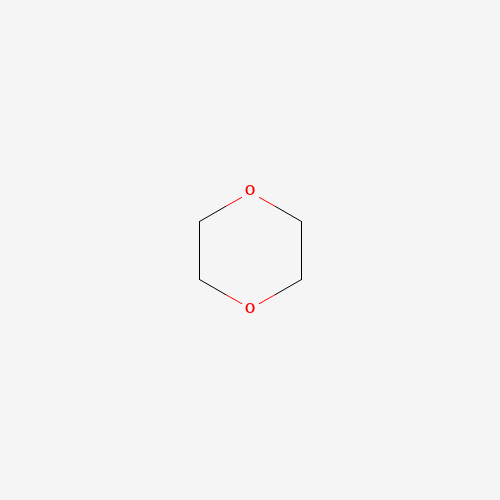
Hazards Summary | 1,4-Dioxane is a clear liquid that easily dissolves in water. It is used primarily as a solvent in the manufacture of chemicals and as a laboratory reagent; 1,4-dioxane also has various other uses that take advantage of its solvent properties. 1,4-Dioxane is a trace contaminant of some chemicals used in cosmetics, detergents, and shampoos. However, manufacturers now reduce 1,4-dioxane from these chemicals to low levels before these chemicals are made into products used in the home.
科学粮草官-词典编辑部,修订于:2026-07-06
Toxicity
ToxicityBody Burden
1,4-Dioxane was detected at mean levels of 0.2 ug/cu m (N = 110) and 0.05 ug/cu m (N = 24) in the exhaled breath of human subjects at two different locations in Los Angeles, CA. 1,4-Dioxane was also detected at a mean level of 0.2 ug/cu m (N = 67) in the exhaled breath of persons in Contra Costa, CA(1).
Fate Summary
ATMOSPHERIC FATE: According to a model of gas/particle partitioning of semivolatile organic compounds in the atmosphere(1), 1,4-dioxane, which has a vapor pressure of 38.1 mm Hg at 25 °C(2), is expected to exist solely as a vapor in the ambient atmosphere. Vapor-phase 1,4-dioxane is degraded in the atmosphere by reaction with photochemically-produced hydroxyl radicals(SRC); the half-life for this reaction in air is estimated to be 33 hours(SRC), calculated from its rate constant of 1.18X10⁻¹¹ cu cm/molecule-sec at 25 °C(3). 1,4-Dioxane is a very weak absorber of UV light(4). Results of aqueous photolysis studies(5) suggest that direct photolysis is not an important environmental fate process(SRC).
Soil Adsorption / Mobility
Using a soil adsorption coefficient (Kd) of 0.17 for 1,4-dioxane measured in a grey clay soil (45% clay, 43% silt, 10% sand) obtained from a landfill site in Ontario, Canada(1), a Koc value of 29 can be derived(SRC) using the soil's organic carbon content of 0.58%(1). A measured Koc value of 17 has also been reported for 1,4-dioxane(2). According to a classification scheme(3), these Koc values suggest that 1,4-dioxane is expected to have very high mobility in soil(SRC).
Environmental Biodegradation
AEROBIC: 1,4-Dioxane, present at 100 mg/L, reached 0% of its theoretical BOD in 2 weeks using an activated sludge inoculum at 30 mg/L in the Japanese MITI test which classified the compound as not readily biodegradable(1). Using OECD Guideline 301F (Ready Biodegradability: Manometric Respirometry Test) with a non-adapted activated sludge inoculum, 1,4-dioxane degraded <10% over a 29-day incubation period at an initial concentration of 100 mg/L(2). Using OECD Guideline 310 (Ready Biodegradability, CO2 in sealed vessels) with a non-adapted activated sludge inoculum, 1,4-dioxane (at 37.1 mg/L) had <5% degradation (via CO2 evolution) over a 60-day incubation period which classified the compound as poorly biodegradable(2). Other screening studies have found 1,4-dioxane to be resistant to bio...
Environmental Bioconcentration
Using OECD Guideline 305C (Bioaccumulation: Test for the Degree of Bioconcentration in Fish) with 1 and 10 ppm concentrations 1,4-dioxane, BCF values of 0.2-0.7 were measured using carp (Cyprinus carpio) which were exposed over a 6-week period(1). According to a classification scheme(2), these BCF values suggest the potential for bioconcentration in aquatic organisms is low(SRC).
Volatilization from Water / Soil
The Henry's Law constant for 1,4-dioxane is 4.8X10⁻⁶ atm-cu m/mole(1). This Henry's Law constant indicates that 1,4-dioxane is expected to volatilize from water surfaces(2). Based on this Henry's Law constant, the volatilization half-life from a model river (1 m deep, flowing 1 m/sec, wind velocity of 3 m/sec)(2) is estimated as 7.3 days(SRC). The volatilization half-life from a model lake (1 m deep, flowing 0.05 m/sec, wind velocity of 0.5 m/sec)(2) is estimated as 56 days(SRC). 1,4-Dioxane's Henry's Law constant indicates that volatilization from moist soil surfaces may occur(SRC). 1,4-Dioxane is expected to volatilize from dry soil surfaces(SRC) based upon a vapor pressure of 38.1 mm Hg(3).
Environmental Abiotic Degradation
The rate constant for the vapor-phase reaction of 1,4-dioxane with photochemically-produced hydroxyl radicals has been experimentally determined as 1.18X10⁻¹¹ cu cm/molecule-sec at 25 °C(1). This corresponds to an atmospheric half-life of about 33 hours at an atmospheric concentration of 5X10+5 hydroxyl radicals per cu cm(2). The major reaction product of the OH-radical initiated oxidation of 1,4-dioxane was found to be ethylene glycol diformate(3). When 1,4-dioxane vapor was mixed with NO at 27 °C and subjected to UV radiation equal to about 2.6 times the intensity of natural sunlight on a summer day in Freeport, TX, 50% of the 1,4-dioxane was degraded after 3.4 hr(4). The rate constant for the vapor-phase reaction of 1,4-dioxane with atmospheric nitrate radicals has been measured as 3...
Environmental Water Concentrations
SURFACE WATER: Raw water collected from an unspecified river in the United Kingdom contained 1,4-dioxane, but no quantitative data were presented(1). 1,4-Dioxane at 1 ug/L was detected in the Chicago Sanitary and Ship Channel in the Lake Michigan basin(2). 1,4-Dioxane was identified, but not quantified, in natural waters of the Kitakyushu area (Japan)(3). Levels of 1,4-dioxane in the range of 0.024-0.69 ug/L, 0.13-0.23 ug/L and 0.42-1.47 ug/L were reported in the Kitakyushu River, Niigata River, and Nagano River, (Japan) respectively(4). Monitoring in the Kanagawa Prefecture, Japan from 1995-1998 detected 1,4-dioxane (detection frequencies only slightly less than 100%) at various rivers sites at ranges of 0.1-16.0 ug/L(5). 1,4-Dioxane was detected at 27 sites in 12 Japanese rivers durin...
Food Survey Values
The level of 1,4-dioxane in various cooked food samples ranged from not detected to 11 ug/kg according to a result of analysis by GC-MS with a detection limit of 2 ug/kg(1). 1,4-Dioxane was qualitatively detected in the volatile compounds of fried chicken(2).
Ecotoxicity Excerpts
/AQUATIC SPECIES/ ... A long-term static renewal test (7 days) with Ceriodaphnia dubia /water flea/ has been carried out. A NOEC of 625 mg/L(nominal) was found in this test.
Effluent Concentrations
1,4-Dioxane was detected at 1 ug/L in effluents from the North Side and Calumet sewage treatment plants on the Lake Michigan basin(1). 1,4-Dioxane was detected at 100-1000 ug/L in 51.4 percent of wastewater samples and at levels exceeding 1000 ug/L in 48.6% of wastewater samples from a factory manufacturing polyester resins in Spain(2). The mean concentration of 1,4-dioxane in these wastewaters was 6400 ug/L with a range of 100-31,400 ug/L(2). 1,4-Dioxane was detected in landfill leachate at ranges of 0.12-0.47 ug/L and 0.91-9.87 ug/L at two landfills located in Japan(3). 1,4-Dioxane was detected in the leachate plume from a municipal landfill in Oklahoma during Nov 1995 to April 1996 sampling(4). 1,4-Dioxane was detected in incineration residues produced by incineration of municipal wa...
Atmospheric Concentrations
INDOOR AIR: 1,4-Dioxane was detected at levels less than 1 ug/cu m in the indoor air of residential dwellings at unspecified locations(1). In the mid-1980s, average levels of 1,4-dioxane in air samples from the United States was about 4 ug/cu m for indoor air(2). 1,4-Dioxane was detected in indoor air samples collected at six museum painting and conservation studios(3).
Artificial Pollution Sources
1,4-Dioxane's production and use as a solvent for cellulose acetate, ethyl cellulose, benzyl cellulose, resins, oils, waxes, spirit-soluble dyes, as well as for many other organic and some inorganic compounds; and its use as a stabilizer in chlorinated solvents(1) may result in its release to the environment through various waste streams(SRC).
Probable Routes of Human Exposure
NIOSH (NOES Survey 1981-1983) has statistically estimated that 429,330 workers (149,697 of these were female) were potentially exposed to 1,4-dioxane in the US(1). Occupational exposure to 1,4-dioxane may occur through inhalation and dermal contact with this compound at workplaces where 1,4-dioxane is produced or used. 1,4-Dioxane was detected in indoor air samples collected at six museum painting and conservation studios(2). Monitoring data indicate that the general population may be exposed to 1,4-dioxane via inhalation of ambient air, ingestion of food and drinking water, and dermal contact with consumer products containing 1,4-dioxane(SRC). Dermal contact may occur with 1,4-dioxane through use of cosmetics and other consumer products(3).
Other Environmental Concentrations
1,4-Dioxane is a trace contaminant of some chemicals used in cosmetics, detergents, and shampoos(1). During 1992-1997, the average concentration of 1,4-dioxane in some cosmetic products reportedly ranged from 14 to 79 mg/kg(1). In a more recent survey reported by the Campaign for Safe Cosmetics, the levels of 1,4-dioxane in cosmetic products were found to be lower (1.5-12 ppm in baby and children's products and 2-23 ppm in adult products) than in the survey done by the FDA in the 1990s(1). Fifteen cleansing products that are sold in the Japanese market, such as shampoo, hand soap, and dishwashing liquid, were analyzed; 1,4-dioxane was detected at a concentration of a few micrograms per gram of the product in nearly all(2).
Environmental Fate / Exposure Summary
1,4-Dioxane's production and use as a solvent for cellulose acetate, ethyl cellulose, benzyl cellulose, resins, oils, waxes, spirit-soluble dyes, as well as for many other organic and some inorganic compounds; and its use as a stabilizer in chlorinated solvents may result in its release to the environment through various waste streams. If released to the atmosphere, a vapor pressure of 38.1 mm Hg at 25 °C indicates that 1,4-dioxane will exist solely in the vapor phase. Vapor-phase 1,4-dioxane is degraded in the atmosphere by reaction with photochemically-produced hydroxyl radicals; the half-life for this reaction in air is estimated to be 33 hours. 1,4-Dioxane is a very weak absorber of UV light though results of aqueous photolysis studies suggest that direct photolysis is not an import...
Symptoms
1,4-Dioxane causes eye and respiratory tract irritation. (L1880)
Cancer Sites
[in animals: lung, liver & nasal cavity tumors]
Interactions
Dioxane ... was investigated as a rat liver altered foci promoter in an initiation/promotion protocol. Animals were initiated with diethylnitrosamine, 30 mg/kg, injected ip 24 hr after 2/3 partial hepatectomy. The chemical under study was administered by gavage once a day, 5 times a week for 7 weeks. Ten days after the last administration the animals were killed. Liver sections were stained for gamma-glutamyl-transpeptidase (GGT) and the number and total volume of gamma-glutamyl-transpeptidase-positive foci was studied. Dioxane (1000 mg/kg) significantly increased the number and total volume of foci ... .
Target Organs
Eyes, skin, respiratory system, liver, kidneys
Toxicity Data
LD50: 1550 mg/kg (Intravenous, Rabbit) (A710) LD50: 4350 mg/kg (Subcutaneous, Mouse) (A710) LD50: >8300 mg/kg (Dermal, Rabbit) (A710) LD50: 2100 mg/kg (Oral, Dog) (A710) LD50: 799 mg/kg (Intraperitoneal, Rat) (T14) LC50: 46 g/m3 over 2 hours (Inhalation, Rat) (A710)
Health Effects
1,4-Dioxane for short period of time cause eye and nose irritation at low levels, and severe kidney and liver effects and possibly death at very high levels. For long-term exposure, studies in animals have shown that breathing vapors of 1,4-dioxane, swallowing liquid 1,4-dioxane or contaminated drinking water, or having skin contact with liquid 1,4-dioxane affects mainly the liver and kidneys. Studies in workers did not indicate whether 1,4-dioxane causes cancer, but animal studies suggest that it is a probable human carcinogen. (L1189)
Adverse Effects
ACGIH Carcinogen - Confirmed Animal.
Exposure Routes
Oral (L1189); inhalation (L1189); dermal (L1189)
Toxicity Summary
Though the mechanism of toxicity of 1,4-dioxane has not yet been elucidated, it is known that its carcinogenic effects are caused by a non-genotoxic mechanism that is most likely cytotoxic in nature. (L1189, L1881)
CDC-ATSDR Toxicological Profile
RAIS Toxicity Values
Oral Slope Factor Reference: IRIS Current
Human Toxicity Values
Lethal concentrations for humans can occur at 470 ppm.
Carcinogen Classification
2B, possibly carcinogenic to humans. (L135)
1 or Cancer Risk Level 1E-06
Mutagen
Evidence for Carcinogenicity
1,4-Dioxane: reasonably anticipated to be a human carcinogen.
Antidote and Emergency Treatment
Advanced treatment: Consider orotracheal or nasotracheal intubation for airway control in the patient who is unconscious, has severe pulmonary edema, or is in severe respiratory distress. Positive-pressure ventilation techniques with a bag valve mask device may be beneficial. Consider drug therapy for pulmonary edema ... . Monitor cardiac rhythm and treat arrhythmias if necessary ... . Start IV administration of D5W /SRP: "To keep open", minimal flow rate. Consider vasopressors if patient is hypotensive with a normal fluid volume. Watch for signs of fluid overload ... .Treat seizures with diazepam or lorazepam ... . Use proparacaine hydrochloride to assist eye irrigation ... . /Dioxane and Related Compounds/
Hazard Quotient Level 3 or Cancer Risk Level 1E-04
Mutagen
USGS Health-Based Screening Levels for Evaluating Water-Quality
Reference: Smith, C.D. and Nowell, L.H., 2024. Health-Based Screening Levels for evaluating water-quality data (3rd ed.). DOI:10.5066/F71C1TWP









