


 一键配货
一键配货
化合物详情
CAS127-18-4
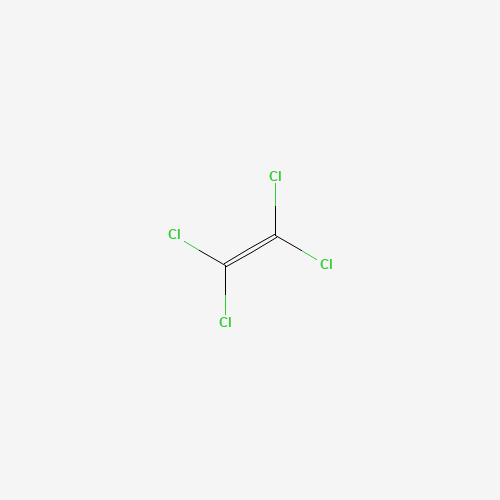
分子式C2Cl4
分子量165.83 g/mol
危化品
Hazards Summary | Tetrachloroethylene is a manufactured chemical that is widely used for dry cleaning of fabrics and for metal-degreasing. It is also used to make other chemicals and is used in some consumer products.
科学粮草官-词典编辑部,修订于:2026-07-06
Toxicity
ToxicityBody Burden
... Tetrachloroethylene ... in the blood and brain (4.4 mg/l00 mL and 36 mg/l00 g, respectively). /fatal/
Fate Summary
ATMOSPHERIC FATE: According to a model of gas/particle partitioning of semivolatile organic compounds in the atmosphere(1), tetrachloroethylene, which has a vapor pressure of 18.5 mm Hg at 25 °C(2), is expected to exist solely as a vapor in the ambient atmosphere. Vapor-phase tetrachloroethylene is degraded in the atmosphere by reaction with photochemically-produced hydroxyl radicals(SRC); the half-life for this reaction in air is estimated to be 96 days(SRC), calculated from its rate constant of 1.67X10⁻¹³ cu cm/molecule-sec at 25 °C(3). Tetrachloroethylene may also be degraded in the atmosphere by reaction with ozone, but the rate of this reaction is too slow to be environmentally important(4). Direct photolysis is not expected to be an important environmental fate process since tetra...
Soil Adsorption / Mobility
The Koc of tetrachloroethylene in a silt loam was measured as 210(1) and in a Lincoln fine sandy soil was 200(2). An average Koc of 237 was calculated for tetrachloroethylene in 6 soils (acid peat, acid humic, calcareous humic, iron-oxide rich subsurface soil, clay subsurface soil and sandy subsurface soil)(3). According to a classification scheme(4) these Koc values suggest that tetrachloroethylene is expected to have moderate mobility in soil(SRC). Using an Oberlausitz lignite (11.1% moisture content, 53.5% carbon, 0.6% nitrogen) and a Pahokee peat soil (10.2% moisture content, 46.1% carbon, 3.3% nitrogen) log Freundlich constants of 2.76 and 2.13 were measured(5).
Environmental Biodegradation
ANAEROBIC: The biodegradation half-life of tetrachloroethylene in anaerobic waters was reported as 98 days(1). The first-order anaerobic biodegradation rate constant of tetrachloroethylene was reported as 0.00042-0.0071/day(2), corresponding to half-lives of 98-1650 days(SRC). Natural attenuation analysis of tetrachloroethylene biodegradation in an anaerobic chlorinated ethene contaminated aquifer in the Bitterfeld/Wolfen area identified potential dechlorinating microorganims including Dehalococcoides, Desulfuromonas, Desulfitobacterium and Deholabacter(3). Using an enrichment culture developed from aquifer solids exposed to alkylbenzenes and chlorinated ethenes at the US Coast Guard Air Station in Traverse City, MI and employing toluene as the sole carbon source, tetrachloroethylene de...
Volatilization from Water / Soil
The Henry's Law constant for tetrachloroethylene is reported as 0.0177 atm-cu m/mole(1). This Henry's Law constant indicates that tetrachloroethylene is expected to volatilize rapidly from water surfaces(2). Based on this Henry's Law constant, the volatilization half-life from a model river (1 m deep, flowing 1 m/sec, wind velocity of 3 m/sec)(2) is estimated as 4 hours(SRC). The volatilization half-life from a model lake (1 m deep, flowing 0.05 m/sec, wind velocity of 0.5 m/sec)(2) is estimated as 5 days(SRC). The volatilization half-life of tetrachloroethylene was reported as 3.2 minutes in laboratory experiments using distilled water(3). Tetrachloroethylene's Henry's Law constant indicates that volatilization from moist soil surfaces may occur(SRC). Tetrachloroethylene is expected to...
Environmental Abiotic Degradation
The rate constant for the vapor-phase reaction of tetrachloroethylene with photochemically-produced hydroxyl radicals is 1.67X10⁻¹³ cu cm/molecule-sec at 25 °C(1). This corresponds to an atmospheric half-life of about 96 days at an atmospheric concentration of 5X10+5 hydroxyl radicals per cu cm(1). Tetrachloroethylene may also be degraded in the atmosphere by reaction with ozone, but the rate of this reaction is too slow to be environmentally important(2). Direct photolysis is not expected to be an important environmental fate process since this compound only absorbs light weakly in the environmental UV spectrum(3). Tetrachloroethylene may undergo indirect photolysis in natural waters when photosensitizers such as humic material are present(4). When tetrachloroethylene in aqueous soluti...
Milk Concentrations
Tetrachloroethylene was detected in 7 of 8 samples of mother's milk collected from 4 urban areas in the US(1). One hour after a visit to a dry cleaning plant, one sample of mother's milk contained 10 ppm tetrachloroethylene; this decreased to 3 ppm after 24 hr(2). Tetrachloroethylene was detected in fresh milk collected from England at 0.3 ug/kg(3).
Plant Concentrations
Tetrachloroethylene was detected in marine algae at concentrations of 13-23 ppb(1).
Effluent Concentrations
Tetrachloroethylene was detected in industrial effluent at concentrations of 1-20 ppb and in the effluent of municipal treatment plants at concentrations of 1-10 ppb(1). Tetrachloroethylene was released from the Baltimore Municipal Treatment Plant at concentrations of 8-129 ppb(2). Maximum concentrations of tetrachloroethylene were reported in wastewater from the following industries: auto and laundry facilities, 93 ppm; aluminum forming facilities, 4 ppm; metal finishing plants; 110 ppm; organic chemical/plastic manufacturing plants, 5.1 ppm (mean value); paint and ink plants, 4.9 ppm(3). Tetrachloroethylene was detected in landfill gas from 7 waste sites in the United Kingdom at 0.1-255 ng/cu m(4). Tetrachloroethylene was detected in the effluent of a municipal waste incinerator in Ge...
ICSC Environmental Data
The substance is toxic to aquatic organisms. The substance may cause long-term effects in the aquatic environment. It is strongly advised not to let the chemical enter into the environment.
Artificial Pollution Sources
Water pollution by tetrachloroethylene leaching from vinyl liners in asbestos-cement water pipelines for water distribution.
Probable Routes of Human Exposure
Tetrachloroethylene concentrations in homes with freshly dry-cleaned clothing stored in the closets may be 2 to 30 times higher than average background levels. In addition, workers in the dry-cleaning industry are a source of exposure to their families. In one study, indoor air concentrations in apartments where dry cleaning workers lived were more than 10-fold higher than in other apartments.
Other Environmental Concentrations
Tetrachloroethylene average sorption parameters (kd 1/hr) were 0.32-0.47 and in carpets and with underlying pads were 0.17-0.25(1). Tetrachloroethylene was detected at a mean of 3.7 ug/cu m in 88% of 73 personal air samples collected May-Sep 1997 from residents of Minnesota(2). In a National Health and Nutrition Examination Survey conducted 1999 to 2000, tetrachloroethylene was detected in 67.7% of 355 personal air samples at 0.12-69.40 ug/cu m (median 0.70 ug/cu m)(3). Breathing zone samples collected in three photocopy centers were reported as 0.5, 0.2 and 0.1 ppb; tetrachloroethylene was not identified as a building background contaminant(4). A positive correlation has been identified between the incidence of asthma symptoms in children and presence of tetrachloroethylene in air of t...
Environmental Fate / Exposure Summary
Tetrachloroethylene's production and use as a dry cleaning agent, chemical intermediate, industrial solvent, in desulfurization of coal, and transformer insulating fluid may result in its release to the environment through various waste streams. Its former use as a pesticide resulted in its direct release to the environment. If released to air, a vapor pressure of 18.5 mm Hg at 25 °C indicates tetrachloroethylene will exist solely as a vapor in the atmosphere. Vapor-phase tetrachloroethylene will be degraded in the atmosphere by reaction with photochemically-produced hydroxyl radicals; the half-life for this reaction in air is estimated to be 96 days. Direct photolysis by sunlight is not expected because tetrachloroethylene only absorbs light weakly in the environmental UV spectrum. If...
Symptoms
Exposure to high concentrations of tetrachloroethylene can cause dizziness, headache, sleepiness, confusion, nausea, difficulty in speaking and walking, unconsciousness, and death. Irritation may result from repeated or extended skin contact with it. (L116)
Treatment
Tetrachloroethylene has no known antidote, and exposure is usually treated symptomatically. (L116)
Cancer Sites
[in animals: liver tumors]
Interactions
There is evidence of hepatotoxic effects caused by Perchloroethylene (PCE), presumably due to reactive metabolic intermediates; lipid peroxidation is under study as a potential mechanism of toxicity. /This study sought/ to verify if PCE levels comparable to those reached in the blood of exposed subjects can cause cell damage and lipid peroxidation. The association of PCE with lipid peroxidation inducing drugs (cyclosporine A, valproic acid and amiodarone) was also tested on rat isolated hepatocytes. AST and LDH release, MTT test and lipid peroxidation assay showed that PCE determines dose-dependent effects on rat isolated hepatocytes. The toxic potential resulting from /the/ data would be valproic acid < cyclosporine A < amiodarone. While valproic acid and cyclosporine caused a mild tox...
Target Organs
Eyes, skin, respiratory system, liver, kidneys, central nervous system
Toxicity Data
LD50: 3835 mg/kg (Oral, Rat) (L116) LD50: 4678 mg/kg (Intraperitoneal, Rat) (T18)
Health Effects
Tetrachloroethylene is a central nervous system depressant. It is also known to cause liver and kidney damage, and is a probably carcinogen. (L116)
Adverse Effects
ACGIH Carcinogen - Confirmed Animal.
Exposure Routes
Oral (L116); inhalation (L116); dermal (L116)
Toxicity Summary
Tetrachloroethylene is believed to affect the central nervous system by altering the fatty acid pattern of brain phospholipids and amino acids, or being incorporated into brain membranes, which may alter neural conduction velocity. Tetrachloroethylene's liver toxicity is caused mainly by its metabolite, trichloroacetic acid (TCA), which induces hepatocellular peroxisomes, causing DNA damage and leading to liver cancer. It is also thought to interfere specifically with energy-dependent hepatic transport functions by inhibiting cell membrane ATPases and decreasing hepatocyte ATP levels. (L116, A63)
CDC-ATSDR Toxicological Profile
Minimum Risk Level
Acute Inhalation: 2 ppm (L134) Intermediate Inhalation: 0.1 ppm (L134) Acute Oral: 0.2 mg/kg/day (L134)
Average Daily Intake
The AVDI of tetrachloroethylene measured in 8 urban areas of Japan was reported as 21 ug (inhalation) and 0.84 ug (ingestion)(1).
RAIS Toxicity Values
Oral Slope Factor Reference: IRIS Current
Acceptable Daily Intakes
Suggested No-Adverse-Response Level (SNARL): In light of the lack of definitive information regarding the quantity of tetrachloroethylene that must be ingested to depress psychophysiological function, it seems appropriate that calculations for a SNARL be based upon quantities of the chemical that are required to produce tissue injury. ... the 0.3 mL/kg (0.49 g/kg) dose appears to be a reasonable "minimum toxic dose" from which to calculate a 24-hr SNARL for contamination of drinking water, assuming that the sole source of tetrachloroethylene during this period will be from 2 L/day of drinking water consumed by a 70 kg human. A safety factor of 100 is applied: 490 mg/kg times 70 kg/100 times 2 L= 172 mg/L. The above considerations ignore the possibility that tetrachloroethylene may be ca...
Carcinogen Classification
2A, probably carcinogenic to humans. (L135)
Populations at Special Risk
Lifestyle factors and chronic pathologic states are important contributors to interindividual variability in susceptibility to xenobiotic-induced toxicity. Nonalcoholic fatty liver disease (NAFLD) is an increasingly prevalent condition that can dramatically affect chemical metabolism. We examined the effect of NAFLD on toxicokinetics of tetrachloroethylene (PERC), a ubiquitous environmental contaminant that requires metabolic activation to induce adverse health effects. Mice (C57Bl/6J, male) were fed a low-fat diet (LFD), high-fat diet (HFD), or methionine/folate/choline-deficient diet (MCD) to model a healthy liver, steatosis, or nonalcoholic steatohepatitis (NASH), respectively. After 8 weeks, mice were orally administered a single dose of PERC (300 mg/kg) or vehicle (aqueous Alkamuls...
1 or Cancer Risk Level 1E-06
Soil Saturation Concentration (mg/kg): 1.66e+02
Evidence for Carcinogenicity
Following EPA (2005a) Guidelines for Carcinogen Risk Assessment, tetrachloroethylene is "likely to be carcinogenic in humans by all routes of exposure." This characterization is based on suggestive evidence of carcinogenicity in epidemiologic studies and conclusive evidence that the administration of tetrachloroethylene, either by ingestion or by inhalation to sexually mature rats and mice, increases tumor incidence.
Antidote and Emergency Treatment
Advanced treatment: Consider orotracheal or nasotracheal intubation for airway control in the patient who is unconscious, has severe pulmonary edema, or is in severe respiratory distress. Positive-pressure ventilation techniques with a bag-valve-mask device may be beneficial. Consider drug therapy for pulmonary edema ... . Monitor cardiac rhythm and treat arrhythmias if necessary ... . Start IV administration of D5W /SRP: "To keep open", minimal flow rate/. Use 0.9% saline (NS) or lactated Ringer's (LR) if signs of hypovolemia are present. For hypotension with signs of hypovolemia, administer fluid cautiously. Consider vasopressors if patient is hypotensive with a normal fluid volume. Watch for signs of myocardial irritability and fluid overload ... . Treat seizures with diazepam (Valiu...
Effects During Pregnancy and Lactation
If you have specific concerns regarding your work site discuss them with your healthcare provider or call MotherToBaby. In addition, you or your employer could contact an industrial hygienist (https://www.aiha.org/about-ih/Pages/Find-an-Industrial-Hygienist.aspx) to have your work site evaluated for ways to make your work site as safe as possible. Small businesses can also contact OSHA's on-site consultation services to help determine whether there are hazards at their worksite: 1-800-321-OSHA (6742).
Hazard Quotient Level 3 or Cancer Risk Level 1E-04
Soil Saturation Concentration (mg/kg): 1.66e+02
USGS Health-Based Screening Levels for Evaluating Water-Quality
Reference: Smith, C.D. and Nowell, L.H., 2024. Health-Based Screening Levels for evaluating water-quality data (3rd ed.). DOI:10.5066/F71C1TWP









