


 一键配货
一键配货
化合物详情
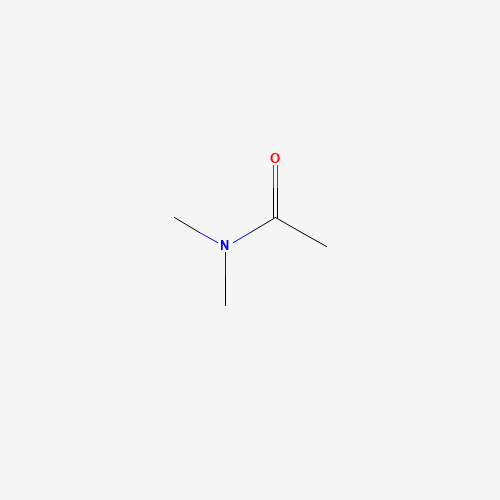
CAS127-19-5
分子式C4H9NO
分子量87.12 g/mol g/mol
危化品
N,N-Dimethylacetamide can cause cancer according to California Labor Code. It can cause developmental toxicity and male reproductive toxicity according to an independent committee of scientific and health experts.
科学粮草官-词典编辑部,修订于:2026-07-06
Toxicity
ToxicityBody Burden
N,N-dimethylacetamide was qualitatively found in 8 of 12 breath samples of subjects monitored in Bayonne and Elizabeth, NJ, and Research Triangle Park, NC, 1980(1).
Ecotoxicity Values
LC50 Pimephales promelas (fathead minnow) 1.50 g/l/96 hr (confidence limit 1.21- 1.86 g/l), flow-through bioassay with measured concentrations, 23.1 °C, dissolved oxygen 6.6 mg/l, hardness 45.0 mg/l calcium carbonate, alkalinity 43.5 mg/l calcium carbonate, and pH 7.7.
Fate Summary
ATMOSPHERIC FATE: According to a model of gas/particle partitioning of semivolatile organic compounds in the atmosphere(1), N,N-dimethylacetamide, which has a vapor pressure of 2 mm Hg at 25 °C(2), is expected to exist solely as a vapor in the ambient atmosphere(SRC). Vapor-phase N,N-dimethylacetamide is degraded in the atmosphere by reaction with photochemically-produced hydroxyl radicals(SRC); the half-life for this reaction in air is 28 hours(SRC), calculated from its rate constant of 1.36X10⁻¹¹ cu cm/molecule-sec at 25 °C(3).
Soil Adsorption / Mobility
The Koc of N,N-dimethylacetamide is estimated as 9(SRC), using a measured log Kow of -0.77(1) and a regression-derived equation(2). According to a classification scheme(3), this estimated Koc value suggests that N,N-dimethylacetamide is expected to have very high mobility in soil(SRC).
Environmental Biodegradation
AEROBIC: N,N-Dimethylacetamide, present at 100 mg/l reached 28% of its theoretical BOD in 4 weeks using an activated sludge inoculum at 30 mg/l and the Japanese MITI test(1). N,N-Dimethylacetamide, present at 30 mg/l, reached 80% of its theoretical BOD in 4 weeks using an activated sludge inoculum at 100 mg/l and the Japanese MITI test(1). In other studies, N,N-dimethylacetamide, present at 400 mg/l, reached 96% of its theoretical TOC in 5 days using industrial activated sludge(2). These results from laboratory studies suggest that N,N-dimethylacetamide will biodegrade in the environment(SRC).
Environmental Bioconcentration
An estimated BCF of 3 was calculated for N,N-dimethylacetamide(SRC), using a log Kow of -0.77(1) and a regression-derived equation(2). According to a classification scheme(3), this BCF suggests the potential for bioconcentration in aquatic organisms is low(SRC).
Volatilization from Water / Soil
The Henry's Law constant for N,N-dimethylacetamide is 1.31X10⁻⁸ atm-cu m/mole(1). This Henry's Law constant indicates that N,N-dimethylacetamide is expected to be essentially nonvolatile from water surfaces(2). The potential for volatilization of N,N-dimethylacetamide from dry soil surfaces may exist(SRC) based upon a vapor pressure of 2 mm Hg(3).
Environmental Abiotic Degradation
The rate constant for the vapor-phase reaction of N,N-dimethylacetamide with photochemically-produced hydroxyl radicals is 1.36X10⁻¹¹ cu cm/molecule-sec at 25 °C(1). This corresponds to an atmospheric half-life of about 28 hours at an atmospheric concentration of 5X10+5 hydroxyl radicals per cu cm(2). N,N-Dimethylacetamide is expected to undergo very slow hydrolysis in the environment that increases somewhat in the presence of acids or bases(3). N,N-Dimethylacetamide is not expected to directly photolyze due to the lack of absorption in the environmental UV spectrum (>290 nm)(SRC).
Environmental Water Concentrations
N,N-Dimethylacetamide was qualitatively detected in samples taken from a sedimentation tank at the Werdhozl sewage treatment plant, Zurich, Switzerland, date not provided(1).
Atmospheric Concentrations
SOURCE DOMINATED: N,N-Dimethylacetamide was detected in 6 of 6 air samples in 1982 within a mile radius of a hazardous liquid waste impoundment, location not given, at concns ranging from 9.6 ng/cu m to 11 ng/cu m(1).
Artificial Pollution Sources
N,N-Dimethylacetamide's production and use as a solvent, chemical reaction medium, and catalyst(1-3) may result in its release to the environment through various waste streams(SRC).
Probable Routes of Human Exposure
NIOSH (NOES Survey 1981-1983) has statistically estimated that 28,943 workers (15,028 of these are female) are potentially exposed to N,N-dimethylacetamide in the US(1). Occupational exposure to N,N-dimethylacetamide may occur through inhalation and dermal contact with this compound at workplaces where N,N-dimethylacetamide is produced or used(SRC).
Other Environmental Concentrations
The 96 hour specific mass emission of N,N-dimethylacetamide from cushions in the presence and absence of a carpet was 65 mg/sq m and 90 mg/sq m, respectively(1).
Environmental Fate / Exposure Summary
N,N-Dimethylacetamide's production and use as a solvent, chemical reaction medium, and catalyst may result in its release to the environment through various waste streams. If released to air, a vapor pressure of 2 mm Hg at 25 °C indicates N,N-dimethylacetamide will exist solely as a vapor in the ambient atmosphere. Vapor-phase N,N-dimethylacetamide will be degraded in the atmosphere by reaction with photochemically-produced hydroxyl radicals; the half-life for this reaction in air is 28 hours. If released to soil, N,N-dimethylacetamide is expected to have very high mobility based upon an estimated Koc of 9. Volatilization from moist soil surfaces is not expected to be an important fate process based upon a Henry's Law constant of 1.31X10⁻⁸ atm-cu m/mole. N,N- Dimethylacetamide may volat...
Symptoms
irritation skin; jaundice, liver damage; depression, drowsiness, hallucinations, delusions
Interactions
PCC4azal embryonal carcinoma tumors were grown in strain 129 mice by sc transplantation. When palpable, the tumors were treated with a combination of retinoic acid and dimethylacetamide. In vitro, this embryonal carcinoma cell line shows minimal spontaneous differentiation and is exquistely sensitive to retinoic acid and/or dimethylacetamide induction of differentiation. Ten daily 20 ul intratumor injections of a solution of 10 mg retinoic acid per ml of dimethylacetamide resulted in nearly complete induction of morphological differentiation mainly into neuropithelial and glandular derivatives. Control tumors showed minor spontaneous differentiation. Differentiation was associated with decreased tumor growth rate, decreased mitotic index, decreased extent of necrosis, and increased surv...
Target Organs
Skin, liver, central nervous system
Toxicity Data
LC50 (rat) = 2,475 ppm/1H
Adverse Effects
ACGIH Carcinogen - Confirmed Animal.
Exposure Routes
inhalation, skin absorption, ingestion, skin and/or eye contact
Human Toxicity Values
The concn considered to be an immediate danger to life and health is 400 ppm.
Carcinogen Classification
IARC Monographs: Volume 123: (2020) Some Nitrobenzenes and Other Industrial Chemicals
Populations at Special Risk
... Women of child bearing age should /be protected from exposure/ ... where /N,N-dimethylacetamide/ or its solutions are present.
Antidote and Emergency Treatment
Skin exposures should be followed by prompt water flushing. Eye exposure should be followed by immediate saline irrigation & an ophthalmology review. Oral ingestions of DMAC should be treated symptomatically & supportively in a hospital. Liver function tests should be obtained periodically as indicated.









