


 一键配货
一键配货
化合物详情
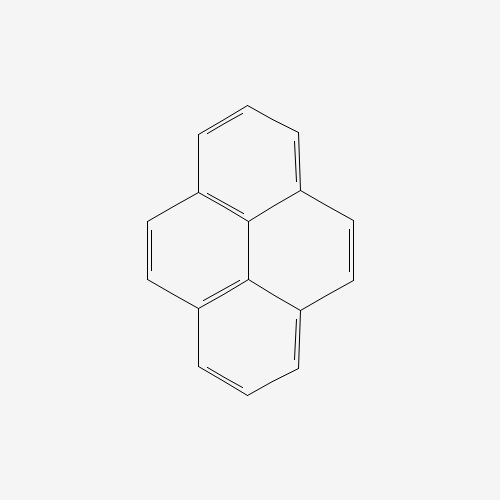
CAS129-00-0
分子式C16H10
分子量202.25 g/mol g/mol
危化品
Physical Description | Pyrene is a colorless solid, solid and solutions have a slight blue fluorescence. Used in biochemical research. (EPA, 1998)
科学粮草官-词典编辑部,修订于:2026-07-06
Toxicity
ToxicityBody Burden
Adipose tissue collected from Korean women during 2007/2008 contained a mean pyrene conentration of 2.1 ng/g lipid wt (98% detection frequency, range of <1.0-5.1 ng/g)(1). Blood plasma collected from 51 healthy females and 60 healthy males in Hong Kong during 2008 contained mean pyrene concentrations (ng/g lipid) of 184 (range 99-305) in females and 212 (range 75.8-312) in males(2). In an analysis of 33 human placenta samples collected from non-smoking women in Beijing, China during 2005-2006, pyrene was detected at mean, median, minimum and maximum concentrations of 2.71, 2.61, not-detected and 5.42 ng/g fresh weight, respectively(3). In an analysis of 7 human umbilical blood samples collected from non-smoking women in Beijing, China during 2005-2006, pyrene was detected at mean, media...
Fate Summary
ATMOSPHERIC FATE: According to a model of gas/particle partitioning of semivolatile organic compounds in the atmosphere(1), pyrene, which has a vapor pressure of 4.5X10⁻⁶ mm Hg at 25 °C(2), will exist in both the vapor and particulate phases in the ambient atmosphere. Pyrene has been detected in ambient air samples in both vapor and particulate phases(3). Vapor-phase pyrene is degraded in the atmosphere by reaction with photochemically-produced hydroxyl radicals(SRC); the half-life for this reaction in air is estimated to be 7.7 hours(SRC), calculated from its rate constant of 5X10-11 cu cm/molecule-sec at 25 °C(4). The atmospheric lifetime of vapor-phase pyrene due to reaction with nitrate radicals has been calculated as approximately 30 days(5). Particulate-phase pyrene may be removed...
Soil Adsorption / Mobility
Log Koc values were obtained in natural materials (%C, % H, % N, %O); 5.70 in cuticle (60.7, 8.6, 1.0, 29.7), 4.69 in humic acid (50.1, 4.5, 3.7, 41.6), 5.50 in humin (47.3, 6.6, 3.7, 42.4), 5.15 in degraded lignin (55.4, 5.3, 0.1, 39.2), 5.05 in lignite (59.8, 4.4, 0.0, 35.8) and 4.94 in peat (47.5, 5.3, 2.8, 44.5)(1). Reported log Koc values of 4.83(2) and 5.13(3) were obtained from HPLC retention factors using an immobilized humic acid packing material. Kd values for pyrene in sediment and deposit-feeder fecal pellets were 0.0023 and 0.0024/day(4). Log Koc values for pyrene in traffic soot, oil soot, wood soot, coal soot, coal, charcoal and diesel soot were reported as 6.79, 6.95, 6.09, 5.71, 6.95, 6.40 and 6.35(5).
Environmental Bioconcentration
BCF (bioconcentration factor) Prionospio cirrifera and Spiochaetpoterus costarum (polychaete worms) = 5.2 /ratio of polychaeta dry wt to sediment dry wt/ BCF (bioconcentration factor) Capitella capitata (polychaete worm) = 13.3 /ratio of polychaeta dry wt to sediment dry wt/
Volatilization from Water / Soil
The Henry's Law constant for pyrene is 1.19X10⁻⁵ atm-cu m/mole at 25 °C(1). This Henry's Law constant indicates that pyrene is expected to volatilize from water surfaces(2). Based on this Henry's Law constant, the volatilization half-life from a model river (1 m deep, flowing 1 m/sec, wind velocity of 3 m/sec)(2) is estimated as 4.5 days(SRC). The volatilization half-life from a model lake (1 m deep, flowing 0.05 m/sec, wind velocity of 0.5 m/sec)(2) is estimated as 37 days(SRC). Pyrene's Henry's Law constant indicates that volatilization from moist soil surfaces may occur(SRC). However, volatilization from water surfaces is expected to be attenuated by adsorption to suspended solids and sediment in the water column. The estimated volatilization half-life from a model pond is 29 years i...
Environmental Abiotic Degradation
Direct photolysis is expected to be an important environmental fate process for pyrene(SRC). Pyrene absorbs strongly at wavelengths >290 nm(1,2) and, therefore, is expected to be susceptible to direct photolysis by sunlight(SRC). The photolytic half-life of pyrene adsorbed to silica, alumina and fly ash substrates were measured as 21, 31 and 46 hours, respectively, following irradiation with a 450 watt mercury lamp(3). The irradiation of pyrene adsorbed to 16 different substrates with a 450 watt mercury lamp yielded photolytic half-lives ranging from 22.5 hours to 1,000 hours(4). Approximately 6% photolytic degradation occurred when pyrene was adsorbed to a fly ash substrate and exposed to natural sunlight for 5 hours(5). Approximately 40% photodegradation was observed when a solution o...
Environmental Water Concentrations
RAIN/FOG/SNOW: The avearge concentration of pyrene for 7 rainfalls in Portland, OR in 1984 was reported as 4.1 ng/L(1). Concentrations of pyrene in ice samples from Greenland in 1989 and 1991 were in the range of 111-595 pg/kg(2). The average concentration of pyrene measured in the fog of Zurich, Switzerland was 2.5 ng/mL, with concns ranging from 0.02 to 7.1 ng/mL(3). Pyrene has been detected in rainfall at concentrations of 5.8-27.8 parts per trillion at undisclosed locations(4). Pyrene was not detected in rain water samples taken April through Dec 1995 but was detected at 10 ng/L in samples taken April through Dec 1996 from Ismailia, Egypt(5). Wet precipitation samples taken Oct 1981 to Aug 2001 from Kejimkumik, Nova Scotia had a median concentration of pyrene of 0.8 ng/L with 53.6%...
Food Survey Values
Pyrene was detected in smoked ham (0.2-11.2 ppb), pork roll (2.5 ppb), frankfurters (3.8 ppb), gouda cheese (2.6 ppb), hot sausage (1.5 ppb), barbecued beef (3.2 ppb), mutton (8 ppb), salami (5.2 ppb), mortadella (15 ppb), heavily smoked bacon (27 ppb), and heavily smoked ham (35-161 ppb)(1). Pyrene was detected in milled wheat and cereals at concentrations of 1.5-28.0 ppb and 2.2-21.0 ppb respectively(2). Pyrene was detected in freeze dried carrots at a concentration of 0.82 ug/kg(3). Pyrene was detected in wheat flour (5.5 ug/kg), rye flour (2.6 ug/kg), rolled oats (5.4 ug/kg), milled oats (1.6 ug/kg), milled wheat (1.6 ug/kg) and bran (47 ug/kg)(4). Pyrene was detected in beet greens (0.692 ug/kg), lettuce (0.433 ug/kg), tomatoes (0.395 ug/kg), potatoes (0.417 ug/kg), apples (3.461 u...
Milk Concentrations
ENVIRONMENTAL: Pyrene was detected in dried milk at a concentration of 2.1 ppb(1). Pyrene was detected at an average concentration of 0.04 ppb in UK milk products(2). Pyrene was detected in milk at 14 farms in samples tested March 2000 at concentrations of 1.8-3.7 ng/g milk fat(3). In an analysis of 21 human milk samples collected from non-smoking women in Beijing, China during 2005-2006, pyrene was detected at mean, median, minimum and maximum concentrations of 0.97, 0.861, 0.232 and 4.71 ng/g fresh weight, respectively(4).
Plant Concentrations
Pyrene was detected in poison oak leaves and little bluestem leaves at concentrations of 40 ppb and 30 ppb respectively(1). Pyrene was identified, not quantified in the leaves of the Bay Evergreen tree(2). Pyrene was detected in pine needles in England at concentrations of less than 3 ng/g to 233 ng/g(3). Pyrene was detected in Chinese cabbage, corn and millet at not detected to 1.04, 1.2-2.78 and 3.78 ug/kg respectively, in the city of Da Tong, China(4). Pyrene was detected in spruce needles at 3.7-18 ng/g dry weight in samples taken 1991 to 1994 in the forest of Gardsjon, Sweden(5). Spruce needles (white, black, Sitka), tested in 35 eastern Alaska sites, contained pyrene at 2.3-38.9 ng/g dry weight(6).
Animal Concentrations
Pyrene was detected in sea lions off the coast of Argentina at average concentrations of 156.6 and 23.06 ng/g (skin), 82.93 and 107.98 ng/g (blood samples) and 14.2 and 11.33 ng/g (liver)(1). Pyrene was detected in blubber from seven sperm whales at 1.5-2.0 ng/g dry weight(2). Pyrene was measured in the eggs of birds in the Selenga river estuary of Lake Baikal region, Russia; (species, concentration ug/kg dry weight) mallard (Anas platyrhynchos), 3218; pintail (Anas acuta), 90.0; shoveler (Anas clypeata), 89.4; tufted duck (Aythya fuligula), 985; pochard (Aythya ferina), 51.0; goose (Anser anser), 106.8; domestic fowl (Gallus gallus), 81.7 and 21.3; heron (Ardea cinerea), 55.0; herring gull (Larus argentatus), 19.0; common gull (Larus canus), 170.8; common tern(Sterna hirundo), 446.6; b...
Effluent Concentrations
Pyrene was detected in the emissions of automobiles in Sweden at an average concentration of 35.1 ng/cu m (diesel) and 19.2 ng/cu m (non-diesel)(1). Particulate-phase pyrene was detected in automobile emissions in California at a concentration of 1.85 ug/kg(2). Average emission rates of pyrene for diesel powered automobiles in Sweden were measured as 4.6 ug/km (particulate-phase) and 17 ug/km (vapor-phase), while the average emissions for unleaded gasoline powered automobiles were 11 ug/km (particulate-phase) and 2.1 ug/km (vapor-phase)(3). The emission rate of pyrene from a commercially manufactured boiler was measured in the range of 0.0 to 0.148 lb/1X10+12 BTU and was dependent upon the type of fuel that powered the boiler(4). Particulate-phase pyrene was detected in the effluent of...
ICSC Environmental Data
Bioaccumulation of this chemical may occur in crustacea, fish, milk, algae and molluscs. It is strongly advised not to let the chemical enter into the environment.
Natural Pollution Sources
/Found in the following natural sources:/ Kuwait Crude oil, 4.5 ppm; South Louisiana crude oil, 3.5 ppm
Fish/Seafood Concentrations
Pyrene was detected in lobsters obtained from the coast of Australia at concentrations ranging from 10 to 18,500 ug/kg(1). Commercial lobsters from Canada contained pyrene at concentrations of 17.5 and 537 ug/kg(2). Pyrene was not detected in Donax truaulus but found at 141.02 ng/g wet weight in Peneaus japonicus in samples taken from Abu Qir Bay, Egyptian Mediterranean Sea, Jan to Oct 2004(3). Marine copepods from Qatar contained pyrene at 19.91, 8.46, 3.06 and not detected in the winter of 1998 and at 16.66, 4.31, 4.17 and 0.60 in the summer of 1998 from samples taken from Messaieed, Doha Harbor, Ras Laffan and the western coast, respectively(4). Pyrene was found in coral reef skeleton (Acropora sp) at 20 sites in the Egyptian Red Sea at not detected to 147 ng/g in samples taken April...
Artificial Pollution Sources
Pyrene's production and use as a starting material in the production of optical brighteners and dyes(1), in biochemical research(2) and as a chemical intermediate(3) may result in its release to the environment through various waste streams(SRC). It is a member of a group of chemicals called polycyclic aromatic hydrocarbons (PAHs). Pyrene is a ubiquitous product of incomplete combustion, occurring in exhaust from motor vehicles, emissions from cigarette smoke, coal-, oil-, and wood-burning stoves and furnaces(3,4) which will result in its direct release to the environment(SRC).
Sediment/Soil Concentrations
SOIL: Pyrene was measured in the soil at an urban roadside in Australia at a concentration of 214 ng/g(1). Pyrene was detected in the soil of UK sites at Birmingham (254 ug/kg), Brishane (214 ug/kg), Wales (63 ug/kg) and Herts(131 ug/kg)(2). Pyrene was identified, not quantified in soil samples from German forests(3). The average concentration of pyrene detected in soil samples from 3 northeastern US cities was 2.4 mg/kg(4). Pyrene was detected in top soil at 17.0 ug/g but not detected at 50 or 100 cm depth in samples taken in Ismailia, Egypt(5). Pyrene was detected in contaminated soil from a gas works, industrial site with coal tar residue and a railroad sleeper preservation plant at concentrations of 53.6, 17.6 and 105.6 mg/kg, respectively(6). Contaminate sites in Antarctica had mea...
Probable Routes of Human Exposure
Pyrene was detected in 100% of the personal air samples in Minnesota Children's Pesticide Exposure Study at a mean concentration of 2.1 ng/cu m (102 children, ages 3-12)(1).
Other Environmental Concentrations
Pyrene was detected in unburned paraffin and bees wax at <0.002 and <0.001 ng/g wax and in burned paraffin and bees wax at <0.02 and <0.02 mg/g organic compound(1). Monitoring conducted during Jan-Mar 2012 in the Athabasca Oil Sands Region, Canada determined an average pyrene atmospheric deposition rate of 0.016 ug/sq m/day(2). Five types of salmon feed from the US and Canada contained 4.08 ng/g of pyrene(3). Pyrene was detected in 19% of the surface dust samples in Minnesota Children's Pesticide Exposure Study at a mean concentration of 0.1 ng/sq cm (102 children, ages 3-12)(4). Pyrene was detected in gasoline at 1.5-1.7 mg/kg, in bitumen at 0.17-0.80 ppm, in coal tar at 19,000-46,000 mg/L, in wood preservative sludge at 24,000 mg/L of raw sludge, in fresh motor oil at 0.29 mg/L and in...
Environmental Fate / Exposure Summary
Pyrene's production and use as a starting material in the production of optical brighteners and dyes, in biochemical research and as a chemical intermediate may result in its release to the environment through various waste streams. It is a member of a group of chemicals called polycyclic aromatic hydrocarbons (PAHs). Pyrene is a ubiquitous product of incomplete combustion, occurring in exhaust from motor vehicles, emissions from cigarette smoke, coal-, oil-, and wood-burning stoves and furnaces which will result in its direct release to the environment. Pyrene occurs in fossil fuels and coal tar. If released to air, a vapor pressure of 4.5X10⁻⁶ mm Hg at 25 °C indicates pyrene will exist in both the vapor and particulate phases in the atmosphere. Vapor-phase pyrene will be degraded in t...
Symptoms
Acute exposure to PAHs causes irritation and inflammation of the skin and lung tissue. (A10)
Treatment
There is no know antidote for PAHs. Exposure is usually handled with symptomatic treatment. (L10)
Target Organs
Urinary
Toxicity Data
LD50: 2700 mg/kg (Oral, Rat) (L908)
Health Effects
PAHs are carcinogens and have been associated with the increased risk of skin, respiratory tract, bladder, stomach, and kidney cancers. They may also cause reproductive effects and depress the immune system. (L10)
Adverse Effects
Dermatotoxin - PICD (photoirritant contact dermatitis).
Exposure Routes
Oral (L10); inhalation (L10)
Toxicity Summary
The ability of PAH's to bind to blood proteins such as albumin allows them to be transported throughout the body. Many PAH's induce the expression of cytochrome P450 enzymes, especially CYP1A1, CYP1A2, and CYP1B1, by binding to the aryl hydrocarbon receptor or glycine N-methyltransferase protein. These enzymes metabolize PAH's into their toxic intermediates. The reactive metabolites of PAHs (epoxide intermediates, dihydrodiols, phenols, quinones, and their various combinations) covalently bind to DNA and other cellular macromolecules, initiating mutagenesis and carcinogenesis. (L10, L23, A27, A32)
Average Daily Intake
The average daily intake of pyrene for women in Japan has been estimated as 0.98 ug/day(1). Estimates of PAH intake (including pyrene) from food vary widely, ranging from a few nanograms to a few micrograms per person per day(2).
RAIS Toxicity Values
Oral Subchronic Chronic Reference Dose Reference: PPRTV Current
Human Toxicity Excerpts
/OTHER TOXICITY INFORMATION/ To survey changes and activities in the polycyclic aromatic hydrocarbon (PAH)-metabolizing enzymes implicated in lung cancer susceptibility studies, ... enzyme induction by 2-5-ring-sized 'biomarker' PAHs in rat liver and lung and the activities in five human lung specimens /were investigated/. Naphthalene, phenanthrene, pyrene, chrysene, and benzo[a]pyrene (BaP) were administered to rats for 3 days (25-128 mg/kg/day) and the responses compared with those of model inducers. PAH treatment increased the CYP1A-catalyzed activity of pyrene 1-hydroxylation and 7-ethoxyresorufin O-deethylation in rat liver by up to 28- and 279-fold, and in rat lung by up to 22- and 51-fold, respectively. 1-Naphthol (hUGT1A6), 1-hydroxypyrene (hUGT1A6/1A9), and entacapone (hUGT1A9)...
Carcinogen Classification
3, not classifiable as to its carcinogenicity to humans. (L135)
Non-Human Toxicity Values
LD50 Mouse ip 514 mg/kg
1 or Cancer Risk Level 1E-06
Fraction of Contaminant Absorbed Dermally from Soil: 0.13
Evidence for Carcinogenicity
OVERALL EVALUATION: Group 3: The agent is not classifiable as to its carcinogenicity to humans.
Antidote and Emergency Treatment
Skin Contact: Flood all areas of body that have contacted the substance with water. Do not wait to remove contaminated clothing; do it under the water stream. Use soap to help assure removal. Isolate contaminated clothing when removed to prevent contact by others. Eye Contact: Remove any contact lenses at once. Immediately flush eyes well with copious quantities of water or normal saline for at least 20-30 min. Seek medical attention. Inhalation: Leave contaminated area immediately; breathe fresh air. Proper respiratory protection must be supplied to any rescuers. If coughing, difficult breathing, or any other symptoms develop, seek medical attention at once, even if symptoms develop many hours after exposure. Ingestion: Contact a physician, hospital, or poison center at once. If the vi...
Hazard Quotient Level 3 or Cancer Risk Level 1E-04
Fraction of Contaminant Absorbed Dermally from Soil: 0.13
USGS Health-Based Screening Levels for Evaluating Water-Quality
Reference: Smith, C.D. and Nowell, L.H., 2024. Health-Based Screening Levels for evaluating water-quality data (3rd ed.). DOI:10.5066/F71C1TWP









