

 一键配货
一键配货
化合物详情
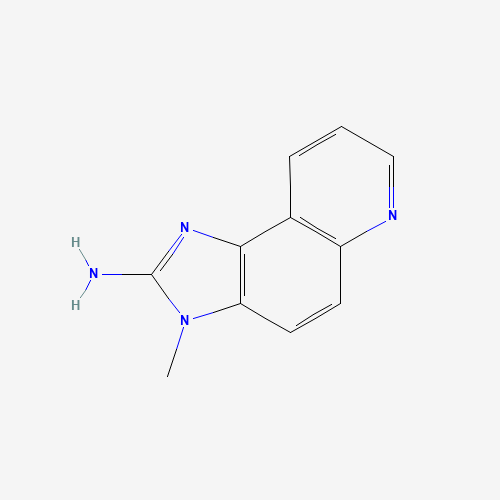
CAS76180-96-6
分子式C11H10N4
分子量198.22 g/mol g/mol
危化品
IQ (2-Amino-3-methylimidazo-[4-5-f]quinoline) can cause cancer according to The World Health Organization's International Agency for Research on Cancer (IARC).
科学粮草官-词典编辑部,修订于:2026-07-06
Toxicity
ToxicityInteractions
The mutagenicity of 2-amino-3-methylimidazo-(4,5-f)quinoline (IQ) was increased by methyl parathion and methyl paraoxon but not by ethyl parathion. This mutagenic synergy was expressed in S. typhimurium strain YG1024. Mammalian microsomal activation was required for ... IQ to express mutagenic synergy.
Adverse Effects
NTP Carcinogen - Reasonably anticipated to be a human carcinogen.
RAIS Toxicity Values
Oral Slope Factor Reference: CALEPA
Carcinogen Classification
Additional information: NB Overall evaluation upgraded to Group 2A with supporting evidence from other relevant data
Non-Human Toxicity Excerpts
/LABORATORY ANIMALS: Subchronic or Prechronic Exposure/ Groups of 40 male Wistar rats, 6 wks old, were given IQ at 10 mg/kg bw or solvent (water, acidified to pH 3.5 with citric acid) by gavage every day for 2 weeks. One week later, the rats were divided into two groups and received either no additional treatment or 500 ppm (mg/l) phenobarbital sodium in the drinking water for the remainder of the study. Ten animals from each group were sacrificed at wk 42, and the study was terminated after 58 weeks. Zymbal gland carcinomas were found in 2/40 rats that received IQ only and in 2/40 that received IQ plus phenobarbital but not in the untreated group or in the group that received phenobarbital only. A hepatocellular adenoma was found in one rat given IQ alone, and a hepatocellular adenoma...
Evidence for Carcinogenicity
Evaluation: There is inadequate evidence in humans for the carcinogenicity of IQ. There is sufficient evidence in experimental animals for the carcinogenicity of IQ. Overall evaluation: IQ (2-Amino-3-methylimidazo(4,5-f)quinoline is probably carcinogenic to humans (Group 2A). In arriving at the overall evaluation, the Working Group took into consideration the following contributory information: IQ is comprehensively genotoxic, and this activity can be expressed in vivo in rodents. IQ can be metabolized by human microsomes to a species that damage bacterial DNA.
Antidote and Emergency Treatment
Advanced treatment: Consider orotracheal or nasotracheal intubation for airway control in the patient who is unconscious, has severe pulmonary edema, or is in respiratory arrest. Positive pressure ventilation techniques with a bag valve mask device may be beneficial. Monitor cardiac rhythm and treat arrhythmias as necessary ... . Start an IV with D5W /SRP: "To keep open", minimal flow rate/. Use lactated Ringer's if signs of hypovolemia are present. Watch for signs of fluid overload. Consider drug therapy for pulmonary edema ... . For hypotension with signs of hypovolemia, administer fluid cautiously. Watch for signs of fluid overload ... . Treat seizures with diazepam (Valium) ... . Use proparacaine hydrochloride to assist eye irrigation ... . /Poison A and B/