


 一键配货
一键配货
化合物详情
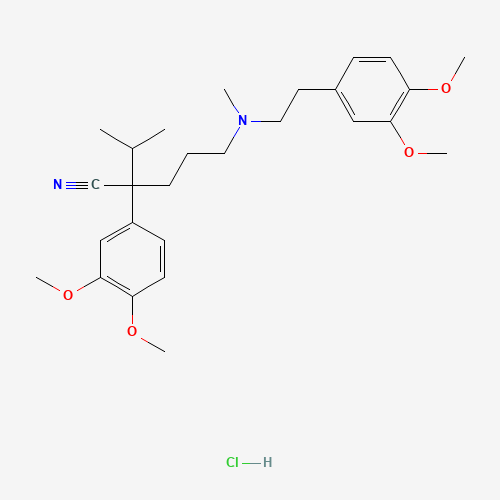
CAS152-11-4
分子式C27H38N2O4·HCl
分子量491.06 g/mol g/mol
危化品
Verapamil Hydrochloride is the hydrochloride form of Verapamil, which is a phenylalkylamine calcium channel blocking agent. Verapamil inhibits the transmembrane influx of extracellular calcium ions into myocardial and vascular smooth muscle cells, causing dilatation of the main coronary and systemic arteries and decreasing myocardial contractility. This agent also inhibits the drug efflux pump P-glycoprotein which is overexpressed in some multi-drug resistant tumors and may improve the efficacy of some antineoplastic agents. (NCI04)
科学粮草官-词典编辑部,修订于:2026-07-06
Toxicity
ToxicitySymptoms
The resultant inhibition of the contractile processes of the myocardial smooth muscle cells leads to dilation of the coronary and systemic arteries,improved oxygen delivery to the myocardial tissue, and decreased total peripheral resistance, systemic blood pressure, and afterload.
Treatment
Treatment of overdosage should be supportive. Beta-adrenergic stimulation or parenteral administration of calcium solutions may increase calcium ion flux across the slow channel and have been used effectively in treatment of deliberate overdosage with verapamil. In a few reported cases, overdose with calcium channel blockers has been associated with hypotension and bradycardia, initially refractory to atropine but becoming more responsive to this treatment when the patients received large doses (close to 1 gram/hour for more than 24 hours) of calcium chloride. Verapamil cannot be removed by hemodialysis. Clinically significant hypotensive reactions or high degree AV block should be treated with vasopressor agents or cardiac pacing, respectively. Asystole should be handled by the usual m...
Toxicity Data
LD50: 8 mg/kg (Intravenous, Mouse) (A308)
Health Effects
Cardiovascular: angina pectoris, AV block (2° & 3°), atrioventricular dissociation, CHF, pulmonary edema, chest pain, claudication, myocardial infarction, palpitations, purpura (vasculitis), syncope. Digestive system: diarrhea, dry mouth, gastrointestinal distress, gingival hyperplasia. Hemic and lymphatic: ecchymosis or bruising. Nervous system: cerebrovascular accident, confusion, equilibrium disorders, insomnia, muscle cramps, psychotic symptoms, shakiness, somnolence, extrapyramidal symptoms. Skin: arthralgia and rash, exanthema, hair loss, hyperkeratosis, macules, sweating, urticaria, Stevens-Johnson syndrome, erythema multiforme. Special senses: blurred vision, tinnitus. Urogenital: gynecomastia, galactorrhea/hyperprolactinemia, increased urination, spotty menstruation, impotence.
Exposure Routes
Orally, 90‰ЫТ100% of Verapamil is absorbed. Intravenous.
Toxicity Summary
Verapamil inhibits voltage-dependent calcium channels. Specifically, its effect on L-type calcium channels in the heart causes a reduction in ionotropy and chronotropy, thuis reducing heart rate and blood pressure. Verapamil's mechanism of effect in cluster headache is thought to be linked to its calcium-channel blocker effect, but which channel subtypes are involved is presently not known.
Carcinogen Classification
No indication of carcinogenicity to humans (not listed by IARC).
Drug Induced Liver Injury
References: DOI:10.1016/j.drudis.2016.02.015









