


 一键配货
一键配货
化合物详情
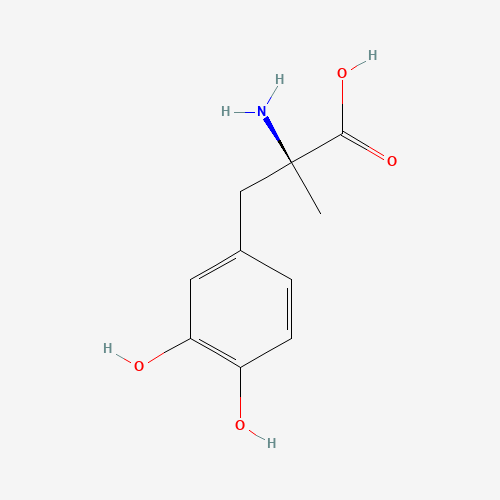
CAS555-30-6
分子式C10H13NO4
分子量211.22 g/mol g/mol
危化品
Physical Description | Methyl dopa appears as colorless or almost colorless crystals or white to yellowish-white fine powder. Almost tasteless. In the sesquihydrate form. pH (saturated aqueous solution) about 5.0. (NTP, 1992)
科学粮草官-词典编辑部,修订于:2026-07-06
Toxicity
ToxicityMilk Concentrations
Methyldopa is distributed into milk; peak milk concentrations of free methyldopa are approximately 20-35% of those in maternal plasma following an individual dose during continuous therapy. The extent of distribution of methyldopa into milk has not been clearly determined, but it is estimated that about 0.02% of a daily maternal dose of 1 g would be ingested by a nursing infant and that this amount is probably not clincially important.
Symptoms
Excessive sedation, weakness, bradycardia, dizziness, lightheadedness, bloating, constipation, distention, flatus, diarrhea, nausea, vomiting and severely low blood pressure (RxList A308).
Treatment
In the event of overdosage, symptomatic and supportive measures should be employed. When ingestion is recent, gastric lavage or emesis may reduce absorption. When ingestion has been earlier, infusions may be helpful to promote urinary excretion. Otherwise, management includes special attention to cardiac rate and output, blood volume, electrolyte balance, paralytic ileus, urinary function and cerebral activity (A308).
Toxicity Data
LD50: >1.5 g/kg (Oral, Mouse) (A308) LD50: >1.5 g/kg (Oral, Rat) (A308)
Health Effects
Acute overdosage may produce acute hypotension with other responses attributable to brain and gastrointestinal malfunction. Haemolytic anaemia, bone marrow suppression, and parkinsonism may also occur (RxList A308, L1178).
Hepatotoxicity
Likelihood score: A (well known cause of clinically apparent liver injury).
Adverse Effects
* Rebound hypertension
Exposure Routes
Oral (A308). Absorption from the gastrointestinal tract is variable but averages approximately 50%.
Toxicity Summary
Although the mechanism of action has yet to be conclusively demonstrated, the resultant hypotensive effect is most likely due to the drug's action on the CNS. Methyldopa is converted into the metabolite, alpha-methylnorepinephrine, in the CNS, where it stimulates the central inhibitory alpha-adrenergic receptors, leading to a reduction in sympathetic tone, total peripheral resistance, and blood pressure. Reduction in plasma renin activity, as well as the inhibition of both central and peripheral norepinephrine and serotonine production may also contribute to the drug's antihypertensive effect, although this is not a major mechanism of action. This is done through the inhibition of the decarboxylation of dihydroxyphenylalanine (dopa) - the precursor of norepinephrine - and of 5-hydroxytr...
Carcinogen Classification
No indication of carcinogenicity to humans (not listed by IARC).
Drug Induced Liver Injury
References: DOI:10.1016/j.drudis.2019.09.022
Populations at Special Risk
... may cause asthma to pharmaceutical workers. /From table/
Antidote and Emergency Treatment
... AFTER DISCONTINUATION OF METHYLDOPA... HEMOLYTIC ANEMIA USUALLY RESOLVES WITHIN A MATTER OF WEEKS. SEVERE HEMOLYSIS MAY BE ATTENUATED BY TREATMENT WITH GLUCOCORTICOIDS.
Effects During Pregnancy and Lactation
Methyldopa can increase serum prolactin and has caused galactorrhea. The maternal prolactin level in a mother with established lactation may not affect her ability to breastfeed.









