


 一键配货
一键配货
化合物详情
CAS5694-00-8
分子式C3H5NO2
分子量87.0773 g/mol
非危品
metabolite of acrylamide; structure given in first source
科学粮草官-词典编辑部,修订于:2026-07-06
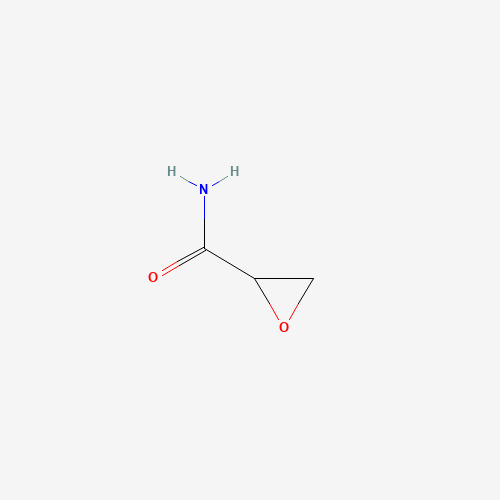
Toxicity
ToxicityBody Burden
The geometric mean concentration of hemoglobin adduct glycidamide concentrations for the US population determined from the National Health and Nutrition Examination Survey (NHANES) is 59.3 pmol/g hemoglobin. The sample size was 7,278 and sampling was conducted from 2003 to 2004(1).
Fate Summary
ATMOSPHERIC FATE: According to a model of gas/particle partitioning of semivolatile organic compounds in the atmosphere(1), glycidamide, which has an estimated vapor pressure of 0.586 mm Hg at 25 °C(SRC), determined from a fragment constant method(2), is expected to exist solely as a vapor in the ambient atmosphere. Vapor-phase glycidamide is degraded in the atmosphere by reaction with photochemically-produced hydroxyl radicals(SRC); the half-life for this reaction in air is estimated to be 6 days(SRC), calculated from its rate constant of 2.6X10⁻¹² cu cm/molecule-sec at 25 °C(SRC) that was derived using a structure estimation method(3). Glycidamide does not contain chromophores that absorb at wavelengths >290 nm(4), and therefore is not expected to be susceptible to direct photolysis b...
Soil Adsorption / Mobility
Using a structure estimation method based on molecular connectivity indices(1), the Koc of glycidamide can be estimated to be 1(SRC). According to a classification scheme(2), this estimated Koc value suggests that glycidamide is expected to have very high mobility in soil.
Environmental Bioconcentration
An estimated BCF of 3 was calculated in fish for glycidamide(SRC), using an estimated log Kow of -0.63(1) and a regression-derived equation(2). According to a classification scheme(3), this BCF suggests the potential for bioconcentration in aquatic organisms is low(SRC).
Volatilization from Water / Soil
The Henry's Law constant for glycidamide is estimated as 1.29X10⁻¹⁰ atm-cu m/mole(SRC) using a fragment constant estimation method(1). This Henry's Law constant indicates that glycidamide is expected to be essentially nonvolatile from water surfaces(2). Glycidamide is expected to volatilize from dry soil surfaces(SRC) based upon an estimated vapor pressure of 0.586 mm Hg(SRC), determined from a fragment constant method(3).
Environmental Abiotic Degradation
The rate constant for the vapor-phase reaction of glycidamide with photochemically-produced hydroxyl radicals has been estimated as 2.6X10⁻¹² cu cm/molecule-sec at 25 °C(SRC) using a structure estimation method(1). This corresponds to an atmospheric half-life of about 6 days at an atmospheric concentration of 5X10+5 hydroxyl radicals per cu cm(1). Glycidamide contains an epoxide functional group that may hydrolyze under environmental conditions(2); however, an estimated base-catalyzed second-order hydrolysis rate constant of 1.22X10⁻⁵ L/mole-sec(SRC) was estimated using a structure estimation method(2) which corresponds to a half-life of 1.795X10+4 years at pH 7(3). Glycidamide does not contains chromophores that absorb at wavelengths >290 nm(2), and therefore is not expected to be susc...
Food Survey Values
The metabolic precursor of glycidamide, acrylamide, occurs in many carbohydrate-containing foods cooked at high temperatures such as French fries, potato chips, pretzels, coffee, breads, and cereals(1,3). Acrylamide is rapidly absorbed after dietary exposure and readily crosses the blood-brain barrier(2).
Artificial Pollution Sources
Glycidamide has been identified as a hemoglobin adduct of acrylamide(1), a chemical intermediate used in the production of polymers targeted as additives for water treatment(2) and that also occurs in some cooked foods(3); this may result in glycidamide's release to the environment through various waste streams(SRC).
Probable Routes of Human Exposure
Biomonitoring study results indicate that the general population may be exposed to glycidamide as a result of ingestion of certain cooked foods(1) and treated drinking water containing acrylamide, which is then metabolized to glycidamide as a hemoglobbin adduct in the body(2).
Environmental Fate / Exposure Summary
Glycidamide has been identified as a hemoglobin adduct of acrylamide, a chemical intermediate used in the production of polymers targeted as additives for water treatment and that also occurs in some cooked foods; this may result in glycidamide's release to the environment through various waste streams. If released to air, an estimated vapor pressure of 0.586 mm Hg at 25 °C indicates glycidamide will exist solely as a vapor in the atmosphere. Vapor-phase glycidamide will be degraded in the atmosphere by reaction with photochemically-produced hydroxyl radicals; the half-life for this reaction in air is estimated to be 6 days. Glycidamide does not contain chromophores that absorb at wavelengths >290 nm, and therefore is not expected to be susceptible to direct photolysis by sunlight. If r...
Average Daily Intake
The estimated daily intake in the United States of acrylamide, the metabolic precursor to glycidamide, is 0.4 ug/kg/day(1). /Acrylamide/
Human Toxicity Excerpts
/BIOMONITORING/ A study comprising 50 subjects investigated the relationship between acrylamide (AA) intake from food using food frequency questionnaires and the concentration of hemoglobin (Hb) adducts of AA and its genotoxic metabolite glycidamide (GA) as a measure of the internal exposure. ... Using multiple linear regression analysis, a significant positive correlation was found between the AA-Hb adduct concentration and the intake of chips/snacks and crisp bread. GA-Hb adduct did not correlate with consumption of any of the main food groups. Neither AA-Hb nor GA-Hb adduct concentration correlated with total dietary intake of AA as calculated from the reported food intake. Adduct concentrations did not correlate with 24 hr urinary excretion of mercapturic acid metabolites of AA and...
Carcinogen Classification
Summary: The results of this bioassay, when compared to those previously reported for acrylamide, indicate that acrylamide is efficiently metabolized to glycidamide in both sexes of both species. Based upon the concordance of tumor sites between the two bioassays, the data also indicate that carcinogenic activity of acrylamide is due to its metabolic conversion to glycidamide.
Non-Human Toxicity Excerpts
/LABORATORY ANIMALS: Developmental or Reproductive Toxicity/ The reproductive toxicity of acrylamide and its epoxide metabolite, glycidamide, was studied in male Sprague-Dawley rats. Groups of eight rats were injected intraperitoneally once a day with 50 mg/kg bw acrylamide for seven days or with 50 mg/kg bw glycidamide for 14 days. Twenty-four hours after the last dose, the animals were killed and the testes removed and weighed to measure epididymal and vas deferens sperm count and viability. Neither substance affected testicular weight. Vas deferens sperm count was reduced by both substances, and glycidamide but not acrylamide reduced testicular protein content, epididymal weight and vas deferens sperm viability.
Antidote and Emergency Treatment
/SRP:/ Advanced treatment: Consider orotracheal or nasotracheal intubation for airway control in the patient who is unconscious, has severe pulmonary edema, or is in severe respiratory distress. Positive-pressure ventilation techniques with a bag valve mask device may be beneficial. Consider drug therapy for pulmonary edema ... . Consider administering a beta agonist such as albuterol for severe bronchospasm ... . Monitor cardiac rhythm and treat arrhythmias as necessary ... . Start IV administration of D5W /SRP: "To keep open", minimal flow rate/. Use 0.9% saline (NS) or lactated Ringer's if signs of hypovolemia are present. For hypotension with signs of hypovolemia, administer fluid cautiously. Watch for signs of fluid overload ... . Treat seizures with diazepam or lorazepam ... . Use...









