


 一键配货
一键配货
化合物详情
CAS6358-53-8
分子量308.300 g/mol g/mol
非危品
Citrus Red No. 2 can cause cancer according to California Labor Code.
科学粮草官-词典编辑部,修订于:2026-07-06
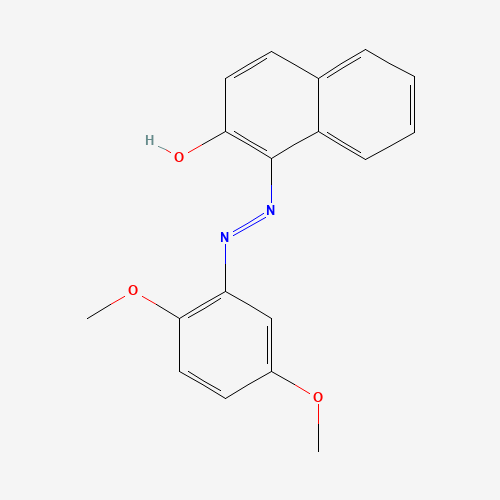
Toxicity
ToxicityFate Summary
ATMOSPHERIC FATE: According to a model of gas/particle partitioning of semivolatile organic compounds in the atmosphere(1), Citrus Red 2, which has an estimated vapor pressure of 3.0X10⁻⁹ mm Hg at 25 °C(SRC), determined from a fragment constant method(2), is expected to exist solely in the particulate phase in the ambient atmosphere. Particulate-phase Citrus Red 2 may be removed from the air by wet or dry deposition(SRC). Citrus Red 2 contains chromophores that absorb at wavelengths >290 nm(3), and therefore may be susceptible to direct photolysis by sunlight(SRC).
Soil Adsorption / Mobility
Using a structure estimation method based on molecular connectivity indices(1), the Koc of Citrus Red 2 can be estimated to be 2.3X10+4(SRC). According to a classification scheme(2), this estimated Koc value suggests that Citrus Red 2 is expected to be immobile in soil.
Environmental Biodegradation
ANAEROBIC: Azo dyes are hydrophobic compounds, suggesting they will partition strongly to bottom sediments where reductive cleavage of the azo linkage may occur. This transformation process could result in the release of potentially hazardous aromatic amines to the water column(1), in this case 1-amino-2,5-dimethoxybenzene and 2-hydroxy-1-napthylamine(SRC).
Environmental Bioconcentration
An estimated BCF of 10 was calculated in fish for Citrus Red 2(SRC), using an estimated log Kow of 5.67(1) and a regression-derived equation(2). According to a classification scheme(3), this BCF suggests the potential for bioconcentration in aquatic organisms is low(SRC).
Volatilization from Water / Soil
The Henry's Law constant for the neutral species of Citrus Red 2 is estimated as 5.2X10⁻¹³ atm-cu m/mole(SRC) using a fragment constant estimation method(1). This Henry's Law constant indicates that Citrus Red 2 is expected to be essentially nonvolatile from water and moist soil surfaces(2). Citrus Red 2 is not expected to volatilize from dry soil surfaces(SRC) based upon an estimated vapor pressure of 3.0X10⁻⁹ mm Hg(SRC), determined from a fragment constant method(3).
Environmental Abiotic Degradation
Citrus Red 2 is not expected to undergo hydrolysis in the environment due to the lack of functional groups that hydrolyze under environmental conditions(1). Citrus Red 2 contains chromophores that absorb at wavelengths >290 nm(1), and therefore may be susceptible to direct photolysis by sunlight(SRC).
Artificial Pollution Sources
Citrus Red 2's production and use to color orange skins(1) may result in its release to the environment through various waste streams(SRC).
Probable Routes of Human Exposure
Occupational exposure to Citrus Red 2 may occur through inhalation and dermal contact with this compound at workplaces where Citrus Red 2 is produced or used. The greatest potential for dermal and inhalation exposure to Citrus Red 2 is expected at the packing station at the manufacturing site and to a lesser extent during activities at the consumer site. Use data indicate that the general public may be exposed to Citrus Red 2 via dermal contact with treated citrus. (SRC)
Environmental Fate / Exposure Summary
Citrus Red 2's production and use to color orange skins may result in its release to the environment through various waste streams. If released to air, an estimated vapor pressure of 3.0X10⁻⁹ mm Hg at 25 °C indicates Citrus Red 2 will exist solely in the particulate phase in the atmosphere. Particulate-phase Citrus Red 2 will be removed from the atmosphere by wet or dry deposition. Citrus Red 2 contains chromophores that absorb at wavelengths >290 nm, and therefore may be susceptible to direct photolysis by sunlight. If released to soil, Citrus Red 2 is expected to be immobile based upon an estimated Koc of 2.3X10+4. Volatilization from moist soil surfaces is not expected to be an important fate process based upon an estimated Henry's Law constant of 5.2X10⁻¹³ atm-cu m/mole. Citrus Red...
Adverse Effects
IARC Carcinogen - Class 3: Chemicals are not classifiable by the International Agency for Research on Cancer.
Carcinogen Classification
IARC Monographs: Volume Sup 7: Overall Evaluations of Carcinogenicity: An Updating of IARC Monographs Volumes 1 to 42, 1987; 440 pages; ISBN 92-832-1411-0 (out of print)
Non-Human Toxicity Values
LD50 Mouse oral male > 4000 mg/kg bw
Evidence for Carcinogenicity
No data are available in humans. Sufficient evidence of carcinogenicity in animals. OVERALL EVALUATION: Group 2B: The agent is possibly carcinogenic to humans.
Antidote and Emergency Treatment
/SRP:/ Advanced treatment: Consider orotracheal or nasotracheal intubation for airway control in the patient who is unconscious, has severe pulmonary edema, or is in severe respiratory distress. Positive-pressure ventilation techniques with a bag valve mask device may be beneficial. Consider drug therapy for pulmonary edema ... . Consider administering a beta agonist such as albuterol for severe bronchospasm ... . Monitor cardiac rhythm and treat arrhythmias as necessary ... . Start IV administration of D5W /SRP: "To keep open", minimal flow rate/. Use 0.9% saline (NS) or lactated Ringer's if signs of hypovolemia are present. For hypotension with signs of hypovolemia, administer fluid cautiously. Watch for signs of fluid overload ... . Treat seizures with diazepam or lorazepam ... . Use...









