


 一键配货
一键配货
化合物详情
CAS7778-18-9
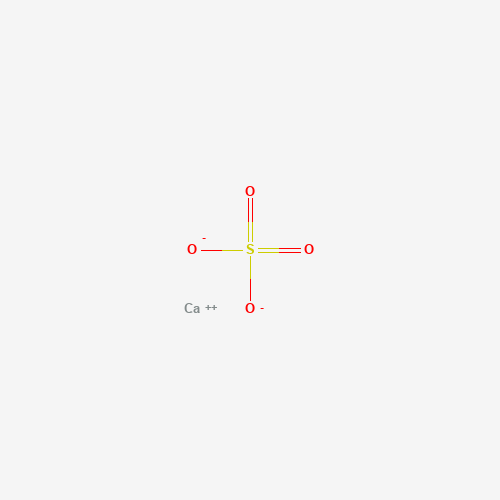
分子式CaSO4
分子量136.14 g/mol g/mol
危化品
Physical Description | Calcium sulfate appears as odorless, white powder or colorless, crystalline solid. Crystals sometimes have a blue, gray or reddish tinge or can be brick red. Density: 2.96 g cm-3.
科学粮草官-词典编辑部,修订于:2026-07-06
Toxicity
ToxicityNatural Pollution Sources
Domestic resources are adequate but are unevenly distributed. There are no gypsum deposits on the eastern seaboard of the United States. Large deposits occur in the Great Lakes region, mid-continent region, California, and other States. /Gypsum/
Probable Routes of Human Exposure
WORKERS EMPLOYED IN PROCESSING OF GYPSUM ROCK MAY BE EXPOSED TO HIGH ATMOSPHERIC CONCN OF GYPSUM DUST ... FURNACE GASES & SMOKE. IN GYPSUM CALCINATING, WORKERS ARE EXPOSED TO HIGH ENVIRONMENTAL TEMP, & THERE IS ALSO THE HAZARD OF BURNS. /GYPSUM/
Symptoms
irritation eyes, skin, upper respiratory system; conjunctivitis; rhinitis, epistaxis (nosebleed)
Target Organs
Eyes, skin, respiratory system
Exposure Routes
inhalation, skin and/or eye contact
Human Toxicity Excerpts
... Calcium sulfate caused no lung disease in calcium sulfate miners.
Non-Human Toxicity Excerpts
The genotoxicity of selenite was investigated in two diploid yeast strains Saccharomyces cerevisiae BZ34 and D7. The effect of reduced glutathione (GSH) on the genotoxicity of selenite in the BZ34 strain was also examined. Selenite induced gene conversion and toxicity in the BZ34 strain. A variety of genetic events occurred including back mutation gene conversion mitotic crossing over aberrant colony formation and toxicity in another strain D7. The genetic activity of selenite peaked at one hour and subsequently declined when the two higher concentrations, (1O(-3) and 10(-2) molar), of selenite were used. When treatment was continued beyond 1 hr the percent of survival decreased marginally. Yeast cells may cause metabolic deactivation of selenite during 5 hr of treatment as the genetic...









