


 一键配货
一键配货
化合物详情
CAS14017-41-5
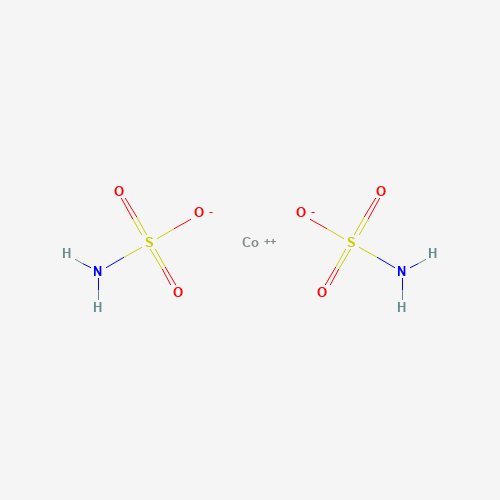
分子式Co(NH2SO3)2·xH2O
分子量251.11(as Anhydrous) g/mol
危化品
Physical Description | Cobaltous sulfamate is a reddish colored solid. It is soluble in water. The primary hazard is the threat to the environment. Immediate steps should be taken to limit the spread to the environment. It is used as a pigment and electroplating metals.
科学粮草官-词典编辑部,修订于:2026-07-06
Toxicity
ToxicityFate Summary
ATMOSPHERIC FATE: Inorganic cobalt compounds are nonvolatile and released into the atmosphere in particulate form(1). Particulate-phase cobalt compounds are removed from the air by wet and dry deposition(SRC). Cobalt has been detected in atmospheric deposition(2) and in rain-snow precipitation(3).
Environmental Bioconcentration
Food Chain Concentration Potential (cobaltous sulfamate hydrate): Bioconcentration of 200-1000 fold only under constant exposure. Not significant under spill conditions(1).
Artificial Pollution Sources
Cobaltous sulfamate's production and use as a pigment, use in the electroplating of metals(1) and use in photonic device fabrication(2) may result in its release to the environment through various waste streams(SRC).
Probable Routes of Human Exposure
Occupational exposure to cobaltous sulfamate may occur through inhalation of dust and dermal contact with this compound at workplaces where cobaltous sulfamate is produced or used. (SRC)
Symptoms
Cobalt inhalation can cause asthma-like breathing problems. Skin contact is known to result in contact dermatitis, which is characterized by irritation and rashes. Ingesting large amounts of cobalt may cause nausea and vomiting. (L2090)
Treatment
Treatment of cobalt poisoning is symptomatic. (L29)
Health Effects
Exposure to high amount of cobalt can cause heart, lung, kidney, and liver damage. Skin contact is known to result in contact dermatitis. Cobalt may also have mutagenic and carcinogenic effects. (L29, L30)
Adverse Effects
IARC Carcinogen - Class 2: International Agency for Research on Cancer classifies chemicals as probable (2a), or possible (2b) human carcinogens.
Exposure Routes
Inhalation (L29); oral (L29); dermal (L29)
Toxicity Summary
Cobalt is believed to exhibit its toxicity through a oxidant-based and free radical-based processes. It produces oxygen radicals and may be oxidized to ionic cobalt, causing increased lipid peroxidation, DNA damage, and inducing certain enzymes that lead to cell apoptosis. Cobalt has also been shown to block inorganic calcium channels, possibly impairing neurotransmission. Cobalt can also chelate lipoic acids, impairing oxidation of pyruvate or fatty acids. In addition, cobalt may inhibit DNA repair by interacting with zinc finger DNA repair proteins, and has also been shown to inhibit heme synthesis and glucose metabolism. Cobalt may activate specific helper T-lymphocyte cells and interact directly with immunologic proteins, such as antibodies (IgA and IgE) or Fc receptors, resulting i...
Minimum Risk Level
Chronic Inhalation: 0.0001 mg/m3 (L134) Intermediate Oral: 0.01 mg/kg/day (L134)
Carcinogen Classification
2B, possibly carcinogenic to humans. (L135)
Evidence for Carcinogenicity
Cobalt and cobalt compounds that release cobalt ions in vivo are reasonably anticipated to be human carcinogens based on sufficient evidence of carcinogenicity from studies in experimental animals and supporting data from studies on mechanisms of carcinogenesis. /Cobalt and cobalt compounds/
Antidote and Emergency Treatment
/SRP:/ Advanced treatment: Consider orotracheal or nasotracheal intubation for airway control in the patient who is unconscious, has severe pulmonary edema, or is in respiratory arrest. Positive pressure ventilation techniques with a bag valve mask device may be beneficial. Consider drug therapy for pulmonary edema ... . Consider administering a beta agonist such as albuterol for severe bronchospasm... . Monitor cardiac rhythm and treat arrhythmias as necessary ... . Start IV administration of D5W TKO (to keep open). Use 0.9% saline (NS) or lactated Ringer's if signs of hypovolemia are present. For hypotension with signs of hypovolemia, administer fluid cautiously. Watch for signs of fluid overload ... . Use proparacaine hydrochloride to assist eye irrigation ... . /Cobalt and Related C...









