


 一键配货
一键配货
化合物详情
CAS993-16-8
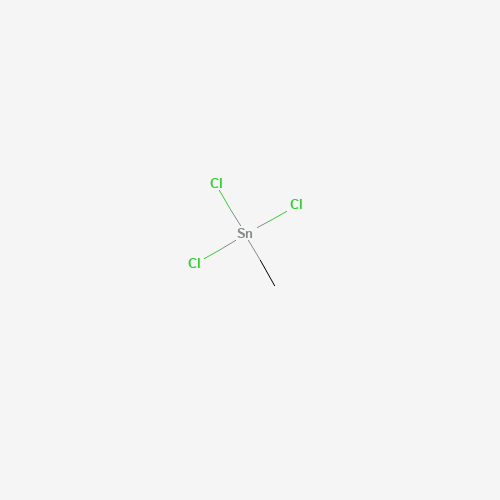
分子式CH3Cl3Sn
分子量240.10352 g/mol
非危品
Monomethyltin trichloride is an organotin compound. Tin is a chemical element with the symbol Sn and atomic number 50. It is a natural component of the earth's crust and is obtained chiefly from the mineral cassiterite, where it occurs as tin dioxide. (L307, L309)
科学粮草官-词典编辑部,修订于:2026-07-06
Toxicity
ToxicitySymptoms
Inorganic or organic tin compounds placed on the skin or in the eyes can produce skin and eye irritation. (L308)
Effect Level
collection=toxvaldb&kind=^EL$
Lethal Dose
collection=toxvaldb&kind=^LD$
Toxicity Data
LC50 (rat) = 600,000 mg/m3/1hr
Health Effects
Breathing or swallowing, or skin contact with organotins, can interfere with the way the brain and nervous system work, causing death in severe cases. Organic tin compounds may also damage the immune and reproductive system. (L307, L308)
Adverse Effects
Toxic Pneumonitis - Inflammation of the lungs induced by inhalation of metal fumes or toxic gases and vapors.
Exposure Routes
Oral (L308); inhalation (L308); dermal (L308)
Toxicity Summary
Organotin compounds produce neurotoxic and immunotoxic effects. Organotins may directly activate glial cells contributing to neuronal cell degeneration by local release of pro-inflammatory cytokines, tumor necrosis factor-_, and/or interleukins. They may also induce apoptosis by direct action on neuronal cells. Organotin compounds stimulate the neuronal release of and/or decrease of neuronal cell uptake of neurotransmitters in brain tissue, including aspartate, GABA, glutamate, norepinephrine, and serotonin. This may be either a contributing factor to or result of the neuronal cell loss. The immunotoxic effects of organotins are characterized by thymic atrophy caused by the suppression of proliferation of immature thymocytes and apoptosis of mature thymocytes. Organotin compounds are be...
Carcinogen Classification
No indication of carcinogenicity to humans (not listed by IARC).









