

 一键配货
一键配货
化合物详情
CAS375-85-9
分子式C7HF13O2
分子量364.06 g/mol
非危品
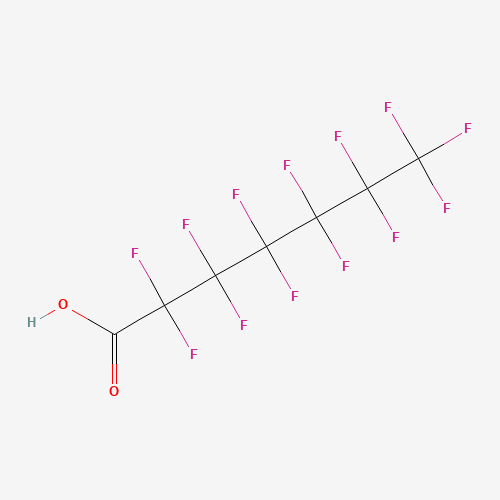
Perfluoroheptanoic acid is a fluoroalkanoic acid that is perfluorinated heptanoic acid. It has a role as a xenobiotic and an environmental contaminant. It is functionally related to a perfluoroheptane and a heptanoic acid.
科学粮草官-词典编辑部,修订于:2026-07-06
Toxicity
ToxicityBody Burden
[Table#8288]: Ik9jY3VwYXRpb24iLCJZZWFycyIsInByZS0gKG5nL21MKSIsImR1cmluZyAobmcvbUwpIiwicG9zdC0gKG5nL21MKSIKInN0dWRlbnQiLCIzIiwiMC44MiIsIjEuMi02LjYiLCI1LjctNy4zIgoiY2FycGVudGVyIiwiNiIsIjwwLjM3IiwiPDAuMzctMi41IiwiPDAuMzctMS43IgoiZnVsbC10aW1lIiwiNiIsIjEuMCIsIjEuNS00LjgiLCIwLjg3LTIuMSIKImdhcmRlbmVyIiwiMTAiLCIwLjc2IiwiMS4zLTMuNyIsIjEuMC0zLjQiCiJmaXJlIGZpZ2h0ZXIiLCI1IiwiPDAuMzciLCIwLjc1LTYuMyIsInNhbXBsZSBub3QgcHJvdmlkZWQiCiJjYXJwZW50ZXIiLCIxNSIsInNhbXBsZSBub3QgcHJvdmlkZWQiLCIxMi0xMiIsIjYuOS0xMCIKImNhcnBlbnRlciIsIjciLCJzYW1wbGUgbm90IHByb3ZpZGVkIiwiMC42OC0yLjQiLCJzYW1wbGUgbm90IHByb3ZpZGVkIgoiZW5naW5lZXIiLCIxMiIsIjE5IiwiMTUtMjAiLCI3LjctMTIiCg==
Ecotoxicity Values
EC50; Species: Chlorella vulgaris (Green Algae) Exponential Growth Phase BA-02; Conditions: saltwater, static, 20 °C, pH 7.6-7.8; Concentration: 5.21 mM for 72 hr; Effect: decreased population growth /formulation/
Fate Summary
ATMOSPHERIC FATE: According to a model of gas/particle partitioning of semivolatile organic compounds in the atmosphere(1), perfluoroheptanoic acid, which has a vapor pressure of 0.133 mm Hg at 25 °C(2), is expected to exist solely as a vapor in the ambient atmosphere. Vapor-phase perfluoroheptanoic acid is degraded in the atmosphere by reaction with photochemically-produced hydroxyl radicals(SRC); the half-life for this reaction in air is estimated to be 31 days(SRC), calculated from its rate constant of 5.2X10⁻¹³ cu cm/molecule-sec at 25 °C(SRC) that was derived using a structure estimation method(3). Perfluoroheptanoic acid does not contain chromophores that absorb at wavelengths >290 nm(4) and, therefore, is not expected to be susceptible to direct photolysis by sunlight(SRC).
Soil Adsorption / Mobility
The log Koc of perfluoroheptanoic acid was measured in three soils amended with municipal biosolids.The log Koc was 2.22 for a silty clay loam having 3 years of biosold application, log Koc of 2.82 for a fine sand with 3 years of biosolis application, and a log Koc of 1.52 for a silt loam with 1-20 years of biosolid application(1). According to a classification scheme(2), this Koc range suggests that perfluoroheptanoic acid is expected to have very high to low mobility in soil, depending on soil composition. The log Kd in sediment samples was reported as 0.96-1.03(3). The log Koc and log Kd were reported as 2.4-4.0 and 1.1-2.9, respectively, in 26 sediment samples collected along the Haihe River, China; samples were collected April to May 2010(4).
Environmental Biodegradation
AEROBIC: The concentration of perfluoroheptanoic acid decreased 40% from day 497 to day 546 in soil containing endogenous microbes incubated at 25 °C(1).
Environmental Bioconcentration
Perfluoroheptanoic acid was not found to bioaccumulate in laboratory experiments using rainbow trout (Onchorynchus mykiss) with a reported BCF of 0.62(1). The predicted biomagnification factor of 0.03 in fish was reported(2). The log BAFs of four whole common shiner (Notropis cornutus) and livers of 16 fish were 1.72-2.63 and 0.49-3.46 L/kg, respectively(3). Based on Arctic food web data collected from the Hudson Bay region of northeastern Canada, during the months of May to Sept between 1999 and 2003, the tropic magnification factor for perfluoroheptanoic acid is 0.75 ng/g protein(4).
Volatilization from Water / Soil
An estimated pKa of -2.29(1) indicates perfluoroheptanoic acid will exist entirely in the anion form at pH values of 5 to 9 and, therefore, volatilization from water and moist soil surfaces is not expected to be an important fate process(SRC). Perfluoroheptanoic acid is not expected to volatilize from dry soil surfaces(SRC) based upon a vapor pressure of 0.133 mm Hg(2).
Environmental Abiotic Degradation
The rate constant for the vapor-phase reaction of perfluoroheptanoic acid with photochemically-produced hydroxyl radicals has been estimated as 5.2X10⁻¹³ cu cm/molecule-sec at 25 °C(SRC) using a structure estimation method(1). This corresponds to an atmospheric half-life of about 31 days at an atmospheric concentration of 5X10+5 hydroxyl radicals per cu cm(1). Perfluoroheptanoic acid is not expected to undergo hydrolysis in the environment due to the lack of functional groups that hydrolyze under environmental conditions(2). Perfluoroheptanoic acid does not contain chromophores that absorb at wavelengths >290 nm(2) and, therefore, is not expected to be susceptible to direct photolysis by sunlight(SRC).
Environmental Water Concentrations
SURFACE WATER: Perfluoroheptanoic acid was detected in lake water samples from locations in Albany, NY at 1.15-12.7 ng/L; samples were taken Feb to Nov 2006(1). Perfluoroheptanoic acid was detected in 16 of 32 surface water samples at 30-8250 ng/L, samples were taken around Decatur, AL, from area ponds and streams near farms that have a history of being treated with fluorochemical industry impacted biosolids(2). Perfluoroheptanoic acid was 36.8 and 41.2% of the total perfluorocarbon concentration (7.8 and 3.6 ng/L) in 10 Washington state rivers sampled May 6-12 and Sept 8-12, 2008, respectively(3). Perfluoroheptanoic acid was detected in 55.7% of samples from 80 locations throughout the Cape Fear water shed, North Carolina at <0.10-329 ng/L; samples were collected the spring of 2006 and...
Food Survey Values
[Table#8292]: IkNvbW1vZGl0eSIsIkNvbmNuIChwZy9nIHByb2R1Y3QpIgoibGV0dHVjZSIsIjAuNDMiCiJjYXJyb3QiLCIqPERMIgoicG90YXRvIiwiMS4xIgoiY2hlZXNlIiwiNy40IgoibWFyZ2FyaW5lIiwiPERMIgoibWlsayIsIjxETCIKImJyZWFkIiwiMTEiCiJzdHJhd2JlcnJ5IGphbSIsIjxETCIKInBvcmsgbWVhdCIsIjIuOCIKImJlZWYiLCI3LjYiCiJjaGlja2VuIG1lYXQiLCIyMCIKImVnZyIsIjxETCIKImZpc2ggc3RpY2tzIiwiPERMIgoiY2FubmVkIG1hY2tlcmVsIiwiPERMIgoic2FsbW9uIiwiMTYiCiJjb2QiLCI8REwiCiJjb2QgbGl2ZXIiLCI8REwiCiJ0ZWEiLCIwLjQ3IChuZy9MKSIKIipETCBkZXRlY3Rpb24gbGltaXQiLCIiCg==
Milk Concentrations
[Table#8293]: IkNvdW50cnkiLCJOdW1iZXIgU2FtcGxlcyIsIiUgUG9zaXRpdmUiLCJDb25jbiAocGcvTCkiCiJKYXBhbiIsIjI0IiwiMjUiLCI8NC40NS0xMy45IgoiTWFsYXlzaWEiLCIxMyIsIjAiLCI8NC40NSIKIlBoaWxpcHBpbmVzIiwiMjQiLCI4IiwiPDQuNDUtMzQuOCIKIkluZG9uZXNpYSIsIjIwIiwiNSIsIjw0LjQ1LTcuMzIiCiJWaWV0bmFtIiwiNDAiLCIxOCIsIjw0LjQ1LTYuODgiCiJDYW1ib2RpYSIsIjI0IiwiMjkiLCI8NC40NS0zOC40IgoiSW5kaWEiLCIzOSIsIjAiLCI8NC40NSIK
Plant Concentrations
Perfluoroheptanoic acid was detected in two of six macroalgea (Fucus gardneri) samples at <0.01-0.09; samples were collected from the Hudson Bay region of northeastern Canada, during the months of May to Sept between 1999 and 2003(1).
Animal Concentrations
[Table#8284]: IlllYXIiLCJOdW1iZXIgY29sbGVjdGVkIiwiTWVhbiAobmcvZykiLCJSYW5nZSAobmcvZykiCiIxOTg2IiwiMyIsIjAuMDEiLCI8MC4wMDUtMC4zIgoiMTk5NSIsIjIiLCIwLjAxIiwiPDAuMDA1LTAuMDMiCiIxOTk3IiwiNyIsIjAuMDA1IiwiPDAuMDA1LTAuMSIKIjE5OTkiLCIyIiwiMC4wMSIsIjwwLjAwNS0wLjAyIgoiMjAwOCIsIjMiLCIwLjAxIiwiPDAuMDA1LTAuMDQiCg==
Effluent Concentrations
[Table#8289]: IkxvY2F0aW9uIiwiSW5mbHVlbnQgKG5nL0wpIiwiRWZmbHVlbnQgKG5nL0wpIgoiRmFlbGlhbmRlbiIsIjE2IiwiMC42IgoiQmFzc2Vyc2RvcmYiLCI2LjciLCI2LjMiCiJEdWViZW5kb3JmIiwiMS4xIiwiNC4xIgoiS2xvdGVuLU9wZmlrb24iLCIxLjgiLCIzLjkiCiJOaWVkZXJnbGF0dCIsIjIuMiIsIjEuOCIKIkJ1ZWxhY2giLCI5LjkiLCIwLjgiCiJHbGF0dGZlbGRlbiIsIjEuMiIsIjAuMyIK
Atmospheric Concentrations
INDOOR: Perfluoroheptanoic acid was not detected in 40 indoor air samples from Oslo, Norway households(1). Perfluoroheptanoic acid was detected at <0.33-69 pg/cu m in indoor air samples from 59 homes in Vancouver, Canada; samples were collected 2007 to 2008(2). Perfluoroheptanoic acid was not detected in air samples from seven homes and one office; samples were collected the winter of 2007 to 2008 from locations in Tromso, Norway(3).
Fish/Seafood Concentrations
[Table#8290]: IkZpc2giLCJMb2NhdGlvbiIsIk51bWJlciIsIlRpc3N1ZSIsIkNvbmNuIChuZy9nIHcvdykiCiJTY2FiYmFyZGZpc2giLCJQUyIsIjEwIiwiTGl2ZXIiLCI8MC42NiIKIiIsIkdCIiwiMTIiLCJMaXZlciIsIjwwLjY2IgoiQ3JvYWtlciIsIlBTIiwiMTAiLCJMaXZlciIsIjwwLjY2IgoiIiwiR0IiLCI3IiwiTGl2ZXIiLCI8MC42NiIKIk11bGxldCIsIkdCIiwiMTUiLCJMaXZlciIsIjwwLjY2LTEuMTYiCiJTY2FiYmFyZGZpc2giLCJQUyIsIjUiLCJNdXNjbGUiLCI8MS41NC0zLjAiCiIiLCJHQiIsIjQiLCJNdXNjbGUiLCI8MS41NCIKIkNyb2FrZXIiLCJQUyIsIjQiLCJNdXNjbGUiLCI8MS41NCIKIiIsIkdCIiwiNCIsIk11c2NsZSIsIjwxLjU0IgoiTXVsbGV0IiwiR0IiLCI4IiwiTXVzY2xlIiwiPDEuNTQiCiIiLCJHQiIsIjE3IiwiS2lkbmV5IiwiPDAuOS0yLjAzIgo=
Artificial Pollution Sources
Perfluorochemicals like perfluoroheptanoic acid have been widely used since the 1950s in many industrial and consumer products, including protective coatings for fabrics and carpet, paper coatings, insecticide formulations, and surfactants(1). Perfluoroheptanoic acid's production and use may result in its release to the environment through various waste streams(SRC).
Sediment/Soil Concentrations
SEDIMENT: Perfluoroheptanoic acid was detected in sediment samples collected in 2003, 2006 and 2009 from Etobicoke Creek (Toronto, Canada) at <0.05-0.1, <0.05-0.6 and <0.1 ng/g dry weight, respectively(1). Sediment samples from Resolute, Char and Amituk lakes on Cornwallis Island, Nunavut, Canada contained perfluoroheptanoic acid at <0.18-7.5, <3.3 and <2.9-3.0 ng/g dry weight, respectively(2). Perfluoroheptanoic acid was detected in some of the 23 sediment samples collected Dec 29-30, 2008 from the Haihe River, China(3). Perfluoroheptanoic acid was detected in 1 of 7 sediment samples from the Guanting Reservoir, China at 0.35 ng/g dry weight; samples were collected May of 2008(4). Perfluoroheptanoic acid was not detected (detection limit 0.05 ng/g dry weight) in nine sediment samples c...
Probable Routes of Human Exposure
Occupational exposure to perfluoroheptanoic acid may occur through inhalation and dermal contact with this compound at workplaces where perfluoroheptanoic acid is produced or used. Monitoring data indicate that the general population may be exposed to perfluoroheptanoic acid via inhalation of dust, ingestion of food and drinking water, and dermal contact with consumer products containing perfluoroheptanoic acid. (SRC)
Other Environmental Concentrations
Dust samples were collected from 102 homes and 10 daycare centers in North Carolina and Ohio from 2000 to 2001 from vacuum cleaner bags during the US Environmental Protection Agency's Children's Total Exposure to Persistent Pesticides and Other Persistent Organic Pollutants study, perfluoroheptanoic acid was detected in 74.1% of the samples at a mean, median and maximum concentration of 109, 50.2 and 1150 ng/g, respectively(1). Perfluoroheptanoic acid was detected at <0.55-1561 ng/g in dust samples from 140 homes in Vancouver, Canada, samples were collected 2007 to 2008(2). Perfluoroheptanoic acid was detected in 5 of 41 dust samples from Norwegian households at 4.5-28 ng/g(3). The mean concentration of perfluoroheptanoic acid in dust samples from seven homes and one office were 9.2 and...
Environmental Fate / Exposure Summary
Perfluorochemicals like perfluoroheptanoic acid have been widely used since the 1950s in many industrial and consumer products, including protective coatings for fabrics and carpet, paper coatings, insecticide formulations, and surfactants. Perfluoroheptanoic acid's production and use may result in its release to the environment through various waste streams. If released to air, a vapor pressure of 0.133 mm Hg at 25 °C indicates perfluoroheptanoic acid will exist solely as a vapor in the atmosphere. Vapor-phase perfluoroheptanoic acid will be degraded in the atmosphere by reaction with photochemically-produced hydroxyl radicals; the half-life for this reaction in air is estimated to be 31 days. Perfluoroheptanoic acid does not contain chromophores that absorb at wavelengths >290 nm and,...
Toxicity Summary
IDENTIFICATION AND USE: Perfluoroheptanoic acid (PFHpA) is a beige crystalline solid. It is categorized as a long-chain perfluoroalkanecarboxylic acid. These acids and derivatives are used as wetting, dispersing, emulsifying, and foaming agents. HUMAN EXPOSURE AND TOXICITY: Researchers studied 105 men and determined that there was no difference in mean PFHpA levels between those with high testosterone and those with low testosterone. In children, a significant difference in serum levels of PFHpA between those with or without asthma was reported, although median levels were the same. No difference in mean serum levels of PFHpA were reported in women with or without endometriosis. In a study in South Korea, PFHpA was not detected in maternal sera, cord sera, or human milk. ANIMAL STUDIES:...
Average Daily Intake
Based on drinking water concentrations, the daily intake of perfluoroheptanoic acid was calculated as 0.96 ng/person/day(1). Body weight normalized dietary exposure calculations from a market basket food study in 1999 from Sweden found the intake of perfluoroheptanoic acid from fish, fruit, potatoes and sugar/sweets to be 17, 0.3, 5.4 and 1.1 pg/kg/day, respectively(2).
Other Toxicity Values
collection=toxvaldb&kind=^Other$
Human Toxicity Excerpts
/BIOMONITORING/ In the recent years hair has been increasingly used as alternative matrix in human biomonitoring (HBM) of environmental pollutants. Sampling advantages and time integration of exposure assessment seem the most attractive features of hair matrix. In the current study, a novel miniaturized method was developed and validated for measuring 15 perfluoroalkyl substances (PFAS), including perfluoro n-butanoic acid (PFBA), perfluoro n-pentanoic acid (PFPeA), perfluoro n-hexanoic acid (PFHxA), perfluoro n-heptanoic acid (PFHpA), perfluoro n-octanoic acid (PFOA), perfluoro n-nonanoic acid (PFNA), perfluoro tetradecanoic acid (PFTeDA), perfluorobutane sulfonic acid (PFBS), perfluoro pentane sulfonic acid (PFPeS), perfluorohexane sulfonic acid (PFHxS), perfluoroheptane sulfonic acid...
Non-Human Toxicity Excerpts
/OTHER TOXICITY INFORMATION/ The potency to accumulate triglyceride (TG) was compared between perfluorinated fatty acids (PFCAs) with different carbon chain lengths in the liver of male and female rats and induction of peroxisomal beta-oxidation. In male rats, either perfluoroheptanoic acid (C7) or perfluorooctanoic acid (C8) had no effect, although perfluorononanonic acid (C9) and perfluorodecanoic acid (C10) markedly accumulated TG. In female rats, C7, C8, and C9 did not cause TG accumulation, whereas C10 caused TG accumulation at the same level as in male rats. TG accumulation induced by C9 was regulated by the level of testosterone in male rats. In contrast with TG accumulation, peroxisomal beta-oxidation was induced by C8, C9, and C10 in male rats and by C9 and C10 in female rats....
Antidote and Emergency Treatment
Advanced treatment: Consider orotracheal or nasotracheal intubation for airway control in the patient who is unconscious, has severe pulmonary edema, or is in severe respiratory distress. Positive-pressure ventilation techniques with a bag-valve-mask device may be beneficial. Consider drug therapy for pulmonary edema ... . Consider administering a beta agonist such as albuterol for severe bronchospasm ... . Monitor cardiac rhythm and treat arrhythmias as necessary ... . Start IV administration of D5W TKO /SRP: "To keep open", minimal flow rate/. Use 0.9% saline (NS) or lactated Ringer's (LR) if signs of hypovolemia are present. For hypotension with signs of hypovolemia, administer fluid cautiously. Watch for signs of fluid overload ... . Treat seizures with diazepam (Valium) or lorazepa...