


 一键配货
一键配货
化合物详情
CAS72741-87-8
分子式C8H15NO3
分子量173.21 g/mol g/mol
危化品
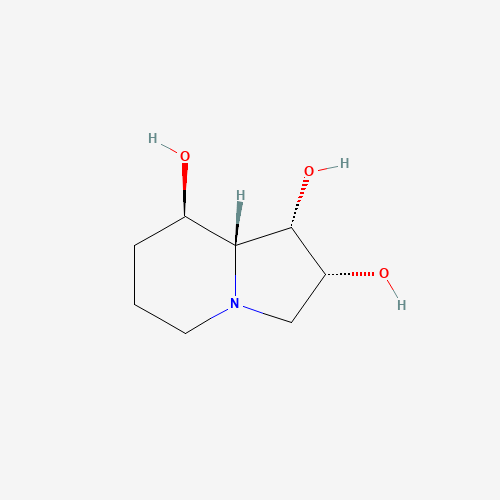
Swainsonine is an indolizidine alkaloid isolated from the plant Swainsona canescens with three hydroxy substituents at positions 1, 2 and 8. It has a role as an antineoplastic agent, an immunological adjuvant, an EC 3.2.1.114 (mannosyl-oligosaccharide 1,3-1,6-alpha-mannosidase) inhibitor and a plant metabolite.
科学粮草官-词典编辑部,修订于:2026-07-06
Toxicity
ToxicitySymptoms
Symptoms of locoism include staggering gait, depression, muscular incoordination, staring, nervousness, hyperexcitability, loss of appetite, and reproductive alterations such as abortion and birth defects. The major symptom of "slobbers syndrome" is profuse salivation. Other symptoms include diarrhea, lacrimation, stiff joints, frequent urination, tremors, spontaneous abortion, labored breathing, loss of appetite, bloat, and possibly death. Swainsonine also causes vacuolation of most tissues. (L1819, A3092, A3093)
Health Effects
Swainsonine causes a variety of neurological disorders, including locoism and "slobbers syndrome" in livestock. In man it causes a lysosomal storage disease, biochemically and morphologically similar to mannosidosis. It is also an appetite suppressant. (L1248, A3092, A3093)
Exposure Routes
Oral, dermal, inhalation, and parenteral (contaminated drugs). (A3101)
Toxicity Summary
Swainsonine inhibits the activity of glycoside hydrolases, especially N-linked glycosylation. Inhibition of Golgi mannosidase II and other alpha-mannosidases causes the accumulation of atypical hybrid glycoproteins and oligosaccarides because the proper processing cannot occur. This also results in intracellular vacuolization. (L1248, A3092, A3093)
Carcinogen Classification
No indication of carcinogenicity to humans (not listed by IARC).
Non-Human Toxicity Excerpts
Lysosomal storage diseases can causeimpaired cellular function and death. Many acquired lysosomal storage diseases are produced by toxic plants containing indolizidine alkaloids. This includes swainsonine, which inhibits lysosomal α-mannosidase and Golgi α-mannosidase II. Swainsonine-induced nervous disease associated with various plants has been reported, including species of the genus Astragalus, Sida, Oxitropis, Swainsona, and Ipomoea. The diagnosis of Astragalus spp. intoxication is established based on clinical signs, microscopic and ultrastructural findings, lectin histochemistry, the abundance of these plants in the grazing area, and the determination of swainsonine in plant specimens.









