


 一键配货
一键配货
化合物详情
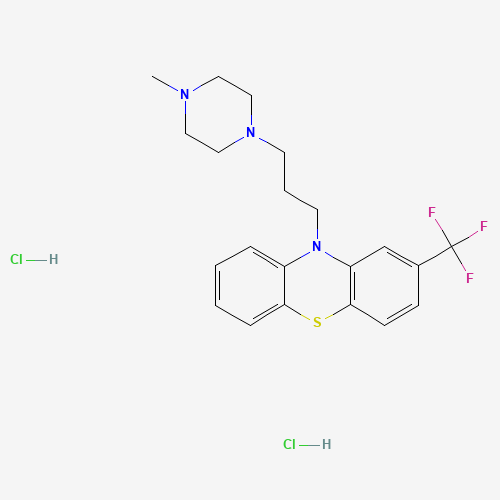
CAS440-17-5
分子式C21H24F3N3S·2HCl
分子量480.42 g/mol g/mol
危化品
Trifluoperazine Hydrochloride is the hydrochloride salt of trifluoperazine, a phenothiazine derivative and a dopamine, alpha-adrenergic, and anticholinergic antagonist with antipsychotic, anxiolytic, and antiemetic activities. Trifluoperazine blocks central dopamine receptors, which may prevent or mitigate delusions and hallucinations caused by an excess of dopamine; dopamine blockade in the chemoreceptor trigger zone (CTZ) may result in an antiemetic effect. This agent binds to central adrenergic receptors, which may result in anxiolytic effects. Trifluoperazine also functions as a calmodulin inhibitor, elevating cytosolic calcium.
科学粮草官-词典编辑部,修订于:2026-07-06
Toxicity
ToxicityEcotoxicity Values
USDA APHIS Chemical Effects: collection=usda_chemeffect&query_type=synonym&query='^440-17-5$'
Symptoms
Symptoms of overdose include agitation, coma, convulsions, difficulty breathing, difficulty swallowing, dry mouth, extreme sleepiness, fever, intestinal blockage, irregular heart rate, low blood pressure, and restlessness.
Treatment
Treatment is essentially symptomatic and supportive. Early gastric lavage is helpful. Keep patient under observation and maintain an open airway, since involvement of the extrapyramidal mechanism may produce dysphagia and respiratory difficulty in severe overdosage. Do not attempt to induce emesis because a dystonic reaction of the head or neck may develop that could result in aspiration of vomitus. Extrapyramidal symptoms may be treated with anti-parkinsonism drugs, barbiturates or Benadryl. See prescribing information for these products. Care should be taken to avoid increasing respiratory depression. If administration of a stimulant is desirable, amphetamine, dextroamphetamine or caffeine with sodium benzoate is recommended. Stimulants that may cause convulsions (e.g., picrotoxin or...
Lethal Dose
collection=toxvaldb&kind=^LD$
Exposure Routes
Oral
Toxicity Summary
Trifluoperazine blocks postsynaptic mesolimbic dopaminergic D1 and D2 receptors in the brain; depresses the release of hypothalamic and hypophyseal hormones and is believed to depress the reticular activating system thus affecting basal metabolism, body temperature, wakefulness, vasomotor tone, and emesis.
Carcinogen Classification
No indication of carcinogenicity to humans (not listed by IARC).
Drug Induced Liver Injury
References: DOI:10.1016/j.drudis.2016.02.015









