


 一键配货
一键配货
化合物详情
CAS13138-45-9
分子式N2NiO6
分子量290.7949 g/mol
危化品
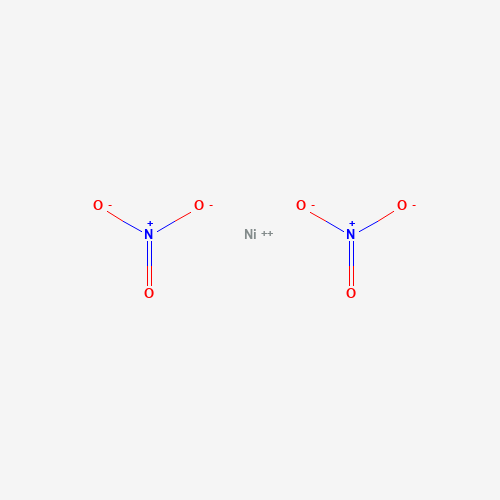
Physical Description | Nickel nitrate is a green crystalline solid. It is soluble in water. It is noncombustible, but it will accelerate the burning of combustible materials. If large quantities are involved in a fire or the combustible material is finely divided, an explosion may result. Prolonged exposure to fire or heat may result in an explosion. Toxic oxides of nitrogen are produced in fires involving this material. It is used in nickel plating and to make nickel catalysts for use in chemical manufacture.
科学粮草官-词典编辑部,修订于:2026-07-06
Toxicity
ToxicityEcotoxicity Values
TLm Stickleback 0.8 ppm/10 days/fresh water /Conditions of bioassay not specified/ /Hexahydrate/
Symptoms
Symptoms of nickel poisoning include headache, nausea, vomiting, dizziness, irritability, and difficulty sleeping, followed by chest pains, sweating, rapid heart beat, and a dry cough. Nitrate and nitrite poisoning causes methemoglobinemia. Symptoms include cyanosis, cardiac dysrhythmias and circulatory failure, and progressive central nervous system (CNS) effects. CNS effects can range from mild dizziness and lethargy to coma and convulsions. (L1137, L42)
Treatment
Excess exposure to nickel is usually handled by preventing further exposure and symptomatic treatment. Nickel poisoning may also be treated using chelation therapy with sodium diethyldithiocarbamate. Methemoglobinemia can be treated with supplemental oxygen and methylene blue 1% solution administered intravenously slowly over five minutes followed by IV flush with normal saline. Methylene blue restores the iron in hemoglobin to its normal (reduced) oxygen-carrying state. (L1613, L42)
Toxicity Data
LD50: 1620 mg/kg (Oral, Rat) (L510)
Health Effects
The most common harmful health effect of nickel in humans is an allergic reaction. This usually manifests as a skin rash, although some people experience asthma attacks. Long term inhahation of nickel causes chronic bronchitis and reduced lung function, as well as damage to the naval cavity. Ingestion of excess nickel results in damage to the stomach, blood, liver, kidneys, and immune system, as well as having adverse effects on reproduction and development. Nitrate and nitrite poisoning causes methemoglobinemia. Nitrites may cause pregnancy complications and developmental effects. They may also be carcinogenic. (L1137, L41)
Adverse Effects
Asthma - Reversible bronchoconstriction (narrowing of bronchioles) initiated by the inhalation of irritating or allergenic agents.
Exposure Routes
Inhalation (L41); oral (L41); dermal (L41)
Toxicity Summary
Nickel is known to substitute for other essential elements in certain enzmes, such as calcineurin. It is genotoxic, and some nickel compounds have been shown to promote cell proliferation. Nickel has a high affinity for chromatin proteins, particularly histones and protamines. The complexing of nickel ions with heterochromatin results in a number of alterations including condensation, DNA hypermethylation, gene silencing, and inhibition of histone acetylation, which have been shown to disturb gene expression. Nickel has also been shown to alter several transcription factors, including hypoxia-inducible transcription factor, activating transcription factor, and NF-KB transcription factor. There is also evidence that nickel ions inhibit DNA repair, either by directly inhibiting DNA repair...
Minimum Risk Level
Intermediate Inhalation: 0.0002 mg/m3 (L134) Chronic Inhalation: 0.00009 mg/m3 (L134)
RAIS Toxicity Values
Oral Chronic Reference Dose Reference: CALEPA
Human Toxicity Excerpts
INHALATION OF DUST CAUSES IRRITATION OF NOSE & THROAT, /COUGHING OR DIFFICULT BREATHING/. ... DUST IRRITATES EYES & MAY CAUSE DERMATITIS IN CONTACT WITH SKIN. SOLID /MATERIAL IS/ IRRITATING TO SKIN & EYES. IF SWALLOWED WILL CAUSE NAUSEA & VOMITING.
Carcinogen Classification
1, carcinogenic to humans. (L135)
Evidence for Carcinogenicity
Evaluation: There is sufficient evidence in humans for the carcinogenicity of nickel sulfate, and of the combinations of nickel sulfides and oxides encountered in the nickel refining industry. There is inadequate evidence in humans for the carcinogenicity of metallic nickel and nickel alloys. There is sufficient evidence in experimental animals for the carcinogenicity of metallic nickel, nickel monoxides, nickel hydroxides and crystalline nickel sulfides. There is limited evidence in experimental animals for the carcinogenicity of nickel alloys, nickelocene, nickel carbonyl, nickel salts, nickel arsenides, nickel antimonide, nickel selenides and nickel telluride. There is inadequate evidence in experimental animals for the carcinogenicity of nickel trioxide, amorphous nickel sulfide and...









