

 一键配货
一键配货
化合物详情
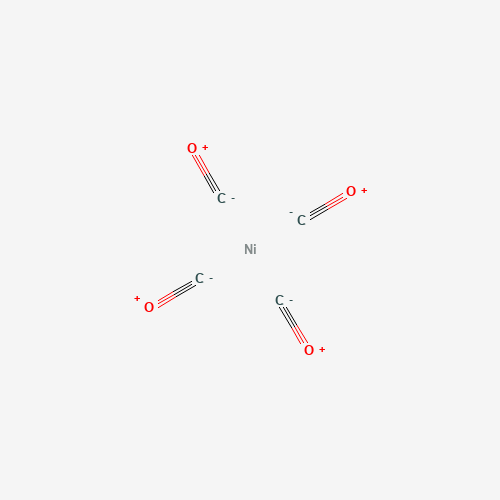
CAS13463-39-3
分子式CNiO
分子量170.7338 g/mol
危化品
Nickel Carbonyl can cause cancer according to an independent committee of scientific and health experts. It can cause developmental toxicity according to The Environmental Protection Agency (EPA).
科学粮草官-词典编辑部,修订于:2026-07-06
Toxicity
ToxicityFate Summary
ATMOSPHERIC FATE: The only gaseous nickel compound of environmental importance is nickel carbonyl, Ni(CO)4. Optimum conditions for its formation occur when carbon monoxide, under high partial pressure, contacts an active form of Ni in the temperature range of 50-150 °C. Under ambient conditions in moist air, it decomposes to form nickel carbonate. Thus, in the atmosphere at concentrations near the ppb level, it has a half-life of about 30 minutes.
Environmental Abiotic Degradation
... Nickel carbonyl decays spontaneously in air with a half-time of approx 30 min.
ICSC Environmental Data
The substance is very toxic to aquatic organisms. The substance may cause long-term effects in the aquatic environment. It is strongly advised not to let the chemical enter into the environment.
Artificial Pollution Sources
Inadvertent formation of nickel carbonyl can occur in various industrial processes that use nickel catalysts, such as coal gasification, petroleum refining, and hydrogenation of fats and oils.
Probable Routes of Human Exposure
NICKEL POISONING CAN OCCUR INDUSTRIALLY FOLLOWING INHALATION OF GASEOUS NICKEL CARBONYL ...
Symptoms
Symptoms of nickel poisoning include headache, nausea, vomiting, dizziness, irritability, and difficulty sleeping, followed by chest pains, sweating, rapid heart beat, and a dry cough. Nickel tetracarbonyl poisoning is characterized by a two-stage illness. The first consists of headaches and chest pain lasting a few hours, usually followed by a short remission. The second phase is a chemical pneumonitis which starts after typically 16 hours with symptoms of cough, breathlessness and extreme fatigue. These reach greatest severity after four days, possibly resulting in death from cardiorespiratory or renal failure. Convalescence is often extremely protracted, often complicated by exhaustion, depression and dyspnea on exertion. (L42, L508)
Treatment
Excess exposure to nickel is usually handled by preventing further exposure and symptomatic treatment. Nickel poisoning may also be treated using chelation therapy with sodium diethyldithiocarbamate. (L42)
Cancer Sites
[lung & nasal cancer]
Interactions
The uptake of (14)C by the green algae, Selenastrum capricornutum, was inhibited by free nickel ... ions. In the presence of the chelator, nitrilotriacetic acid, the inhibition ... was reduced. Thus, the toxicity of metals may be reduced or increased by the presence of chelators.
Target Organs
Lungs, paranasal sinus, central nervous system, reproductive system
Toxicity Data
LC50: 35 ppm over 30 minutes (Inhalation, Mouse) (T76)
Health Effects
The most common harmful health effect of nickel in humans is an allergic reaction. This usually manifests as a skin rash, although some people experience asthma attacks. Long term inhahation of nickel causes chronic bronchitis and reduced lung function, as well as damage to the naval cavity. Ingestion of excess nickel results in damage to the stomach, blood, liver, kidneys, and immune system, as well as having adverse effects on reproduction and development. (L41)
Adverse Effects
ACGIH Carcinogen - Confirmed Animal.
Exposure Routes
Inhalation (L41); oral (L41); dermal (L41)
Toxicity Summary
Nickel is known to substitute for other essential elements in certain enzmes, such as calcineurin. It is genotoxic, and some nickel compounds have been shown to promote cell proliferation. Nickel has a high affinity for chromatin proteins, particularly histones and protamines. The complexing of nickel ions with heterochromatin results in a number of alterations including condensation, DNA hypermethylation, gene silencing, and inhibition of histone acetylation, which have been shown to disturb gene expression. Nickel has also been shown to alter several transcription factors, including hypoxia-inducible transcription factor, activating transcription factor, and NF-KB transcription factor. There is also evidence that nickel ions inhibit DNA repair, either by directly inhibiting DNA repair...
Minimum Risk Level
Intermediate Inhalation: 0.0002 mg/m3 (L134) Chronic Inhalation: 0.00009 mg/m3 (L134)
RAIS Toxicity Values
Oral Chronic Reference Dose Reference: CALEPA
Carcinogen Classification
1, carcinogenic to humans. (L135)
Non-Human Toxicity Values
LC50 Cat inhalation 270 ppm/30 min
1 or Cancer Risk Level 1E-06
Fraction of Contaminant Absorbed in Gastrointestinal Tract: 1
Evidence for Carcinogenicity
Evaluation: There is sufficient evidence in humans for the carcinogenicity of nickel sulfate, and of the combinations of nickel sulfides and oxides encountered in the nickel refining industry. There is inadequate evidence in humans for the carcinogenicity of metallic nickel and nickel alloys. There is sufficient evidence in experimental animals for the carcinogenicity of metallic nickel, nickel monoxides, nickel hydroxides and crystalline nickel sulfides. There is limited evidence in experimental animals for the carcinogenicity of nickel alloys, nickelocene, nickel carbonyl, nickel salts, nickel arsenides, nickel antimonide, nickel selenides and nickel telluride. There is inadequate evidence in experimental animals for the carcinogenicity of nickel trioxide, amorphous nickel sulfide and...
Antidote and Emergency Treatment
Advanced treatment: Consider orotracheal or nasotracheal intubation for airway control in the patient who is unconscious. Positive pressure ventilation techniques with a bag valve mask device may be beneficial. Monitor cardiac rhythm and treat arrhythmias if necessary ... . Consider drug therapy for pulmonary edema ... . Start an IV with D5W /SRP: "To keep open", minimal flow rate/. Use lactated Ringer's if signs of hypovolemia are present. For hypotension with signs of hypovolemia, administer fluid cautiously. Consider vasopressors for hypotension with a normal fluid volume. Watch for signs of fluid overload ... . Use proparacaine hydrochloride to assist eye irrigation ... . /Nickel and related compounds/
Hazard Quotient Level 3 or Cancer Risk Level 1E-04
Fraction of Contaminant Absorbed in Gastrointestinal Tract: 1