


 一键配货
一键配货
化合物详情
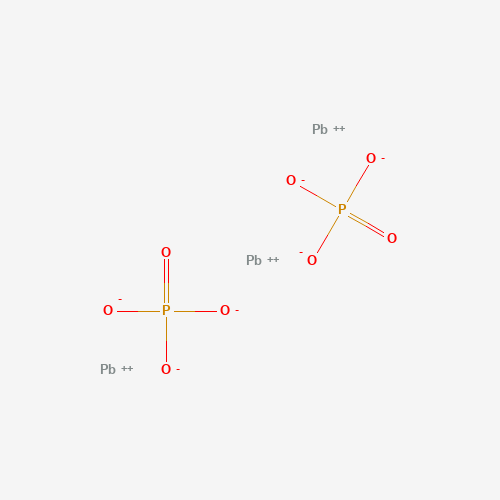
CAS7446-27-7
分子式O7P2Pb2
分子量811.5 g/mol
非危品
Lead Phosphate can cause cancer according to an independent committee of scientific and health experts.
科学粮草官-词典编辑部,修订于:2026-07-06
Toxicity
ToxicityEcotoxicity Excerpts
/AQUATIC SPECIES/ ... The effect of lead speciation on the toxicity of the metal to the shrimp Hyallela azteca in artificial test media /was investigated/. Lead was added to the medium in association with four different molarities of phosphate, 10-3, 10-4, 10-5, and 10-6 mol/litre, and at two different pH values, 6 and 8. Theoretical calculations were made of the concn of free lead in the solutions. At pH 6, very little free lead exists at high phosphate concn, irrespective of the total lead concn. Similarly, little free lead is predicted at any phosphate concn at pH 8. Mortality figures related well to the predicted values for free lead in the various solutions. At pH 6, a total lead concn of 5 mg/L, and a phosphate concn of 10-6 M/L, there was 100% mortality after 48 hr. For phosphate...
Natural Pollution Sources
... FOUND IN ... PYROMORPHITE (PHOSPHATE) ...
Probable Routes of Human Exposure
NIOSH (NOES Survey 1981-1983) has statistically estimated that 4617 workers (27 of these were female) were potentially exposed to lead phosphate dibasic in the US(1).
Symptoms
Symptions of chronic lead poisoning include reduced cognitive abilities, nausea, abdominal pain, irritability, insomnia, metal taste in the mouth, excess lethargy or hyperactivity, chest pain, headache and, in extreme cases, seizures, comas, and death. There are also associated gastrointestinal problems, such as constipation, diarrhea, vomiting, poor appetite, weight loss, which are common in acute poisoning. (A2, L21)
Treatment
Lead poisoning is usually treated with chelation therapy using DMSA, EDTA, or dimercaprol. (L21)
Health Effects
Lead is a neurotoxin and has been known to cause brain damage and reduced cognitive capacity, especially in children. Lead exposure can result in nephropathy, as well as blood disorders such as high blood pressure and anemia. Lead also exhibits reproductive toxicity and can results in miscarriages and reduced sperm production. (L21)
Adverse Effects
ACGIH Carcinogen - Confirmed Animal.
Exposure Routes
Oral (L136); inhalation (L136); dermal (L136)
Toxicity Summary
Lead mimics other biologically important metals, such as zinc, calcium, and iron, competing as cofactors for many of their respective enzymatic reactions. For example, lead has been shown to competitively inhibit calcium's binding of calmodulin, interferring with neurotransmitter release. It exhibits similar competitive inhibition at the NMDA receptor and protein kinase C, which impairs brain microvascular formation and function, as well as alters the blood-brain barrier. Lead also affects the nervous system by impairing regulation of dopamine synthesis and blocking evoked release of acetylcholine. However, it's main mechanism of action occurs by inhibiting delta-aminolevulinic acid dehydratase, an enzyme vital in the biosynthesis of heme, which is a necesssary cofactor of hemoglobin. (...
Minimum Risk Level
Chronic Inhalation: 0.05 mg/m3 (L134)
RAIS Toxicity Values
Oral Slope Factor Reference: CALEPA
Human Toxicity Excerpts
/SIGNS AND SYMPTOMS/ Permanent kidney damage can result from long-term or high exposures. Lead exposure increases the risk of high blood pressure. High or repeated exposure may damage the nerves resulting in loss of coordination in the arms and legs. Can cause brain damage and anemia.
Acceptable Daily Intakes
0.007 mg/kg (WHO) /Lead; from table/
Carcinogen Classification
2A, probably carcinogenic to humans. (L135)
Non-Human Toxicity Excerpts
/OTHER TOXICITY INFORMATION/ Premature loss of teeth in rats from exptl lead poisoning is attributed to the demineralization caused by chem displacement of jawbone calcium by the colloidal secondary lead phosphate from the circulating blood.
1 or Cancer Risk Level 1E-06
Fraction of Contaminant Absorbed in Gastrointestinal Tract: 1
Evidence for Carcinogenicity
Lead, lead compounds: Reasonably anticipated to be a human carcinogen
Hazard Quotient Level 3 or Cancer Risk Level 1E-04
Fraction of Contaminant Absorbed in Gastrointestinal Tract: 1









