

 一键配货
一键配货
化合物详情
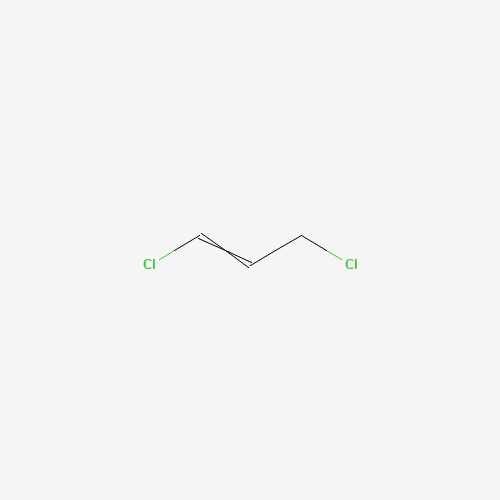
CAS542-75-6
分子式C3H4Cl2
分子量110.97 g/mol g/mol
危化品
1,3-Dichloropropene can cause cancer according to an independent committee of scientific and health experts.
科学粮草官-词典编辑部,修订于:2026-07-06
Toxicity
ToxicityBody Burden
Dichloropropene was detected in one of 8 samples of mother's milk from 4 urban areas in the USA but the isomer was not specified(1). /Dichloropropene/
EPA Ecotoxicity
Pesticide Ecotoxicity Data from EPA: 54
Fate Summary
ATMOSPHERIC FATE: According to a model of gas/particle partitioning of semivolatile organic compounds in the atmosphere(1), 1,3-dichloropropene, which has a vapor pressure of 34.3 and 23.0 mm Hg at 25 °C for the cis and trans-isomers respectively(2), is expected to exist solely as a vapor in the ambient atmosphere. Vapor-phase 1,3-dichloropropene is degraded in the atmosphere by reaction with photochemically-produced hydroxyl radicals(SRC); the half-life for this reaction in air is estimated to be 1.9 and 1.1 days for the cis and trans-isomers(SRC), calculated from their respective rate constants of 1.43X10⁻¹¹ and 8.4X10⁻¹² cu cm/molecule-sec at 25 °C(3). 1,3-Dichloropropene is also degraded in the atmosphere by reaction with ozone and nitrate radicals. The half-life for the reaction wi...
Soil Adsorption / Mobility
Adsorption is higher in dry soils than in moist soil(2). However, water-saturated soils have air passageways blocked and fumigant movement is decreased(2). This is illustrated by a 20-day study in which the 1,3-dichloropropene diffused to >.46 m in a silty clay loam with 23% moisture (dry wt) and >1.20 m in the same soil when the moisture content was 7.7%(2). The concentration of 1,3-dichloropropene was monitored at ground level and at 42 inches above ground after fumigant was applied to a pineapple field at a depth of 18 inches(1). 1,3-Dichloropropene levels were relatively constant (20-50 ppb) at ground level for 6 days after fumigation; after 9 days the concentration steadily declined to <0.1 ppb after 27-30 days. A light rain at day 6 temporarily increased the release of the fumigan...
Environmental Biodegradation
ANAEROBIC: Using silty loam and sandy loam soils under anaerobic conditions at 15 and 25 °C, 1,3-dichloropropene had soil metabolism half-lives ranging from 2.4 to 9.1 days. Degradation products included 3-chloroallyl alcohol, propionic acid and an unknown compound(1).
Environmental Bioconcentration
Estimated weighted average BCF 1.91 for the edible portion of all freshwater and estuarine aquatic organisms consumed by Americans. (The estimation method was given). /1,3-Dichloropropene (cis and trans)/. ... Estimated steady state BCF 4.84 (from table). /1,3-Dichloropropene (cis and trans)/(1).
Volatilization from Water / Soil
Lab experiments were conducted concerning the principal factors which influence volatilization of 1,3-dichloropropene from soil. Four independent variables were considered: soil type, soil moisture, soil temperature, and dose of the chemical applied to the soil. Soil temperature was the most important variable affecting volatilization loss of 1,3-dichloropropene, with 36.97, 88.69, and 71.03% recovered in n-hexane after 72 hours at 5, 15, and 25 °C, respectively, followed by soil moisture. Air dried soil, air-dried plus 4% water, and air-dried plus 8% water resulted in 39.68, 60.93, and 64.45% total recovered in n-hexane, respectively, after 144 hours. Soil type and 1,3-dichloropropene concentration in the soil had only a small influence on nematicide volatilization, with 36.81, 29.46,...
Environmental Abiotic Degradation
1,3-Dichloropropene hydrolysis half-lives measured in buffered solutions at pH 5, 7, and 9 were 13.5 days at 20 °C(1). Hydrolysis half-lives measured at pH 5.5 and 7.5 were 2 days at 29 °C, 11-13 days at 15 °C, and 90-100 days at 2 °C(1). Chloroallyl alcohol is the main hydrolytic product, with the hydrolysis being pH independent and temperature dependent(1). Similar hydrolysis half-lives of 3.1, 11.3, and 51 days measured at 30, 20, and 10 °C, respectively, in sterile, buffered water(2). Some hydrolysis dependence on pH was observed in a study that measured half-lives of 8.7, 7.2, and 2.8 days at pH 4, 7, and 10, respectively, in buffer solutions at 20 °C(3). The primary hydrolysis product of 1,3-dichloropropene is 3-chloroallyl alcohol, which is broken down further to 3-chloroacrylic...
Food Survey Values
A variety of food samples collected from retail stores in the Kanto plain area of Japan in November 1992 did not have any positive detections for 1,3-dichloropropene (specific detection limit not reported)(1). 1,3-Dichloropropene has not been detected in food(2).
Milk Concentrations
ENVIRONMENTAL: Dichloropropene was detected in one of 8 samples of mother's milk from 4 urban areas in the USA but the isomer was not specified(1). /Dichloropropene/
Ecotoxicity Excerpts
/PLANTS/ 1,3-Dichloropropene at 20 ug/mL of air, killed 100% of microsclerotia after incubation for 30 hr, and at 100 ug/g of soil moisture after incubation for 3 days. Higher temperatures increased the toxicity.
Effluent Concentrations
Based on the National Urban Runoff Program in which 86 samples from 19 cities throughout the US were analyzed, 1,3-dichloropropene was detected only in Eugene, OR at 1-2 ppb, which was a 2% frequency of detection nationwide(1). 1,3-Dichloropropene has been detected in wastewater from organic chemicals manufacturing/plastics (79 ppb mean)(2). 1 out of 5 samples of municipal landfill leachate in WI was positive, reporting a concn of 18 ppb (cis isomer) but not detected in 6 samples of municipal landfill leachate in MN(3). Influent of a textile wastewater plant contained 2 ppb of the cis-isomer while effluent from the plant contained 6 ppb of the cis-isomer and 6 ppb of the trans-isomer(4). Influent to a municipal waste treatment plant contained no 1,3-dichloropropene, but following super-...
ICSC Environmental Data
The substance is very toxic to aquatic organisms. The substance may cause long-term effects in the aquatic environment. It is strongly advised not to let the chemical enter into the environment.
Atmospheric Concentrations
SOURCE DOMINATED: 1,3-Dichloropropene concentrations were reported in samples from the US (4 sites, 16 points) at 7.3 parts per trillion median, 570 parts per trillion maximum (isomer unspecified). One source area, Freeport, TX, that had a mean concentration of 170 parts per trillion, is a site of 1,3-dichloropropene manufacturing(1).
Fish/Seafood Concentrations
The USEPA STORET Data Base (146 observations) 0.19 ppm mean, 20.0 ppm maximum(1).
Artificial Pollution Sources
1,3-Dichloropropene's production(1) may result in its release to the environment through various waste streams; its use as a soil fumigant nematocide(1,2) will result in its direct release to the environment(SRC). Its use in organic synthesis(3) may result in its release to the environment through various waste streams(SRC). Emissions, due to its rapid diffusion in soil, can result in air releases in application areas(4). A field experiment conducted under typical agronomic practices found that 16-35% of applied 1,3-dichloropropene was lost through volatilization(5). Another field study estimated 18-23% of applied 1,3-dichloropropene resulted in atmospheric emissions(6). The California State Department of Agriculture reported that in 1971 approximately 1,285 metric tons of pesticide con...
Sediment/Soil Concentrations
SOIL: Data from the USEPA STORET Data Base reports a 5.44 ppb mean, 500 ppb maximum on dry weight basis of 341 observations(1).
Probable Routes of Human Exposure
Exposure occurs principally during manufacturing or during bulk handling.
Other Environmental Concentrations
During a study of organic compounds in tobacco smoke, the concentrations of 1,3-dichloropropene in ultra low tar, full flavor low tar, and full flavor cigarette brands were 11.4, 11.7, and 14.4 ug/cigarette, respectively(1).
Environmental Fate / Exposure Summary
1,3-Dichloropropene's production may result in its release to the environment through various waste streams; its use as a soil fumigant nematocide will result in its direct release to the environment. Its use in organic synthesis may result in its release to the environment through various waste streams. If released to air, vapor pressures of 34.3 and 23.0 mm Hg at 25 °C for the cis- and trans-isomers, respectively, indicate 1,3-dichloropropene will exist solely as a vapor in the ambient atmosphere. Vapor-phase 1,3-dichloropropene will be degraded in the atmosphere by reaction with photochemically-produced hydroxyl radicals; the half-life for this reaction in air is estimated to be 1.9 and 1.1 days for the cis and trans-isomers, respectively. 1,3-Dichloropropene is also degraded in the...
Symptoms
Symptoms occuring after inhalation include gasping, refusal to breathe, coughing, substernal pain; lacrimation and headache are prominant. After inhalation exposures, malaise, headache, chest and abdominal discomfort and irritability can persist during weeks or years. Moreover, Irritation of eyes and upper respiratory mucosa appears promptly after exposure to concentrated vapors. Ingestion can cause cough, sore throat, headache, dizziness, nausea, vomiting, unconsciousness, and laboured breathing (T48, L893).
Treatment
Following oral exposure, administer charcoal as a slurry. Monitor liver and kidney function; elevations may not be seen for several days. Following eye exposure, irrigate exposed eyes with copious amounts of room temperature water for at least 15 minutes. If irritation, pain, swelling, lacrimation, or photophobia persist, the patient should be seen in a health care facility. Following dermal exposure, remove contaminated clothing and wash exposed area thoroughly with soap and water. Following inhalation, move patient to fresh air, even though initial symptoms and signs are mild; keep the victim quiet, in a semi-reclining position. Minimum physical activity limits the likehood of pulmonary edema. If victim is not breathing, clear the airway of secretions and resuscitate with positive pre...
Cancer Sites
[in animals: cancer of the bladder, liver, lung & forestomach]
Interactions
Treatment with buthionine sulfoximine (0.2 M in 0.58% NaCl, 4 mL/kg body weight (to inhibit glutathione synthesis) 4 hr before dosing with 1,3-dichloropropene or with diethyl maleate (3.1 M in corn oil, 0.4 ml/kg body weight) (to deplete glutathione) or corn oil itself 1 hour before dosing with 1,3-dichloropropene at 50 and 75 mg/kg body weight, resulted in elevations of N-acetylglucosaminidase excretion. In contrast, treatment with aminooxyacetic acid (0.125 M in 0.85 % NaCl, 4 mL/kg body weight) (which inhibits beta lyase activity) 1 hour before 1,3-dichloropropene injection prevented the 1,3-dichloropropene induced release of N-acetylglucosaminidase from the renal tubule. These results suggest that the nephrotoxic effects of 1,3-dichloropropene may be mediated through the mercapturic...
Target Organs
Eyes, skin, respiratory system, central nervous system, liver, kidneys
Toxicity Data
LD50: 304 mg/kg (Oral, Rat) (L893)
Health Effects
Ingestion of trans-1,3-D can lead to developed gastrointestinal distress, adult respiratory distress syndrome, hematological and hepatorenal functional impairment, acute gastrointestinal distress with pulmonary congestion and edema, central nervous depression, perhaps even in the absence of impaired oxygen uptake. Moreover, this can lead to death. Coma may occur rapidly after inhalation. Inhalation of trans-1,3-D at low concentration can cause central nervous depression and moderate irritation of respiratory system; headache is frequent. After inhalation exposures, malaise, headache, chest and abdominal discomfort and irritability have been reported to persist for several weeks, and perhaps for several years. Severe skin irritation with marked inflammatory response of epidermis can unde...
Adverse Effects
ACGIH Carcinogen - Confirmed Animal.
Exposure Routes
Inhalation (L893); oral (L893); dermal (L893); eye contact (L893).
Toxicity Summary
The primary toxic effects of trans-1,3-dichloropropene are portal-of-entry effects resulting from the chemical reactivity of the compound and its physicochemical properties. Repeated irritation results in a hyperplastic response in the target tissues. The mutagenicity of trans-1,3-dichloropropene is attributed to its biotransformation by cytochrome P-450 to stereospecific epoxides and the hydrolysis product, 3-chloro-2-hydroxypropanal. It is likely that depletion of glutathione would block the major detoxification pathway for trans-1,3dichloropropene, resulting in increased toxicity of organs such as the liver and kidney because of binding of reactive intermediates to macromolecules in cells. There is some evidence that cytotoxicity of hepatic cells exposed to trans-1,3-dichloropropene...
Minimum Risk Level
Intermediate Inhalation: 0.008 ppm (Rabbit) (L893) Chronic Inhalation: 0.007 ppm (Rabbit) (L893)
RAIS Toxicity Values
Oral Slope Factor Reference: IRIS Current
Carcinogen Classification
2B, possibly carcinogenic to humans. (L135)
1 or Cancer Risk Level 1E-06
Soil Saturation Concentration (mg/kg): 1.57e+03
Evidence for Carcinogenicity
1,3-Dichloropropene: reasonably anticipated to be a human carcinogen. /1,3-Dichloropropene, Technical Grade/
Hazard Quotient Level 3 or Cancer Risk Level 1E-04
Soil Saturation Concentration (mg/kg): 1.57e+03
USGS Health-Based Screening Levels for Evaluating Water-Quality
Reference: Smith, C.D. and Nowell, L.H., 2024. Health-Based Screening Levels for evaluating water-quality data (3rd ed.). DOI:10.5066/F71C1TWP