


 一键配货
一键配货
化合物详情
CAS7787-36-2
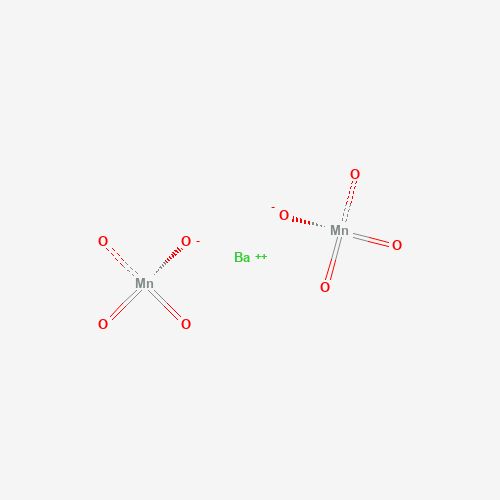
分子式BaMn2O8
分子量375.198 g/mol
危化品
Physical Description | Barium permanganate appears as a purplish colored crystalline solid. Noncombustible, but accelerates burning of combustible material. Finely divided combustible materials may be explosive. May spontaneously ignite on contact with combustible liquids. Contact with sulfuric acid may result in fires or explosions. Used as a disinfectant and to make other permanganates.
科学粮草官-词典编辑部,修订于:2026-07-06
Toxicity
ToxicitySymptoms
Ingesting excess barium may cause vomiting, abdominal cramps, diarrhea, difficulties in breathing, increased or decreased blood pressure, numbness around the face, and muscle weakness. High levels may result in changes in heart rhythm or paralysis and possibly death. Manganese mainly affects the nervous system and may cause behavioral changes and other nervous system effects, which include movements that may become slow and clumsy. This combination of symptoms when sufficiently severe is referred to as
Treatment
Intravenous infusion of potassium often relieves many of the symptoms of barium toxicity. (L214)
Health Effects
The health effects of the different barium compounds depend on how well the compound dissolves in water or the stomach contents. At low doses, barium acts as a muscle stimulant, while higher doses affect the nervous system, causing cardiac irregularities, tremors, weakness, anxiety, dyspnea, paralysisand possibly death. Barium may also cause gastrointestinal disturbances, damage the kidneys and cause decreases in body weight. Manganese mainly affects the nervous system and may cause behavioral changes and other nervous system effects, which include movements that may become slow and clumsy. This combination of symptoms when sufficiently severe is referred to as
Adverse Effects
ACGIH Carcinogen - Not Classifiable.
Exposure Routes
Oral (L214); inhalation (L214)
Toxicity Summary
Barium is a competitive potassium channel antagonist that blocks the passive efflux of intracellular potassium, resulting in a shift of potassium from extracellular to intracellular compartments. The intracellular translocation of potassium results in a decreased resting membrane potential, making the muscle fibers electrically unexcitable and causing paralysis. Some of these barium's effects may also be due to barium induced neuromuscular blockade and membrane depolarization. Manganese is a cellular toxicant that can impair transport systems, enzyme activities, and receptor functions. It primarily targets the central nervous system, particularily the globus pallidus of the basal ganglia. It is believed that the manganese ion, Mn(II), enhances the autoxidation or turnover of various int...
Minimum Risk Level
Intermediate Oral: 0.2 mg/kg/day (Barium)(L134) Chronic Oral: 0.2 mg/kg/day (Barium) (L134) Chronic Inhalation: 0.0003 mg/m3 (Manganese) (L134)
Average Daily Intake
... 3-7 mg by dietary intake. /Sol and insol manganese cmpd/
Human Toxicity Excerpts
/SIGNS AND SYMPTOMS/ Short Term Exposure: Skin and eye contact can cause severe irritation and burns. Barium permanganate can affect you when breathed in. Breathing the dust or mist can irritate the nose, throat, and bronchial tubes, causing cough and phlegm. Exposure to either form can affect the nervous system and cause hypokalemia, which can cause heart disorders. Long Term Exposure: After repeated exposure, barium may show up as spots in the lungs on chest X-ray. Some barium chemicals are contaminated with silica, which scars the lungs. Animal studies have found increased blood pressure and changes in the heart from ingesting barium over a long time. Repeated contact may cause chronic drying and cracking skin.
Carcinogen Classification
No indication of carcinogenicity to humans (not listed by IARC).
Evidence for Carcinogenicity
A4; Not classifiable as a human carcinogen. /Barium and soluble compounds, as Ba/









