


 一键配货
一键配货
化合物详情
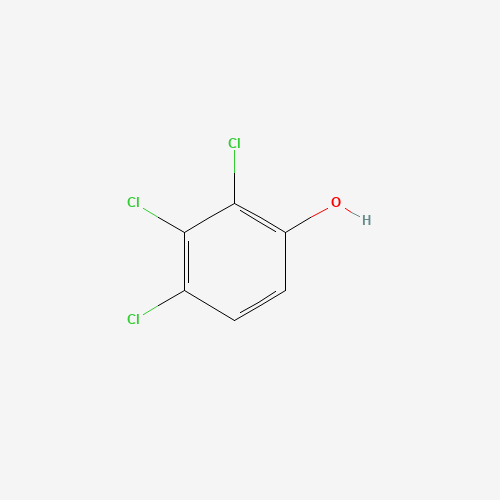
CAS15950-66-0
分子式C6H3Cl3O
分子量197.446 g/mol
非危品
Physical Description | Trichlorophenol appears as solid crystals or flakes with a strong disinfectant odor. Sinks in water. (USCG, 1999)
科学粮草官-词典编辑部,修订于:2026-07-06
Toxicity
ToxicityEcotoxicity Values
USDA APHIS Chemical Effects: collection=usda_chemeffect&query_type=synonym&query='^15950-66-0$'
Fate Summary
Terrestrial Fate: Contamination of soil in the vicinity of two Finnish sawmills using preservative (Ky-5) against blue-staining fungi that contained chlorophenols was studied. The soil around the treatment basins contained up to 70 mg chlorophenols/kg and that in the storage area for treated lumber up to 6 mg/kg. Contamination extended to a depth of at least 2 m near the treatment basins. Surface water inside the sawmill area contained the same chlorophenols as those used in wood preservation, plus some additional isomers. The ground water and lake water around the sawmill areas were contaminated. The fate of different chlorophenols in soil is probably affected by many factors, such as the water solubility of each chlorophenol, pH of the soil, rainfall, soil organic matter content, type...
Environmental Biodegradation
Terrestrial Fate: Studies on the aerobic and anaerobic degradation of phenol and selected chlorophenols were carried out using clay loam soil containing no added nutrients. The phenolic cmpd were added to flasks containing soil to give an initial concn of 100 ug/g wet wt soil. Under aerobic conditions, ... 2,4,5-trichlorophenol was ... degraded by microorganisms. Under anaerobic conditions, none of the cmpd studied were degraded by microorganisms. The cmpd appeared to stimulate microbial growth in the soil. /Phenol and selected chlorophenols/
Environmental Abiotic Degradation
... Chlorinated phenols will undergo photolysis in aqueous solutions as a result of ultraviolet irradiation /at 290nm/ and that photodegradation leads to the substitution of hydroxyl groups in place of the chlorine atoms with subsequent polymer formation. /Chlorinated phenols/
Environmental Water Concentrations
TRICHLOROPHENOL (UNSPECIFIED ISOMERS) HAS BEEN DETECTED IN RIVER WATER, LANDFILL LEACHATE (AT A LEVEL OF 40 ug/l), TAP-WATER (AT LEVELS OF 2 AND 4 ng/l), AND IN CHLORINATED, BIOLOGICALLY-TREATED EFFLUENT FROM A SEWAGE PLANT.
Effluent Concentrations
Biologically treated effluent samples from 9 Canadian bleached softwood Kraft mills were analyzed for chlorinated phenolic content. Chlorinated phenolics, including 3,4,5-trichlorophenol, present in effluent discharged from bleached Kraft mills are not expected to contribute an off-odor to recipient waters.
ICSC Environmental Data
The substance is very toxic to aquatic organisms. The substance may cause long-term effects in the aquatic environment. This substance does enter the environment under normal use. Great care, however, should be taken to avoid any additional release, for example through inappropriate disposal.
Fish/Seafood Concentrations
... Chlorinated phenols have been shown to impair the flavor of freshwater fish flesh at concentrations much lower than those at which they have a toxic effect. /Chlorinated phenols/
Artificial Pollution Sources
Chlorophenols may be produced inadvertently by chlorination reactions which take place during the disinfection of wastewater effluents or drinking water sources. ... Chlorinated phenols represent important compounds with regard to potential point source and non-point source water contamination. /Chlorinated phenols/
Probable Routes of Human Exposure
Workers employed in wood treatment plants, tanneries, textile plants, and pulp and paper mills, as well as pesticide spray operators are potentially at risk from exposure to chlorophenols and to impurities in chlorophenol products. /Chlorophenols/
Adverse Effects
IARC Carcinogen - Class 3: Chemicals are not classifiable by the International Agency for Research on Cancer.
Exposure Routes
The substance can be absorbed into the body by inhalation of its aerosol, through the skin and by ingestion.
Human Toxicity Excerpts
ON PROLOGED EXPOSURE, EVEN MILD TO MODERATE CHEMICAL BURNS ON SKIN OF MAN.
Non-Human Toxicity Values
LD50 Guinea pig oral 1000-3000 mg/kg
Non-Human Toxicity Excerpts
Correlation was found between acute (24hr) toxicity (median inhibitory concn IC50) to Daphnia magna of 17 chlorophenols and their octanol water partition coefficients, dissociation constants, melting points, the perimeter of the efficient section of the mol, or mol connectivity index of the first order. Phenols with Cl in para-position were more toxic than those with Cl in ortho-position.
Antidote and Emergency Treatment
For basic treatment: Establish a patent airway. Suction if necessary. Watch for signs of respiratory insufficiency and assist ventilations if necessary. Administer oxygen by nonrebreather mask at 10 to 15 L/min. Monitor for pulmonary edema and treat if necessary ... . Monitor for shock and treat if necessary ... . Anticipate seizures and treat if necessary ... . For eye contamination, flush eyes immediately with water. Irrigate each eye continuously with normal saline during transport ... . Administer activated charcoal ... . Dilution may be contraindicated because it may increase absorption. Do not use emetics ... . Cover skin burns with dry, sterile dressings after decontamination ... . Maintain body temperature. /Phenols and related compounds/









