


 一键配货
一键配货
化合物详情
CAS7789-43-7
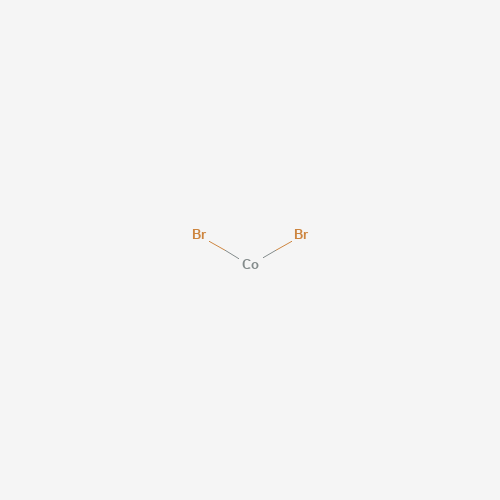
分子式CoBr2
分子量218.74 g/mol g/mol
危化品
Physical Description | Cobaltous bromide is a red violet crystalline solid. It is soluble in water. The primary hazard is the threat to the environment. Immediate steps should be taken to limit its spread to the environment. It is used as a catalyst in the production of other chemicals.
科学粮草官-词典编辑部,修订于:2026-07-06
Toxicity
ToxicityEcotoxicity Values
LC50; Species: Pimephales promelas (fathead minnow); Conditions: freshwater, static, 22 °C; Concentration: 91.9 mg/L for 96 hr (95% confidence limit: 56.3-132.9 mg/L)
Fate Summary
ATMOSPHERIC FATE: Inorganic cobalt compounds are nonvolatile and released into the atmosphere in particulate form(1). Particulate-phase cobalt compounds are removed from the air by wet and dry deposition(SRC). Cobalt has been detected in atmospheric deposition(2) and in rain-snow precipitation(3).
Environmental Bioconcentration
Food Chain Concentration Potential: Microorganisms concentrate the cobalt (from cobaltous bromide) in water up to 1000 to 1500 times(1).
Artificial Pollution Sources
Cobaltous bromide's production and use in hygrometers and as a catalyst for organic reactions(1) may result in its release to the environment through various waste streams(SRC).
Probable Routes of Human Exposure
Occupational exposure to cobaltous bromide may occur through inhalation of dust and dermal contact with this compound at workplaces where cobaltous bromide is produced or used. (SRC)
Symptoms
Cobalt inhalation can cause asthma-like breathing problems. Skin contact is known to result in contact dermatitis, which is characterized by irritation and rashes. Ingesting large amounts of cobalt may cause nausea and vomiting. Bromine vapour causes irritation and direct damage to the mucous membranes. Symptoms include lacrimation, rhinorrhoea, eye irritation with mucous secretions from the oropharyngeal and upper airways, coughing, dyspnoea, choking, wheezing, epistaxis, and headache. The bromide ion is a central nervous system depressant producing ataxia, slurred speech, tremor, nausea, vomiting, lethargy, dizziness, visual disturbances, unsteadiness, headaches, impaired memory and concentration, disorientation and hallucinations. This is called bromism. (L2090, L626, L627, L29)
Treatment
EYES: irrigate opened eyes for several minutes under running water. INGESTION: do not induce vomiting. Rinse mouth with water (never give anything by mouth to an unconscious person). Seek immediate medical advice. SKIN: should be treated immediately by rinsing the affected parts in cold running water for at least 15 minutes, followed by thorough washing with soap and water. If necessary, the person should shower and change contaminated clothing and shoes, and then must seek medical attention. INHALATION: supply fresh air. If required provide artificial respiration.
Toxicity Data
LD50: 406 mg/kg (Oral, Rat) (T14)
Health Effects
Exposure to high amount of cobalt can cause heart, lung, kidney, and liver damage. Skin contact is known to result in contact dermatitus. Cobalt may also have mutagenic and carcinogenic effects. Bromine vapour causes irritation and direct damage to the mucous membranes. Elemental bromine also burns the skin. The bromide ion is a central nervous system depressant and chronic exposure produces neuronal effects. This is called bromism and can result in central reactions reaching from somnolence to coma, cachexia, exicosis, loss of reflexes or pathologic reflexes, clonic seizures, tremor, ataxia, loss of neural sensitivity, paresis, papillar edema of the eyes, abnormal speech, cerebral edema, delirium, aggressiveness, and psychoses. (L625, L626, L627, L29, L30)
Adverse Effects
IARC Carcinogen - Class 2: International Agency for Research on Cancer classifies chemicals as probable (2a), or possible (2b) human carcinogens.
Exposure Routes
Inhalation (L29); oral (L29); dermal (L29)
Toxicity Summary
Cobalt is believed to exhibit its toxicity through a oxidant-based and free radical-based processes. It produces oxygen radicals and may be oxidized to ionic cobalt, causing increased lipid peroxidation, DNA damage, and inducing certain enzymes that lead to cell apoptosis. Cobalt has also been shown to block inorganic calcium channels, possibly impairing neurotransmission. Cobalt can also chelate lipoic acids, impairing oxidation of pyruvate or fatty acids. In addition, cobalt may inhibit DNA repair by interacting with zinc finger DNA repair proteins, and has also been shown to inhibit heme synthesis and glucose metabolism. Cobalt may activate specific helper T-lymphocyte cells and interact directly with immunologic proteins, such as antibodies (IgA and IgE) or Fc receptors, resulting i...
Minimum Risk Level
Chronic Inhalation: 0.0001 mg/m3 (L134) Intermediate Oral: 0.01 mg/kg/day (L134)
Carcinogen Classification
2B, possibly carcinogenic to humans. (L135)
Non-Human Toxicity Values
LD50 Rat oral 406 mg/kg
Non-Human Toxicity Excerpts
/LABORATORY ANIMALS: Acute Exposure/ Eight cobalt compounds were administered to rats by gastric intubation and the following LD50 values (mg anhydrous compound/kg body wt) were determined: Co(II) fluoride, 150; cobalt(II) oxide, 202; cobalt(II) phosphate, 387; cobalt(II) bromide, 406; cobalt(II) chloride, 418; cobalt(II) sulfate, 424; cobalt(II) nitrate, 434; and cobalt(II) acetate, 503. After administration of the Co compounds, body temperatures decreased by 2.5-7.5 °C. The liver, heart and kidneys of rats given cobalt(II) fluoride or oxide were examined microscopically. Hyperemia, hemorrhage and cytoplasmic changes were noted, while the kidney glomeruli were rich in cells and basal membranes were thickened. Cells of the proximal tubules were swollen and showed vacuolization and degen...
Evidence for Carcinogenicity
Cobalt and cobalt compounds that release cobalt ions in vivo are reasonably anticipated to be human carcinogens based on sufficient evidence of carcinogenicity from studies in experimental animals and supporting data from studies on mechanisms of carcinogenesis. /Cobalt and cobalt compounds/









