


 一键配货
一键配货
化合物详情
CAS13106-47-3
分子式CH2O3.Be
分子量- g/mol
危化品
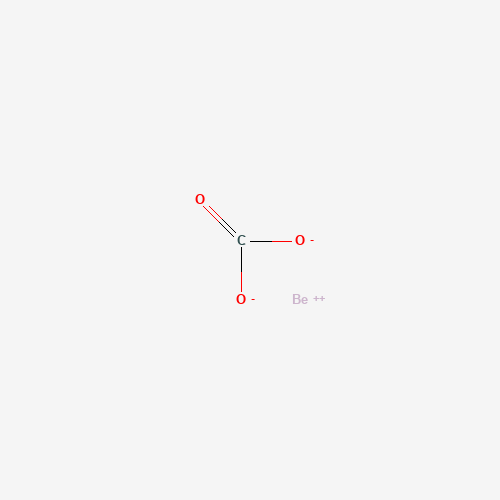
Beryllium carbonate is a chemical compound with the chemical formula BeCO3. There are three forms reported, anhydrous, a tetrahydrate and basic beryllium carbonate. The anhydrous form is reported to be unstable, decomposing to BeO and carbon dioxide, and requiring storage under CO2. The tetrahydrate is said to be formed when CO2 is bubbled through a solution of Be(OH)2 and is also reported to be similarly unstable. Basic beryllium carbonate is a mixed salt, which can be prepared by the reaction of beryllium sulfate and ammonium carbonate, and contains both carbonate and hydroxide ions, with formula Be2CO3(OH)2.
科学粮草官-词典编辑部,修订于:2026-07-06
Toxicity
ToxicitySymptoms
Chronic beryllium disease causes fatigue, weakness, difficulty breathing, and a persistent dry cough. (L24, L25)
Treatment
Chronic beryllium disease is treated with immunosuppressive medicines, usually of the glucocorticoid class. (L24)
Health Effects
Acute inhalation of a high level of beryllium can result in a pneumonia-like condition called acute beryllium disease. Chronic inhalation of beryllium can cause an inflammatory reaction in the respiratory system called chronic beryllium disease. Chronic beryllium disease may result in anorexia and weight loss, as well as right side heart enlargement and heart disease in advanced cases. Chronic exposure can also increase the risk of lung cancer. Skin contact with beryllium results in contact dermatitus. (L24, L25)
Exposure Routes
Inhalation (L24)
Toxicity Summary
Once in the body, beryllium acts as a hapten and interacts with human leucocyte antigen (HLA) DP presenting cells in the lungs, becoming physically associated with a major histocompatability (MHC) class II molecule. This MHC class II-beryllium-peptide complex is recognized by the T lymphocyte receptor, triggering CD4+ T lymphocyte activation and proliferation. The resulting inflammatory response is a cell-mediated process orchestrated by cytokines and results in the formation of (usually pulmonary) granulomas. Beryllium's toxicity may be controlled by the iron-storage protein ferritin, which sequesters beryllium by binding it and preventing it from interacting with other enzymes. (L25, A37, A91)
Minimum Risk Level
Chronic Oral: 0.002 mg/kg/day (L134)
Carcinogen Classification
1, carcinogenic to humans. (L135)









