


 一键配货
一键配货
化合物详情
CAS484-29-7
分子式C12H9NO2
分子量199.21 g/mol g/mol
危化品
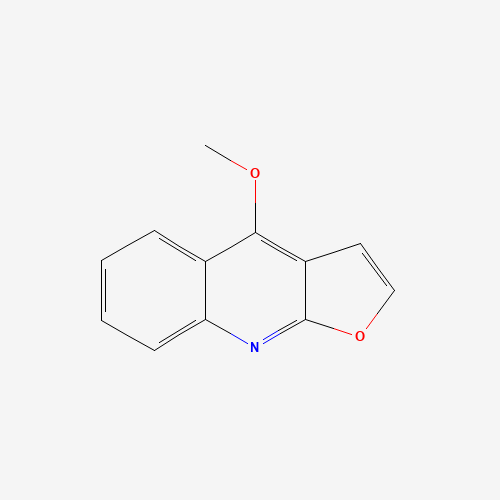
Dictamnine is an organic heterotricyclic compound, an organonitrogen heterocyclic compound, an oxacycle and an alkaloid antibiotic.
科学粮草官-词典编辑部,修订于:2026-07-06
Toxicity
ToxicitySymptoms
The symptoms are equivalent to photodermatitis, but vary in severity. The skin condition is a cutaneous phototoxic inflammatory eruption resulting from contact with light-sensitizing botanical substances—particularly from the plant families Umbelliferae, Rutaceae, Moraceae, and Leguminosae—and ultraviolet light, typically from sun exposure. Phytophotodermatitis usually results in hyperpigmentation of the skin that often appears like a bruise. This may be accompanied by blisters or burning. The reaction typically begins within 24 hours of exposure and peaks at 48–72 hours after the exposure. (Wikipedia)
Treatment
Phytophotodermatitis can be prevented by staying indoors after handling dictamnine. Windows will filter out ultraviolet light and prevent symptoms from arising. Many different topical and oral medications can be used to treat the inflammatory reaction of phytophotodermatitis. A dermatologist may also prescribe a bleaching cream to help treat the hyperpigmentation and return the skin pigmentation back to normal. If they do not receive treatment, the affected sites may develop permanent hyperpigmentation or hypo pigmentation. Sunblock can greatly mitigate symptoms, at least when caused by rue (Ruta Graveolens). (Wikipedia)
Health Effects
Dictamnine may play a major role in the elicitation of phytophotodermatitis (A15434). Phytophotodermatitis, also known as "Lime Disease" (not to be confused with Lyme Disease), "Berloque dermatitis", or "Margarita photodermatitis" is a chemical reaction which makes skin hypersensitive to ultraviolet light. It is caused by contact with photosensitizing compounds. (Wikipedia)
Exposure Routes
Dermal
Toxicity Summary
Dictamnine has been shown to be phototoxic to human cell lines (namely Jurkat T cells and HaCaT keratinocytes). Although it is less phototoxic than the structurally related furocoumarins 5-methoxypsoralen and 8-methoxypsoralen, "it may play a major role in the elicitation of phytophotodermatitis because of its abundance in plants of the Rutaceae family." (A15434)
Carcinogen Classification
No indication of carcinogenicity to humans (not listed by IARC).









