


 一键配货
一键配货
化合物详情
CAS18810-58-7
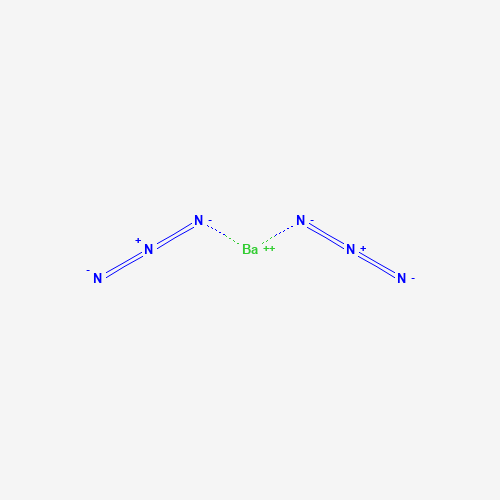
分子式BaN6
分子量221.37 g/mol
危化品
Physical Description | Barium azide, wetted with not less than 50% water appears as a slurry of white crystals. When dry, a high explosive that easily ignited and quick to burn vigorously. Wetting reduces sensitivity to shock and heat. Generates toxic oxides of nitrogen when burned.
科学粮草官-词典编辑部,修订于:2026-07-06
Toxicity
ToxicitySymptoms
Ingesting excess barium may cause vomiting, abdominal cramps, diarrhea, difficulties in breathing, increased or decreased blood pressure, numbness around the face, and muscle weakness. High levels may result in changes in heart rhythm or paralysis and possibly death. (L214)
Treatment
Intravenous infusion of potassium often relieves many of the symptoms of barium toxicity. (L214)
Health Effects
The health effects of the different barium compounds depend on how well the compound dissolves in water or the stomach contents. At low doses, barium acts as a muscle stimulant, while higher doses affect the nervous system, causing cardiac irregularities, tremors, weakness, anxiety, dyspnea, paralysisand possibly death. Barium may also cause gastrointestinal disturbances, damage the kidneys and cause decreases in body weight. (L214)
Exposure Routes
Oral (L214); inhalation (L214)
Toxicity Summary
Barium is a competitive potassium channel antagonist that blocks the passive efflux of intracellular potassium, resulting in a shift of potassium from extracellular to intracellular compartments. The intracellular translocation of potassium results in a decreased resting membrane potential, making the muscle fibers electrically unexcitable and causing paralysis. Some of these barium's effects may also be due to barium induced neuromuscular blockade and membrane depolarization. (L214)
Minimum Risk Level
Intermediate Oral: 0.2 mg/kg/day (L134) Chronic Oral: 0.2 mg/kg/day (L134)
Carcinogen Classification
No indication of carcinogenicity to humans (not listed by IARC).









