


 一键配货
一键配货
化合物详情
CAS13765-19-0
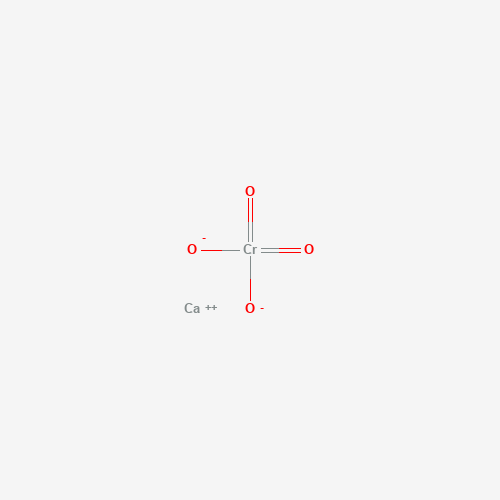
分子式Ca.CrH2O4
分子量118 g/mol
非危品
Physical Description | Calcium chromate is a yellow powder. It is slightly soluble in water. The primary hazard is the threat to the environment. Immediate steps should be taken to prevent its spread to the environment.
科学粮草官-词典编辑部,修订于:2026-07-06
Toxicity
ToxicityEcotoxicity Excerpts
/PLANTS/ /Calcium chromate/, at 200 ppm, /inhibited/ plant growth by 50%. Algal and microphyte flora 1.5 km downstream were affected with concentrations Cr(VI) of 0.2-0.5 ppm.
ICSC Environmental Data
The substance is very toxic to aquatic organisms. The substance may cause long-term effects in the aquatic environment. It is strongly advised not to let the chemical enter into the environment.
Natural Pollution Sources
Calcium chromate does not occur naturally.
Artificial Pollution Sources
Highly alkaline waste material containing mostly calcium chromate (CaCrO4) from the processing of chromite ore to chromate caused land and river pollution.
Probable Routes of Human Exposure
NIOSH (NOES Survey 1981-1983) has statistically estimated that 32,129 workers (5,565 of these are female) were potentially exposed to calcium chromate in the US(1).
Symptoms
Breathing hexavalent chromium can cause irritation to the lining of the nose, nose ulcers, runny nose, and breathing problems, such as asthma, cough, shortness of breath, or wheezing. Ingestion of hexavalent chromium causes irritation and ulcers in the stomach and small intestine, as well as anemia. Skin contact can cause skin ulcers. (L16)
Treatment
There is no know antidote for chromium poisoning. Exposure is usually handled with symptomatic treatment. (L16)
Interactions
We used a soft agar assay on cultured Syrian hamster fibroblasts to determine the ability of nitrilotriacetic acid (NTA) and Cr(VI) compounds to induce malignant cell transformation. Induction of extended anchorage-independent growth was detected in BHK 21/c13 cells by scoring colonies of transformed cells visible to the naked eye 20-25 d after plating in growth medium containing agar. Survival was determined by plating cells in liquid medium without agar and by counting the number of macroscopic colonies after 7-10 d. Mitomycin C and 4-nitroquinoline 1-oxide were used as reference direct transforming agents, with clearly positive results. In our hands no increase of the spontaneous transformation rate of BHK cells was induced by NTA concentrations ranging from 2 X 10(-3) to 10(-2) M, a...
Health Effects
Hexavalent chromium is a known carcinogen. Chronic inhalation especially has been linked to lung cancer. Hexavalent chromium has also been know to cause reproductive and developmental defects. (A12)
Adverse Effects
ACGIH Carcinogen - Confirmed Human.
Exposure Routes
Inhalation (L16); oral (L16); dermal (L16)
Toxicity Summary
Hexavalent chromium's carcinogenic effects are caused by its metabolites, pentavalent and trivalent chromium. The DNA damage may be caused by hydroxyl radicals produced during reoxidation of pentavalent chromium by hydrogen peroxide molecules present in the cell. Trivalent chromium may also form complexes with peptides, proteins, and DNA, resulting in DNA-protein crosslinks, DNA strand breaks, DNA-DNA interstrand crosslinks, chromium-DNA adducts, chromosomal aberrations and alterations in cellular signaling pathways. It has been shown to induce carcinogenesis by overstimulating cellular regulatory pathways and increasing peroxide levels by activating certain mitogen-activated protein kinases. It can also cause transcriptional repression by cross-linking histone deacetylase 1-DNA methylt...
Minimum Risk Level
Intermediate Oral: 0.005 mg/kg/day (L134) Chronic Oral: 0.001 mg/kg/day (L134)
RAIS Toxicity Values
Oral Slope Factor Reference: CALEPA
Human Toxicity Excerpts
/GENOTOXICITY/ The recently developed strain TA102, particularly suited to the detection of oxidative mutagens was the most sensitive out of 9 strains of S. typhimurium his- in revealing the mutagenicity of Cr(VI) compounds (sodium dichromate, calcium chromate and chromium trioxide). The rank of sensitivity was the following: TA102, TA100, TA97, TA92, TA1978, TA98, TA1538 and TA1537, TA1535 being the only insensitive strain. Cr(III) compounds (chromic acetate, chromic nitrate and chromic potassium sulfate) were totally inactive with all strains. The direct mutagenicity of Cr(VI) was markedly decreased, through NADPH-requiring mechanisms, by rat-liver S9 fractions and, to a lower extent, by human lung S12 fractions, which supports the hypothesis of a metabolically regulated threshold in...
Carcinogen Classification
1, carcinogenic to humans. (L135)
Non-Human Toxicity Values
LD50 Female rat oral 327 mg/kg
Antidote and Emergency Treatment
Advanced treatment: Consider orotracheal or nasotracheal intubation for airway control in the patient who is unconscious, has severe pulmonary edema, or is in severe respiratory distress. Positive-pressure ventilation techniques with a bag-valve-mask device may be beneficial. Consider drug therapy for pulmonary edema ... . Consider administering a beta agonist such as albuterol for severe bronchospasm ... . Monitor cardiac rhythm and treat arrhythmias as necessary ... . Start IV administration of D5W TKO. Use 0.9% saline (NS) or lactated Ringer's (LR) if signs of hypovolemia are present. For hypotension with signs of hypovolemia, administer fluid cautiously. Watch for signs of fluid overload ... . Treat seizures with diazepam (Valium) or lorazepam (Ativan) ... . Use proparacaine hydroch...









