

 一键配货
一键配货
化合物详情
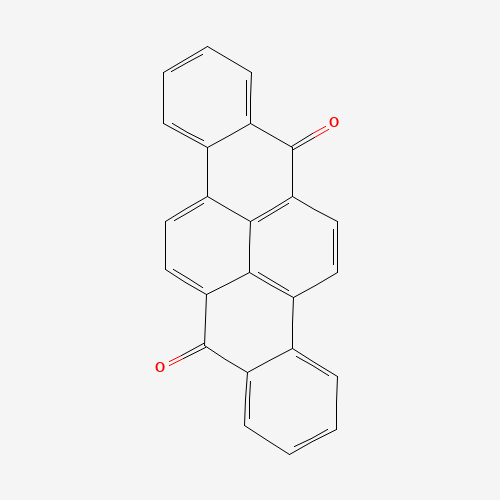
CAS128-66-5
分子式C24H12O2
分子量332.35 g/mol
非危品
Physical Description | C.i. vat yellow 4 is a viscous orange liquid. Used for coloring of cotton, wool and cellulose acetate.
科学粮草官-词典编辑部,修订于:2026-07-06
Toxicity
ToxicityProbable Routes of Human Exposure
Beauticians exposed to paraphenylenediamine derivatives in hair dyes, workers dyeing texitle resins, and photographic film developers exposed to color developing solutions not infrequently become sensitized to azo dyes. /Organic dyes/
Adverse Effects
Occupational hepatotoxin - Secondary hepatotoxins: the potential for toxic effect in the occupational setting is based on cases of poisoning by human ingestion or animal experimentation.
Human Toxicity Excerpts
Most organic azo dyes are potential skin sensitizers, the most important of which are paraphenylenediamine and its analogs. Water soluble azo dyes are more likely to cause clinical sensitization than insoluble dyes. ... In addition to allergic eczematous contact dermatitis, color developing solutions have caused lichen planus like eruptions. /Organic dyes/
Carcinogen Classification
Summary: It is concluded that under the conditions of this bioassay, the formulated product containing C.I. vat yellow 4 was not carcinogenic for male or female Fischer 344 rats or for female B6C3F1 mice, but was carcinogenic for male B6C3F1 mice, causing an increased incidence of lymphomas.
Non-Human Toxicity Excerpts
Despite their widespread use and potential for significant human exposure, genotoxicity data on anthraquinones and other dyes are limited. In this study, 16 anthraquinones and one azo dye (Solvent Red 1) were selected for testing using the thymidine locus and micronucleus (MN) analysis in L5178Y/TK(+ or -)-3.7.2C mouse lymphoma cells. Six of the dyes were from the same lot used in the NTP rodent bioassay. The dyes used were all production lots and thus varied in their purity. Disperse Blue 7, 2-aminoanthraquinone; 1-amino-2-methylanthraquinone, Disperse Blue 3 and Disperse Red 11 were genotoxic (inducing 1814 mutants/10(6) survivors, 369 MN/1000 cells at 13% survival; 397 mutants/10(6) survivors, 196 MN/1000 cells at 21% survival; 178 mutants/10(6) survivors, 119 MN/1000 cells at 51% su...