


 一键配货
一键配货
化合物详情
CAS13510-49-1
分子式BeSO4
分子量105.07 g/mol
危化品
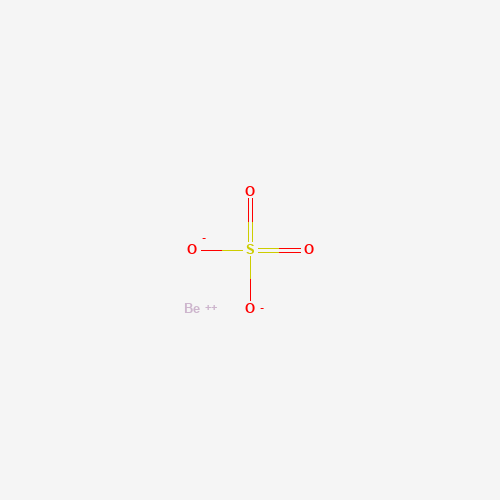
Beryllium sulfate is a metal sulfate in which the metal is beryllium (in the +2 oxidation state) and the ratio of beryllium to sulfate is 1:1. It has a role as a NMR chemical shift reference compound and an allergen. It contains a beryllium(2+).
科学粮草官-词典编辑部,修订于:2026-07-06
Toxicity
ToxicityEcotoxicity Excerpts
/PLANTS/ Although the seeds /SRP: Lepidium sativum L. (garden cress)/ germinated with decreasing concentrations of beryllium chloride and beryllium sulfate (10-3 to 10-7 M dissolved in water) the percentage of germinating seeds was lower than in the control ... Contents of chlorophyll a and b in Be2+ treated seedlings were lower than in the control, especially chlorophyll a.
ICSC Environmental Data
The substance is toxic to aquatic organisms. It is strongly advised not to let the chemical enter into the environment.
Probable Routes of Human Exposure
NIOSH (NOES Survey 1981-1983) has statistically estimated that 120 workers (none of these were female) were potentially exposed to beryllium sulfate in the US(1).
Symptoms
Chronic beryllium disease causes fatigue, weakness, difficulty breathing, and a persistent dry cough. (L24, L25)
Treatment
Chronic beryllium disease is treated with immunosuppressive medicines, usually of the glucocorticoid class. (L24)
Interactions
... Specific pathogen free male Fischer-344 rats were ip injected with 1 mg of ionic beryllium, copper, lead, zinc, cadmium, or saline once/day for 7 days, then killed 16 hr after the final injection. Livers were assayed for ferritin and metallothionein. Other rats received 40 mg/kg ferric-ammonium-citrate ip for 3 days; ferritin was later assayed in some animals while others received 2.2 to 25 mg/kg beryllium sulfate doses iv, followed by ferric-ammonium-citrate or saline for 14 days. Median lethal dose (LD50) were determined. Some animals received 40 mg/kg ferric-ammonium-citrate ip for 3 days followed by 6 mg/kg radiolabeled beryllium sulfate; beryllium distribution and excretion were determined at 48 hr. All ferritin samples regardless of the ion injected contained large amt of iron...
Toxicity Data
LD50: 0.51 mg/kg (Intravenous, Rat) (A193)
Health Effects
Acute inhalation of a high level of beryllium can results in a pneumonia-like condition called acute beryllium disease. Chronic inhalation of beryllium can caused an inflammatory reaction in the respiratory system called chronic beryllium disease. Chronic beryllium disease may result in anorexia and weight loss, as well as right side heart enlargement and heart disease in advanced cases. Chronic exposure can also increase the risk of lung cancer. Skin contact with beryllium results in contact dermatitus. (L24, L25)
Adverse Effects
Fibrogenic - Inducing tissue injury and fibrosis (scarring).
Exposure Routes
Inhalation (L24)
Toxicity Summary
Once in the body, beryllium acts as a hapten and interacts with human leucocyte antigen (HLA) DP presenting cells in the lungs, becoming physically associated with a major histocompatability (MHC) class II molecule. This MHC class II-beryllium-peptide complex is recognized by the T lymphocyte receptor, triggering CD4+ T lymphocyte activation and proliferation. The resulting inflammatory response is a cell-mediated process orchestrated by cytokines and results in the formation of (usually pulmonary) granulomas. Beryllium's toxicity may be controlled by the iron-storage protein ferritin, which sequesters beryllium by binding it and preventing it from interacting with other enzymes. (L25, A37, A91)
Minimum Risk Level
Chronic Oral: 0.002 mg/kg/day (L134)
RAIS Toxicity Values
Oral Chronic Reference Dose Reference: CALEPA
Carcinogen Classification
1, carcinogenic to humans. (L135)
Non-Human Toxicity Values
LD50 Mice oral 140 mg Be /kg
Evidence for Carcinogenicity
Beryllium and beryllium compounds are known to be human carcinogens based on sufficient evidence of carcinogenicity from studies in humans. /Beryllium and compounds/
Antidote and Emergency Treatment
Advanced treatment: Consider orotracheal or nasotracheal intubation for airway control in the patient who is unconscious, has severe pulmonary edema, or is in severe respiratory distress. Positive-pressure ventilation techniques with a bag valve mask device may be beneficial. Consider drug therapy for pulmonary edema ... . Monitor cardiac rhythm and treat arrhythmias if necessary ... . Start IV administration of D5W /SRP: "To keep open", minimal flow rate/. Use 0.9% saline (NS) or lactated Ringer's (LR) if signs of hypovolemia are present. For hypotension with signs of hypovolemia, administer fluid cautiously. Watch for signs of fluid overload ... . Treat seizures with diazepam or lorazepam ... . Use proparacaine hydrochloride to assist eye irrigation ... . /Beryllium and Related Compou...









