

 一键配货
一键配货
化合物详情
CAS7446-18-6
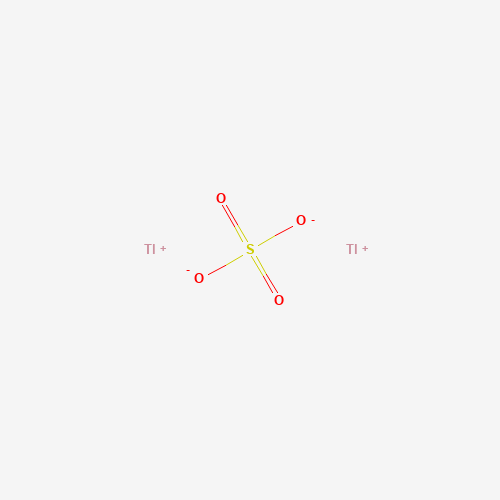
分子式Tl2SO4
分子量504.83 g/mol
危化品
Physical Description | Thallium sulfate appears as odorless white rhomboid prisms or a dense white powder. Density 6.77 g / cm3. Melting point 1170 °F (632 °C). Extremely toxic by ingestion. Very toxic by skin absorption and ingestion. A slow acting cumulative poison. Used as a rat poison, and an ant bait. Also used for analysis (testing for iodine in the presence of chlorine) and ozonometry. Not registered as a pesticide in the U.S.
科学粮草官-词典编辑部,修订于:2026-07-06
Toxicity
ToxicityEcotoxicity Values
USDA APHIS Chemical Effects: collection=usda_chemeffect&query_type=synonym&query='^10031-59-1$'
Fate Summary
IN JAPAN, THALLIUM SULFATE HAS BEEN SPRAYED OVER FOREST AREAS TO KILL RATS AND OTHER PESTS, BUT HAS NOT BEEN FOUND IN SAMPLES OF WATER TAKEN OVER A PERIOD OF ONE MONTH AFTER SPRAYING.
ICSC Environmental Data
The substance is very toxic to aquatic organisms. The substance may cause long-term effects in the aquatic environment. This substance does enter the environment under normal use. Great care, however, should be taken to avoid any additional release, for example through inappropriate disposal.
Symptoms
Ingestion Exposure: Abdominal pain. Nausea. Vomiting. Diarrhoea. Headache. Weakness. Convulsions. Muscle pain. Paralysis. Delirium. Unconsciousness.
Interactions
THALLIUM POISONING IN GUINEA PIGS WAS NOT SIGNIFICANTLY PREVENTED BY THE ENTERAL (GASTRIC TUBE) APPLICATION OF DITHIOCARB & POTASSIUM CHLORIDE. WHEN DITHIOCARB (90 MG/KG/DAY, SC 10 DAYS) WAS GIVEN DURING A TIME PERIOD OF 2-12 HR AFTER A SINGLE ADMIN OF THALLIUM SULFATE (20 MG/KG, SC), A SLIGHT THERAPEUTIC EFFECT OF THE ANTIDOTE DITHIOCARB WAS NOTED.
Adverse Effects
Occupational hepatotoxin - Secondary hepatotoxins: the potential for toxic effect in the occupational setting is based on cases of poisoning by human ingestion or animal experimentation.
Exposure Routes
The substance can be absorbed into the body through the skin and by ingestion.
RAIS Toxicity Values
Oral Subchronic Chronic Reference Dose Reference: PPRTV Current
Human Toxicity Excerpts
Thallium is a skin sensitizer and cumulative poison which is toxic by ingestion, inhalation or skin absorption. /Soluble thallium compounds/
Non-Human Toxicity Values
LD50 Brown rat oral 16 mg/kg
Non-Human Toxicity Excerpts
The effect of dithallium sulfate (thallium, 20 mg/kg body weight) on renal function was investigated in 10- and 20-day old rats. Nephrotoxic effects were evaluated by the determination of glomerular filtration rate, urinary volume, electrolyte and protein excretion, as well as by morphological investigations. In contrast to adult rats there were no morphological destructions in 10- and 20-day old rats. Changes in renal function seemed to be less expressed in 10- and 20-day old rats than in adult rats. The smaller nephrotoxicity in 10-day rats may be caused by lower thallium concentration in renal tissue, whereas in 20-day old rats decreased nephrotoxicity cannot be explained in this way. The activity of Na+/K+-ATPase in rat renal tissues was found to be involved in the mechanisms of tha...
1 or Cancer Risk Level 1E-06
Fraction of Contaminant Absorbed in Gastrointestinal Tract: 1
Evidence for Carcinogenicity
CLASSIFICATION: D; not classifiable as to human carcinogenicity. BASIS FOR CLASSIFICATION: Based on the lack of carcinogenicity data in animals and humans. HUMAN CARCINOGENICITY DATA: Inadequate. ANIMAL CARCINOGENICITY DATA: None.
Hazard Quotient Level 3 or Cancer Risk Level 1E-04
Fraction of Contaminant Absorbed in Gastrointestinal Tract: 1