


 一键配货
一键配货
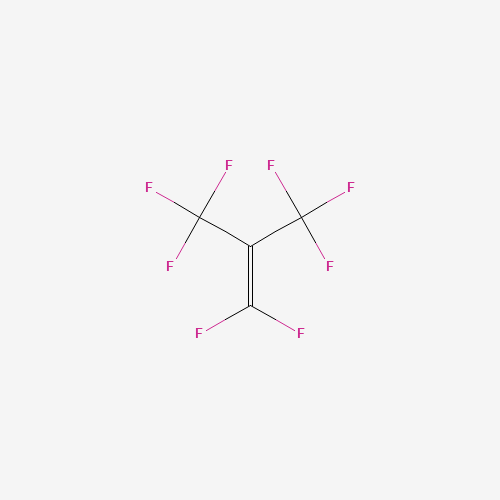
化合物详情
CAS382-21-8
分子式C4F8
分子量200.03 g/mol
危化品
科学粮草官-词典编辑部,修订于:2026-07-06
Toxicity
ToxicityFate Summary
ATMOSPHERIC FATE: According to a model of gas/particle partitioning of semivolatile organic compounds in the atmosphere(1), perfluoroisobutylene, which has a vapor pressure of 1740 mm Hg at 25 °C(2), is expected to exist solely in the gas phase in the ambient atmosphere. Gas-phase perfluoroisobutylene is degraded in the atmosphere by reaction with photochemically-produced hydroxyl radicals(SRC); the half-life for this reaction in air is estimated to be 5.7 days(SRC), calculated from its rate constant of 2.8X10⁻¹² cu cm/molecule-sec at 25 °C(SRC) that was derived using a structure estimation method(3). Gas-phase perfluoroisobutylene is also degraded in the atmosphere by reaction with ozone(SRC); the half-life for this reaction in air is estimated to be 41 days(SRC), calculated from its r...
Soil Adsorption / Mobility
Using a structure estimation method based on molecular connectivity indices(1), the Koc of perfluoroisobutylene can be estimated to be 1,700(SRC). According to a classification scheme(2), this estimated Koc value suggests that perfluoroisobutylene is expected to have slight mobility in soil.
Environmental Bioconcentration
An estimated BCF of 46 was calculated in fish for perfluoroisobutylene(SRC), using an estimated log Kow of 3.03(1) and a regression-derived equation(1). According to a classification scheme(2), this BCF suggests the potential for bioconcentration in aquatic organisms is moderate(SRC). However, perfluoroisobutylene decomposes rapidly in water via hydrolysis(3); therefore, bioconcentration is not expected to be an important fate process(SRC).
Volatilization from Water / Soil
The Henry's Law constant for perfluoroisobutylene is estimated as 34 atm-cu m/mole(SRC) using a fragment constant estimation method(1). This Henry's Law constant indicates that perfluoroisobutylene is expected to volatilize rapidly from water surfaces(2). Based on this Henry's Law constant, the volatilization half-life from a model river (1 m deep, flowing 1 m/sec, wind velocity of 3 m/sec)(2) is estimated as 4.1 hours(SRC). The volatilization half-life from a model lake (1 m deep, flowing 0.05 m/sec, wind velocity of 0.5 m/sec)(2) is estimated as 5.6 days(SRC). The Henry's Law constant of perfluoroisobutylene indicates that volatilization from moist soil surfaces may occur(SRC). However, volatilization from water surfaces and moist soil is expected to be attenuated by hydrolysis(SRC) b...
Environmental Abiotic Degradation
The rate constant for the vapor-phase reaction of perfluoroisobutylene with photochemically-produced hydroxyl radicals has been estimated as 2.8X10⁻¹² cu cm/molecule-sec at 25 °C(SRC) using a structure estimation method(1). This corresponds to an atmospheric half-life of about 5.7 days at an atmospheric concentration of 5X10+5 hydroxyl radicals per cu cm(1). The rate constant for the vapor-phase reaction of perfluoroisobutylene with ozone has been estimated as 2.8X10⁻¹⁹ cu cm/molecule-sec at 25 °C(SRC) that was derived using a structure estimation method(1). This corresponds to an atmospheric half-life of about 41 days at an atmospheric concentration of 7X10+11 ozone molecules per cu cm(1). Based on analogy to a measured nitrate radical rate constant of 3.0X10⁻¹⁵ cu cm/molecule-sec at 2...
Artificial Pollution Sources
Perfluoroisobutylene's production and use as a synthetic intermediate for the production of polymeric materials(1) and use in the etching process for seimiconductors(2) may result in its release to the environment through various waste streams(SRC). Perfluoroisobutylene is generated during the thermal decomposition of polytetrafluoroethylene(4,5). Perfluoroisobutylene smoke is given off when Teflon burns at temperatures above 400 °C, such as in a vehicle fire(5). Perfluoroisobutylene is also produced by the thermal decomposition of the fluorinated primary fluid in the condensation reflow soldering process(6).
Probable Routes of Human Exposure
Occupational exposure to perfluoroisobutylene may occur through inhalation contact with this compound at workplaces where perfluoroisobutylene is produced or used(1-3). The general population may be exposed to perfluoroisobutylene via inhalation of ambient air in the vicinity of high temperature thermal decomposition of polytetrafluoroethylene (e.g. Teflon)(5), such as a vehicle fire(6).
Other Environmental Concentrations
Thermal decomposition of polytetrafluoroethylene (PTFE, Teflon) can lead to the production of small amounts of perfluoroisobutylene(1).
Environmental Fate / Exposure Summary
Perfluoroisobutylene's production and use as a synthetic intermediate for the production of polymeric materials and use in the etching process for seimiconductors may result in its release to the environment through various waste streams. Its generation during the thermal decomposition of polytetrafluoroethylene may result in its direct release to the environment. If released to air, a vapor pressure of 1740 mm Hg at 25 °C indicates perfluoroisobutylene will exist solely in the gas phase in the atmosphere. Gas-phase perfluoroisobutylene will be degraded in the atmosphere by reaction with photochemically-produced hydroxyl radicals; the half-life for this reaction in air is estimated to be 5.7 days. Gas-phase perfluoroisobutylene will also be degraded in the atmosphere by reaction with oz...
Symptoms
Inhalation Exposure: Sore throat. Cough. Nausea. Headache. Weakness. Shortness of breath. Laboured breathing. Symptoms may be delayed.
Interactions
Perfluoroisobutene, a pyrolysis product of polyetrafluoroethene may cause pulmonary edema and death when inhaled. Oral N-acetylcysteine has shown protection against inhalation of perfluoroisobutene... . Protection against the lethal effects of inhaled perfluoroisobutene has been shown when N-acetylcysteine has been orally administered 4, 6 or 8 hr before gas exposure. Plasma levels of cysteine, glutathione and N-acetylcysteine were increased for up to 7 hr following oral administration of Nac. N-acetylcysteine was not detected in the bronchioalveolar lavage fluid following oral administration. Duration of protection in vivo has been related to the duration of increased thiol levels in the plasma.
Toxicity Data
LC50 (rat) = 0.5 ppm/6hr
Adverse Effects
Toxic Pneumonitis - Inflammation of the lungs induced by inhalation of metal fumes or toxic gases and vapors.
Exposure Routes
The substance can be absorbed into the body by inhalation.
Toxicity Summary
IDENTIFICATION AND USE: Perfluoroisobutylene is a colorless gas which is soluble in water. It may be used as a potential chemical warfare agent; etching material for semiconductor fabrication and synthesis of polymeric materials. HUMAN EXPOSURE AND TOXICITY: A harmful concentration of this gas in the air will be reached very quickly on loss of containment. The substance can be absorbed into the body by inhalation. The substance irritates the respiratory tract. Inhalation exposure may cause severe symptoms of pulmonary edema with wheezing, difficulty in breathing, coughing up sputum and bluish discoloration of the skin. Coughing and chest pain may occur initially. However, severe symptoms of pulmonary edema may be delayed for several hours and then become rapidly worse. Overexposure may...
Human Toxicity Excerpts
/CASE REPORTS/ /Investigators/ monitored 5 patients (2 men and 3 women) accidentally exposed to PFIB at work. Two were chemical plant operators and the other three were chemical engineer technologists involved in laboratory work. All but one [female] patient reported that the contact with PFIB lasted less than one minute during which time 2 to 5 breaths were taken. Immediately after exposure, all patients developed cough, difficulty breathing, and deep chest pains. Approximately 6 to 8 hours after exposure, these symptoms increased in severity. No ocular or upper respiratory irritation was noted. All patients ran fevers that lasted between 2 and 25 days, and all developed pulmonary edema. The duration of the in-patient stay of the three patients was 27 13, 17, and 23 days. They were dis...
Non-Human Toxicity Values
LC50 Rat Inhalation 1.05 ppm 2 hrs
Non-Human Toxicity Excerpts
/LABORATORY ANIMALS: Acute Exposure/ The histopathology of rat lung has been studied after an acute exposure to perfluoroisobutylene (PFIB) at a concentration of 638 mg/cu m (78 ppm.) for 1.5 min giving a Ct = 957 mg min/cu m for the first 24 hr following exposure. Within 5 min of exposure changes to the bronchioles and peribronchial alveoli were observed which took the form of alterations to cilial structure, increased pinocytosis and electron lucency, with occasional vesicle formation of type I alveolar epithelial cells. Intercellular leakage with minimal fluid accumulation in the alveolar spaces was also seen. The very rapid action of PFIB strongly suggests a direct action by the compound. There then followed the gradual development of pulmonary edema which was visible histologically...
Antidote and Emergency Treatment
Airborne exposure to lung-toxic agents may damage the lung surfactant system and epithelial and endothelial cells, resulting in a life-threatening pulmonary edema that is known to be refractory to treatment. The aim of this study was to investigate in rats (1) the respiratory injury caused by nose-only exposure to perfluoroisobutene (PFIB), and (2) the therapeutic efficacy of a treatment at 4 and/or 8 hr after exposure consisting of the natural surfactant Curosurf and/or the anti-inflammatory drug N-acetylcysteine (NAC). For that purpose, the following parameters were examined: respiratory frequency (RF), lung compliance (Cdyn), airway resistance (Raw), lung wet weight (LWW), airway histopathology; and in brochoalveolar lavage (BAL) fluid, total protein, total phospholipid, cell count a...









